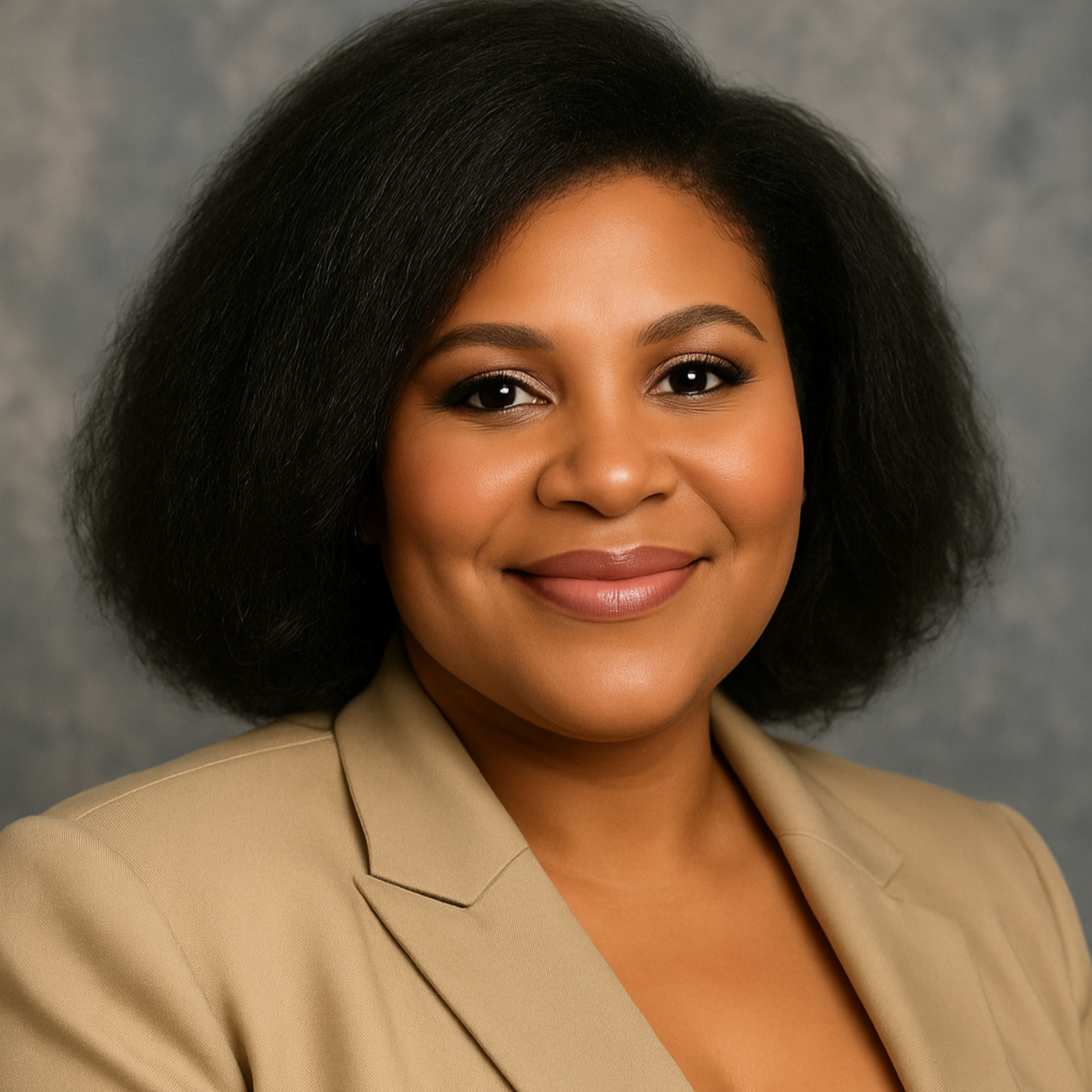
Biblical Counseling vs. Christian Counseling: A Framework Every Pastor Needs
Tonight's Episode
Are you a pastor, counselor, or seminary student trying to hold faith and mental health together? Elisha breaks down the three schools of Christian counseling, the theology behind integration, and her Three Tables framework for whole-person care. This is the conversation the church needs to have.
Elisha's Space: There is a conversation happening right now in seminaries, in pastoral offices, in graduate counseling programs, in church counseling centers. And it is not being spoken loudly. It tends to happen in the margins, in the hallways after service, in the whispered consultation between a pastor and a therapist who are sometimes working at cross purposes without fully realizing it. It ⁓ sounds like this. ⁓ A student sits in the in a theology of counseling class ⁓ and ⁓ that sufficient word of God needs nothing else. ⁓ And student believes it. ⁓ She it with her whole heart, but then ⁓ she her first clinical placement. She sits across from a trauma survivor whose nervous system stuck in a freeze response. And she opens her mouth to offer scripture. ⁓ something in her freezes too, because she can feel that the words are right, but something is missing and she doesn't have language for what it is. A pastor has been meeting with the same man in his congregation for three years. Every week. They pray together, they read scripture together, and this man is not getting better. He's drowning. And the pastor quietly wonders, Am I the problem? Or is there something I just don't know? And because no one taught him that some wounds require more than words, he carries the weight of that question alone. A Christian counselor. Sits in a clinical supervision and her supervisor questions her use of prayer in a session. She nods, she agrees, and she quietly puts that part of herself away. The part that knows from her own story that the spirit is not separate from the healing. This episode is for all three of them. Welcome to Elisha's Space. a sanctuary for healing growth and for the kind of honest conversations that actually change things. I'm Elisha, your host, a counselor, an author, and someone who has sat in the same stuck place as you have. If you're new here, welcome home. If you've been listening for a while, I see you and I'm glad you're back. Today's episode is different from what you may be used to here. It is practical, clinical, but pastoral and it is aimed at a specific listener. The person who is trying to serve others at the intersection of faith and mental health, and who sometimes feels like they're building a bridge between two communities that aren't fully sure they want to connect. ⁓ We're going to talk about the ⁓ of mental health integration, ⁓ what actually means to bring and clinical practice together. Not as a compromise, ⁓ not as a branding strategy. But as a theological conviction rooted in the nature of what it means to be human, we're going to trace some history. We're going to name the tensions honestly. And we're going to build a framework that you can actually carry into your work. But before we do any of that, let's breathe together. If you're driving, you can keep your eyes open. If you're somewhere you can settle in, go ahead and close them. Take a breath in through your nose and let it out slowly through your mouth. One more. Breathe in and release. This episode is going to ask something of your mind. It's going to ask you to hold complexity, to sit with tension without needing to resolve it immediately. And that is not always comfortable, but it is where the most honest work happens. So if anything stirs in you as we get into the content today, come back to your breath. That's not weakness, that's wisdom. So stay with me. I want to start with something that might feel uncomfortable, and I'm going to ask you to stay with me. The Christian counseling world. And I mean that broadly, has a conflict at its center. It has for decades. And it is a conflict that I think reflects something much deeper than a disagreement about methodology. think it reflects a war over identity, ⁓ over ⁓ over what it actually means to be human. ⁓ one side of that conflict, you have a tradition. A deeply sincere, deeply biblical tradition that says the word of God is sufficient. That for matters of the soul, what the person in front of you needs is scripture, prayer, community, repentance, and the grace of God. That psychology at best is redundant. And at worst, is pulling people away from the only thing that can actually heal them. This position has a name. You may have heard it called. Nephetic counseling, or more recently, biblical counseling. ⁓ Its founding voice a man ⁓ named Jay Adams, in 1970 ⁓ published a book Competent to Counsel. And essentially launched a movement. His argument, counselors don't need Freud, they need Paul. The concepts of psychology, the diagnosis, the therapeutic frameworks, and the clinical language. These are secular constructs built on secular assumptions about human nature, and the church has imported them uncritically. I want you to hear me. say this clearly, Adams was not entirely wrong. The church had in many ways outsourced the care of souls to a profession that had no framework for the eternal. There was a very real problem. People were leaving the church to get help the church could have and should have been able to offer. This is a legitimate grief, but here is where the story gets complicated. In that same decade, a parallel conversation was beginning. Psychologists who were also people of deep faith, men like Larry Crabbe, Gary Collins, began to ask a different question. What if the insights we're finding and clinical research are not opposed to scripture? What if they're confirming it? What if understanding the human mind and nervous system doesn't undermine the gospel but illuminates it? ⁓ This gave to what we now call the integration movement. And the AACC, the American Association of Christian Counselors, ⁓ became one of its primary homes. ⁓ Even with integration, there are tensions because integration is a word that means different things to different people. And if you've been trained in a graduate counseling program at a Christian university, you know that the integration your school taught you might look very different from the integration your colleague school taught them. Here is something that rarely gets said in these conversations. The debate between biblical counseling and integration is, at its root, a debate about epistemology and how we know what we know. About what counts as valid knowledge, about whether truth discovered in a laboratory can coexist with truth revealed in scripture. And I want to suggest that this is a false binary because the truth is, both of these communities, in their best moments, are trying to answer the same question: How do we help the people who are suffering? The method looks different, the language looks different, the institutional affiliations look different, but the question The pastoral human aching question is the same. And when I sit with a client who is struggling, I do not have the luxury of choosing one or the other. I have a whole person in front of me. That person is body, soul, and spirit. They have a nervous system that has been shaped by their experiences. They have a theology. Even if that person wouldn't call it that. A deep set of beliefs about whether they're safe, whether they're loved, whether God can be trusted. And those things, the biological and the theological, are not separate systems. They are, in my clinical and pastoral experience, profoundly intertwined. This isn't just a philosophical position for me. It's what I see every week. Let me give you a map, a brief one, because I think when we understand where we've been, we can make more intentional choices about where we're going. I'm going to describe three schools of thought, not to argue that one is right and the others are wrong, but because clarity about where these streams come from helps us move through them more wisely. School one is biblical counseling. This conviction here is that scripture is not only sufficient for salvation, it is sufficient for sanctification and soul care. Mental and emotional struggles are at their core. or spiritual problems. Anxiety is not a neurological condition. It is a failure to trust God. Depression is not a biochemical state. It is a response to unconfessed sin or a crisis of faith. The movement has nuanced since Adams. The CCEF the Christian Counseling and Education Foundation, has done important work to bring more theological to the model. There is ⁓ acknowledgement that biology matters, that suffering can occur without moral failure, that the body is involved. But at its foundation, the tends to be suspicious of secular psychology ⁓ and often regards clinical diagnostic categories. PTSD, bipolar disorder, clinical depression, as secular constructs that pathologize where are ultimately spiritual conditions. School two is integration. The integration model says all truth is God's truth. Romans 1 and 2 tells us that God has written truth into creation. Including the human mind. The tools of clinical psychology, therapy, research, neuroscience, evidence-based interventions are not secular enemies of the faith. They are instruments through which we can understand more fully the image of God in which we are made. This school also insists on the authority of scripture. It does not replace it with psychology, but it asks, what does it look like to bring the insights of both into a coherent framework for care? The danger in this school, and I name this as someone who works in this tradition, is integration without discernment. It is possible to call yourself an integrationist and simply do secular therapy with a prayer at the beginning. That is not integration, that is compartmentalization. True integration requires that your theology actually shapes your clinical practice. And that your clinical knowledge actually enriches your theological understanding. It's a conversation, not a checklist. School three, Christian psychology. This is a smaller but growing conversation primarily with scholars like John Coe and Hall at Rosemead of Psychology. Their argument, We don't just need to integrate Christianity into psychology. We need to build a distinctly Christian psychology from the ground up using the resources of scripture, patristic. Tradition, spiritual theology, and careful philosophical reflection to develop a psychology that is not merely Christian flavored, but Christian in its core assumptions. This is a beautiful and most important project. It is less immediately accessible for the clinician who has a client in front of them right now. It is more of an academic and generational undertaking, but I believe it represents where the conversation needs to go. So where do I land? I am an integrationist with discernment, and I want to explain what that means in practice, because I think the word alone can sound like an invasion. Here is my theological foundation, and I want to lay it out clearly because I think it is often assumed but rarely articulated. Pillar one, Amago Deo. Genesis 1 tells us that we are made in the image of God. That is not a spiritual claim. It is a claim about the totality of what we are. We are body, we are soul, we are spirit. We bear the image of God in our physical being and our capacity for relationship, for creativity, for moral reasoning, for love. When I work with a trauma survivor and I explain to them that their hypervigilance is their nervous system doing exactly what God designed it to do. Scanning for threat because that threat was real. That is not a secular intervention. That is a theological one. That person is made in the image of God. Their body is not their enemy. Their nervous system is not a malfunction. It is grace. Knowledge isn't just power for trauma survivors. Knowledge is safety. ⁓ Pillar two, incarnation. This is the one that undoes me that God in the person of Jesus took on a body, a nervous system, neurotransmitters, fascia, a stress response. Jesus wept. Jesus swept drops of blood and Gethsemane, which, by the way, ⁓ is a recognized Physiological response to extreme psychological distress called hematrodosis. Jesus experienced fear, and the scriptures do not apologize for this, they present it as part of its full identification with us. If God took on a nervous system, the nervous system is not separate from the spiritual, the body is not the body of the soul. The mind is not something we need to transcend. is something we are invited to steward. This isn't visualization. This is theology. This is physiology. ⁓ those two things are not in conflict. Pillar three, common grace. This is the theological principle that God, ⁓ his generosity, allows truth to be discovered by all people. Not just those within the covenant community. The scientist who does not believe in God can still discover true things about the human brain. The researcher who has no faith can still produce findings that illuminate the image of God in us. This is the theological ground for integration. It is not that we baptize secular psychology, it is that we recognize that truth, wherever it comes from, belongs to God. Calvin said it, all truth is God's truth. If a therapist discovers that EMDR reduces the intrusive symptoms of PTSD, that is a discovery about how God designed the brain to heal. I don't need to apologize for using it. And here is a word I'd like to share about sin and diagnosis. And this is where the conversation gets difficult. I want to handle it carefully. Biblical counselors are right that sin matters, that moral agency matters, that the gospel is not therapy, and therapy is not the gospel. I hold that conviction. But I want to say something clearly. Not every symptom of mental illness is a symptom of moral failure. A person with OCD is not more sinful than someone without it. A woman with PTSD is not less faithful because her amygdala. A man with a bipolar disorder is not deficit in his faith because his brain chemistry fluctuates. The psalms are full of people whose bodies and minds were in distress. Not because they sinned, but because they were human, suffering is not always diagnostic of spiritual failure. Sometimes it is simply evidence that we live in a broken world. And the church that conflates those two things, mental illness and moral failure, does enormous damage. I have sat With people whose shame from that conflation was as traumatic as anything else in their history. So let me say this. The theology I work with holds both. Sin is real, the soul needs the gospel, and the body is real. The nervous system needs compassion and clinical competence. A mature, integrative approach to Christian counseling holds both of those truths without sacrificing one for the other. I want to give you something you can actually carry with you. I call it the three tables. When I am working with a person, whether they're a client, a congregation member, someone in a pastoral conversation. I am always asking what tables are in the room and which ones do I have access to? Table one or two. The theological table. And this is the table of scripture, theology, confession, repentance, grace, prayer, and community. This is the one that the biblical counselor is most comfortable at, and it is an essential table. There are questions at this table that only the gospel can answer: questions about eternal identity, questions about forgiveness, questions about whether suffering has meaning, questions about what it means to. Be held by a God who does not abandon the pastor, the chaplain, the spiritual director. At their best, they are fluent at this table. Table two. The clinical table. This is the table of neuroscience, trauma theory, psychological diagnosis, evidence-based practice, somatic interventions, and psychoeducation. This is the table that the licensed clinician is most comfortable at. It is also essential. There are questions here that only clinical expertise can address. Questions about medication, questions about trauma processing, questions about attachment patterns that formed before a person was old enough to have words. The therapist, the psychiatrist, the clinical social worker. At their best, they are fluent at this table. Table three, the pastoral table. This is a table that is most often forgotten. And it is, I think, the one that makes everything else work. The pastoral table is the table of sustained presence, of witnessing, of being with someone over time, across seasons, in the Ordinariness of their life. It is the table of community, of accountability, of belonging. Neither the theologian nor the clinician alone can fully occupy this table. It requires both. And more, it requires a community of people committed to one another's flourishing over the long arc of life. Here is the question I want to bring into every situation. Which tables are already in the room, which ones are empty, and who needs to be invited? Because the person in front of you, the seminary student who is anxious, the pastor's wife who is depressed, the young adult who is deconstructing, the trauma survivor who cannot sit in a church pew without disassociating. That person needs all three tables, not just one. And if you can only offer one, then your most important skill is not your technique. It is your willingness to say, I cannot give you everything you need. Let me walk with you towards someone who can. Referral is not a failure, it is a form of love. Let me get specific, because some of you are in very concrete situations and you need concrete guidance. For the pastor, you are not a clinician, you were not trained to diagnose or treat mental illness. And the fact that someone has come to you in crisis does not mean you are equipped to be their primary care provider. And that is okay. What you are is often the first person someone is willing to tell. The trusted presence who is close enough to the everyday life of your congregation to notice when something is wrong. That is not a small thing. That is often the thing that saves someone's life. So here's what I ask of you: know the signs that Someone needs clinical intervention, not just pastoral care. Persistent symptoms of depression that are not responsive to spiritual intervention, suicidal ideation, active trauma responses, psychosis, those are not primarily spiritual problems. They have a clinical component that you are not trained to address. Build relationships with Christian clinicians in your community before you need them. Know their names, know their orientation, know who you can trust to honor the faith of your congregation members and stay in the picture. Referral does not mean abandonment. The person you send to a therapist still needs you, still needs their community, still needs that table one conversation. The clinical work and the pastoral work are not competing, they are complementary. For the counselor, your training may have taught you to bracket your own faith in the clinical room. To be neutral, to not impose. I understand the impulse. I want to honor it. But here is what I found. When a client brings God into the room, the most clinically harmful thing I can do is treat that as irrevolent. Because for a person whose faith is central to their identity, their theology is not separate from their mental health. It is woven through it. Their relationship with God is one of the most significant attachment relationships in their life. To bracket that is not neutrality. It is a form of clinical neglect. I am not saying impose your faith on clients who don't share it. I am saying meet your clients in the full reality of who they are. And for many of them, that reality includes a spiritual life that needs to be honored. Not set aside. For those of you who work with religious trauma, with deconstruction experiences, with clients who have been hurt by the church, this is a place that requires enormous clinical and theological sophistication because the wound is not just emotional, it is theological, and it needs someone who can speak both languages. That someone can be you. Before we close with prayer. I want to give your body a moment to settle. This has been a lot, a lot of nuance, a lot of tension to hold. And I want to acknowledge that for some of you, this conversation may have stirred something. Maybe it surfaced an old wound. A time when someone told you that your mental health struggle was a faith failure. Maybe it surfaced a professional tension you've been quietly carrying. Maybe it brought up a face. person you're currently walking with who needs more than you alone can give. Whatever is alive in you right now, let it be. Don't try to resolve it yet. Place your hands on your chest. Feel your heart beating. That heartbeat is not separate from your soul. That rhythm, that steady, faithful rhythm, is the work of the God who knit you together. Breathe in. And let it out. His peace is not dependent on your having all the answers. It is a regulated nervous system in the presence of a safe God. Let's pray together. Father, I I am grateful that you made these bodies, that you knit together the very nervous systems that we are learning to understand and steward and care for. I am grateful that you did not ask us to choose between the spiritual and the physical, that in the incarnation of your Son you consecrated both. For the pastor in this room who feels inadequate, remind them that your strength is not made perfect in weakness, that you never ask them to have all the answers. You ask them to show up. For the counselor who has felt the weight of two worlds pulling at her. I ask for clarity, for the courage to be fully who she is in every room she enters, for the wisdom to know what belongs to her and what belongs to someone else. For the seminary student who is feeling the gap between what they were taught and what they are experiencing, I ask that you would be gracious with their questions, that you would use their the tension they feel to build something more beautiful than certainty. And for the person at the very end of this, the one who has been hurt by a church that didn't know how to hold their mental health. I asked for healing, not just emotional healing, but theological healing, the kind that lets them believe again that they were not too much, that they were not a problem to be managed, that they were always a person to be loved. Thank you that we do not have to build this bridge alone. You are already there. Amen. Here is your challenge. I want you to identify one person in your ministry or clinical work who is currently receiving either purely pastoral care or purely clinical care. And ask yourself: is there a table that's missing? You don't have to fix it this week. You don't have to make any referrals or have any hard conversations. Just notice. Notice which tables are present. Notice which ones are empty and let that noticing be the beginning of something. If you're a pastor this week, reach out to the one Christian clinician in your community and introduce yourself. Not because you have a referral, just to know them. If you're a counselor, this week when a client brings God into the room, let them. Don't redirect, don't bracket, just follow. One step. One connection, one moment of integration, that's how the bridge gets built. If this episode helped you, share it. Text it to one pastor, one counselor, one seminary student who needs to hear this conversation because this is the kind of episode that changes how someone shows up for the people they serve and that matters. You can find more resources and the start guide at elishaspace.unpodium.com. Until next time, you're not too much, you're not too far, and you are not alone.
 Apple Podcasts
 Castbox
 Castro
 Goodpods
 Moon FM
 Overcast
 Pocket Casts
 Podbean
 Podcast Addict
 Podcast Republic
 Spotify