Boundaries as Sacred Stewardship | Overcoming the Betrayal Guilt
Tonight's Episode
When setting a boundary feels like betrayal — a Christian counselor's guide to boundaries in faith and relationships. Why your body treats "no" as danger, the theology of boundaries as stewardship, and the S.A.F.E. Framework for setting boundaries without guilt. Includes a guided somatic breath practice and prayer. Download the S.T.A.R.T. Guide → https://elishas-space.onpodium.com
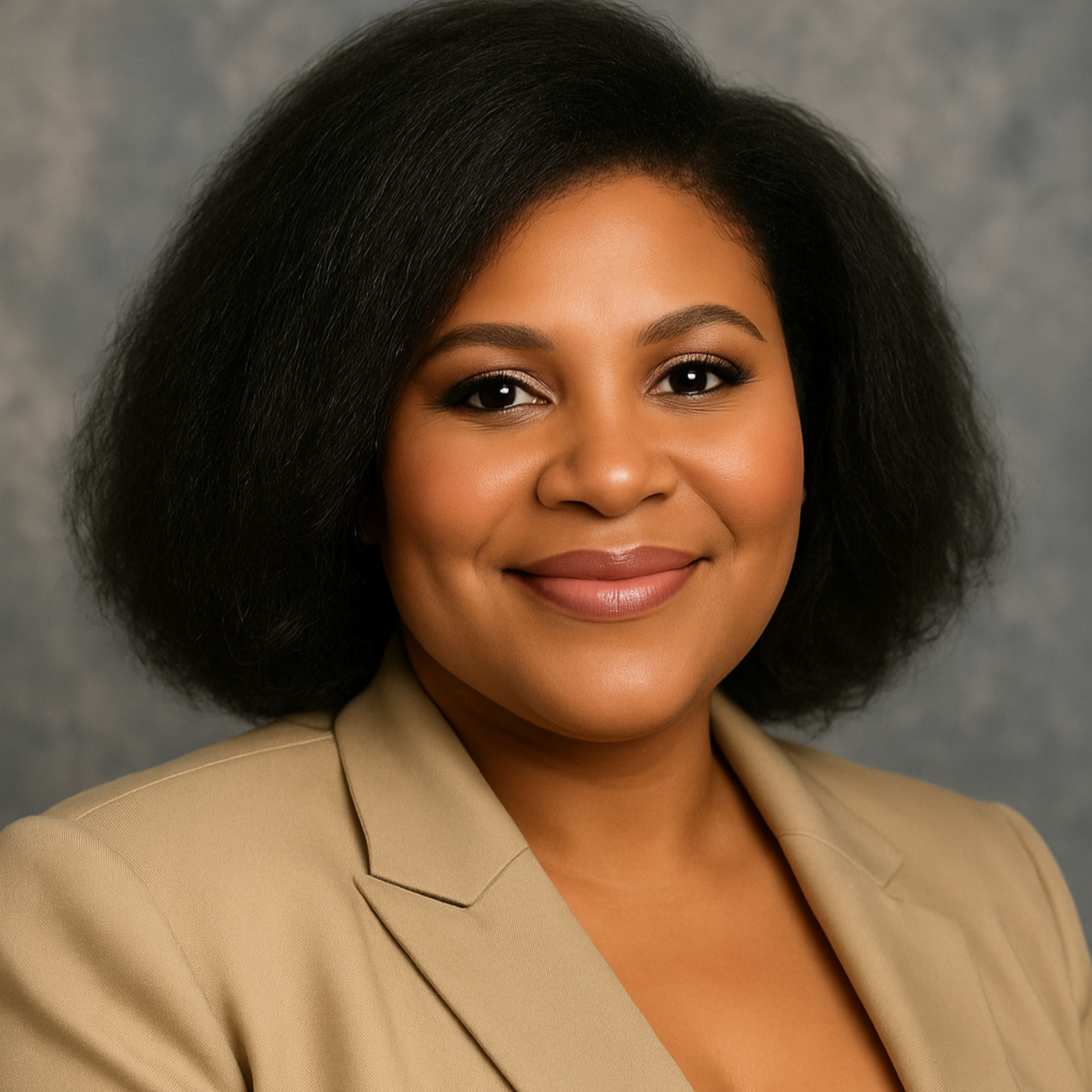
Elisha's Space: You know that feeling, the one that comes right after you say no, or even just think about saying no to someone you love, someone in your family, someone in your church. Your stomach drops, your chest tightens, And before the word is even fully out of your mouth, the guilt hits like a wave. Was that selfish? Was that unchristian? Am I being unloving? And so the boundary never gets fully set. You swallow it. You show up anyway. You sit in the parking lot of your mother's house or your church or Or your friend's wedding and your body is screaming. But you walk in anyway, because the shame of saying no feels worse than the cost of saying yes. Nothing is wrong with you. Your body is doing exactly what it was designed to do. It learned a long time ago that keeping the peace meant staying safe, that love meant compliance, that no was a threat to belonging. But that's not the whole story. And today we're going to talk about what's actually happening in your nervous system, in your theology, and in your relationships, when setting a boundary feels like betrayal. Stay with me. Welcome to Elisha Space, a sanctuary for healing growth and for the kind of honest conversations that actually change things. I'm Elisha, your host, counselor, and author, and someone who has sat in the same stuck place as you have. If you've been listening for a while, I see you and I'm glad you're back. And if you're new here, welcome home. Today's episode is Practical Clinical Bud Pastoral. We're talking about boundaries. Specifically Christian boundaries in relationships, why they feel so impossible, why your body reacts before your brain can catch up, and why so many of us have been handed a theology of love that leaves no room for the word no. And I want to give you a framework today, not a list of rules, not a just be assertive pep talk, but a nervous system-informed, scripture-grounded way. Of understanding what a boundary actually is and what it isn't. So the next time you need to set one, you have something to hold on to. So let's do it. Let me name something you already know, but maybe you haven't heard said out loud. In many Christian spaces and many Christian families, love got defined as always being available. Never disappointing anyone. Turning the other cheek so many times your face is bruised and interpreting die to self as erase yourself. And if you grew up in a high control environment, a rigid church, a family system where questioning anything got you labeled rebellious or unspiritual, then the word boundary doesn't just feel uncomfortable, it feels dangerous. It feels like sin. I've sat with many people in my counseling practice, brilliant, faithful, devoted people, who will look at me and say, I know I should set a boundary, but I can't. It feels like I'm abandoning them. It feels like I'm being unchristian. And here's what I tell them: a boundary is not a wall. A boundary is not a punishment. A boundary is not a rejection. A boundary is a nervous system saying I have reached the edge of what I can hold without collapsing. It is your body's God given capacity for self-protection. The same capacity that makes you flinch when something is too hot, that makes your heart rate change when you sense danger. Your body knows something your theology hasn't caught up to yet. That love your neighbor as yourself assumes there is a self love. You can't offer a self you've erased. This isn't visualization, this is physiology. Okay, let's go deeper because understanding why your body reacts the way it does when you try to set a boundary is the key to changing it. Even when you think about saying no to someone who has historically punished you for saying no, your amygdala, your brain's threat detection system fires. It doesn't fire gently. It fires like there's a predator in the room because to your nervous system. There might as well be. Your vagus nerve, that wandering nerve I've talked about before, the one that connects your brain to your heart, your lungs, your gut. It picks up the signal. And it does one of the three things. It engages your social engagement system. You stay calm, you stay present, you can speak your truth and stay connected. And this is what happens when you feel safe. It drops you into fight or flight. Your heart races, your voice shakes, you either get aggressive or you flee the conversation entirely. This is your sympathetic nervous system saying we're under threat, mobilize. Or and this is the one I see most in the counseling room, it drops you into dorsal vagal shutdown. Your voice goes flat, your body goes numb. You go through the motions of the conversation, but you're not really there. You disassociate. You say yes because saying no doesn't even feel like an option your body will let you access. And then afterward, the shame. The shame of having betrayed yourself. The shame of having said yes when you meant no, the shame of knowing you'll do it again next week. Here's what I want you to understand. That shutdown response is not weakness. It is not a character flaw. It is not a spiritual failure. It is your nervous system protecting you the only way it knows how. By going still, by going quiet. By making you small enough to survive, knowledge isn't just power for trauma survivors. Knowledge is safety. When you know that your body is doing something designed to keep you alive, not something broken, not something sinful, you can start to work with your nervous system instead of against it. You can start to build what I call boundary capacity. The ability to hold your ground without your body treating the ground is a threat. And that's what the framework I'm about to give you is designed to do. I want to introduce you to my framework I use in the counseling practice. It's called Safe. And it's designed specifically for people whose nervous systems treat boundaries as danger. S signal. Before you set a boundary, you have to feel the signal that one is needed. For most of the people I work with, the signal isn't a clear thought. It's somatic. It's a tightness in the throat and not in the stomach. A sudden urge to leave the room, a flood of shame that seems to come from nowhere. Your body is signaling a boundary before your mind names it. The first step is to hear the signal without overriding it. Right now, wherever you are, if you're driving, keep your eyes open, just notice. If you're sitting, close your eyes for a moment. Bring your attention to your throat, your jaw, your chest. Is there tension there? Tightness in your forehead, your jaw, a pulling in your throat? That tension is information, it's not anxiety, it's not you being too sensitive, it's your body telling you that something, a person, a demand, an expectation is pressing against the edge of what you can hold. Let your nervous system hear that you are listening. That's all. Just listen. A anchor. Once you've heard the signal, you anchor, not in the other person's reaction, in your body, in your breath, in the present moment. Because if you try to set a boundary from a dysregulated state, from fight, flight, or shut down, it will come out as an explosion or a collapse. Neither one holds. Anchoring means feet on the floor. Exhale longer than you inhale. Feel the chair, the ground, the physical reality of where you are. You're not in the past. You're not in the imagined future where they're angry at you. You're here right now. And from here, you have choices. F frame. This is where theology meets neurology. You frame the boundary not as something you're doing to someone but as something you're doing for the relationship. A boundary says, I am choosing to stay in relationship with you. And for me to stay, genuinely, sustainably, without collapse, I need this. It's not a door slamming, it's a door staying open. With a frame that can hold both people. The reframe matters because your nervous system needs it. If you frame the boundary as I'm being mean, I'm being selfish, I'm being unchristian, your body will sabotage the boundary before the words leave your mouth. But if you frame it as I am caring for the vessel God gave me so that I can love well. Your body recognizes that as safety. His peace is not dependent on your circumstances being resolved. It is a regulated nervous system in the presence of a safe God. E Express. Expression doesn't have to be confrontation. Sometimes it's a sentence. Sometimes it's a change in behavior. Sometimes it's a text. Sometimes it's the first time you say. I need to think about that before I answer, instead of the automatic yes. The expression can be small. It just has to be real. Now I want to address the elephant in the room because I know what some of you are thinking. But doesn't scripture say to turn the other cheek, to go the extra mile, to lay down your life for your friends? Yes. And I am not going to pretend those verses aren't there. But I am going to tell you what I tell my clients. Context matters. Text without context is a weapon. Turn the other cheek. Matthew 5.39. Was Jesus naming a system of oppression? Roman soldiers would strike a subject with the back of their hand, a gesture of domination, not combat. Jesus was saying don't internalize the denomination. don't absorb the lie that you are less than. It was a subversion of power, Not a prescription for staying in abusive relationships. Go the extra mile, Matthew 541. Roman law allowed soldiers to compel civilians to carry their gear for one mile. Jesus said, Go too, not because you're weak, because you're so free that you can't be controlled by the other one mile. The second mile was an act of sovereign generosity, not submission. Lay down your life for your friends fifteen thirteen. Jesus said this himself, about a specific, willing, chosen sacrifice, not about you erasing yourself so other people never have to feel uncomfortable Here's a theological refrain. Boundaries are stewardship. Your nervous system is something God designed. Your capacity is something God gave you. Your no is part of how you steward the body, the mind, the spirit, the relationships he entrusted to you. When Jesus Himself withdrew to lonely places to pray, to rest, He was modeling a boundary. He didn't heal everyone, he didn't go to every village, he said no to good things so he could say yes to to the God ordained things. And if Jesus, sinless, perfect, fully God and fully man, if he set boundaries, then maybe your boundary isn't sin, maybe it's obedience. Okay, we've gone deep into the why. Now I want to give you something to do. This is a somatic practice I use with my clients. I want you to have it in your body, not just in your head, so that the next time you're in that moment where someone is asking for something you can't give, you have a physical anchor. I call it safe boundary breath. If you're driving, just listen. Don't close your eyes, you can come back to this later. If you're somewhere safe, I want you to settle. Feet on the floor, hands resting. Wherever they want to be, on your lap, on your chest, if that feels right. Take a breath in through your nose for counts. And exhale through your mouth. Six counts. Longer than the exhale, that's what tells your vagus nerve safe. Again, N for four. Out for six. Now, bring to mind not the person you're dreading, but the feeling, the physical feeling you get when a boundary is pressing against you. That tightness, that dread, that collapse. Don't fix it. Don't push it away. Just let your nervous system hear that you are not running from it. Now place one hand on your chest over your sternum and the other on your belly. And say out loud or in your mind, this is my body, this is my signal, ⁓ This is information, not threat. I am allowed to feel the edge of what I can hold. I am allowed to say no, and I am allowed to say it from a place of love, not from a place of fear. Let your hands rest there. Feel the warmth of your own hand on your own body. That contact, that pressure, that's co-regulation. You are offering your own nervous system the safety of touch. You don't need another person to do this. You can do this for yourself. And when you're ready, one more breath in for four. Out for six. Come back. Open your eyes if they were closed. Fill the room. You're here. I want to close with a prayer and then a breath prayer. Something you can carry with you into the moments where a boundary feels like betrayal. Father, I am grateful that you made these bodies, that you knit together the very nervous systems that we are learning to regulate. That the vagus nerve, that wandering nerve, is not an accident, it's your design, your provision, your tenderness woven into our physiology. Ungrateful that you are not a God who demands our eraser. That when you said love your neighbor as yourself, you assumed there was a self worth loving, that you designed us with limits. Not as flaws, but as grace notes, as built-in mercies. For every person listening who has swallowed a no so many times they've forgotten what it sounds like. I ask for the courage to find it again. Not as a weapon, but as a door, a door that stays open because it has a frame strong enough to hold it. For every person who has been told that their boundaries are sin, I ask for the theological refrain to land in their body, not just their mind, that they would feel the truth of it, that stewardship is not selfishness, and that no can be an act of love. And for the relationships that need adjusting, not ending, but adjusting. I ask for wisdom, for timing, for the words, And for the nervous system regulation to save them from a place of safety, not survival. And now the breath prayer. This is simple. You inhale one phrase, you exhale the next. Inhale, I am allowed. Exhale to be safe. Inhale I am allowed. Exhale to be whole. Inhale, I am allowed to Exhale to say no. Carry that with you this week into the conversations, into the parking lots, into the rooms where your body wants to collapse. Inhale, I am allowed. Exhale to be safe. Now I want to give you a challenge. Seven days. Day one, notice one signal. Just notice. Don't act on it. Don't set the boundary. Just listen to your body and name what you feel. There's tightness in my throat. That's a signal. Day two, anchor. When you feel the signal, practice the safe boundary breath. Feet on the floor. Exhale longer than inhale. One hand on your chest, that's it. Day three, frame. Write down in your journal, on your phone, anywhere, one boundary you've been avoiding. Then write the refrain. This boundary is stewardship, not sin. It is caring for the vessel God gave me. Day four, express. Small. Not the big conversation, just one micro expression. I need to think about that. Let me get back to you. I'm not sure yet. One sentence that replaces the automatic S. Day five, express. Slightly bigger, tell one safe person about the boundary you're working toward, not the person the boundary is for. A safe friend. Practice saying it out loud. Day six, reflect. How did your body respond this week? Did the signal get louder? Quieter? Did the breath help? Write it down. Day seven, rest. Actually, rest. Your nervous system has been doing hard work this week. Let it recover. Do the breath prayer. Lie down. Let your body feel safe. Seven days, small steps. This is how you build boundary capacity. Not by forcing a confrontation, but by training your nervous system that know it's not a threat to your survival. If this episode helped you, share it. Text it to one person you know is struggling. One person who keeps showing up when they're empty. One person who's been told that their boundaries are not Christian. One person whose body is screaming what their theology has yet to catch up to. You can find more resources, including the Start Guide for Somatic Regulation and the Sanctuary Style Method for Nervous System Safety and Shame Recovery at elishaspace.onpodium.com. And if you're not already part of our community, come find us. We are on YouTube, on the podcast, and in spaces where healing is real, not performative. Until next time. You are not too much, and you are not too far, and you are not alone.
 Apple Podcasts
 Castbox
 Castro
 Goodpods
 Moon FM
 Overcast
 Pocket Casts
 Podbean
 Podcast Addict
 Podcast Republic
 Spotify