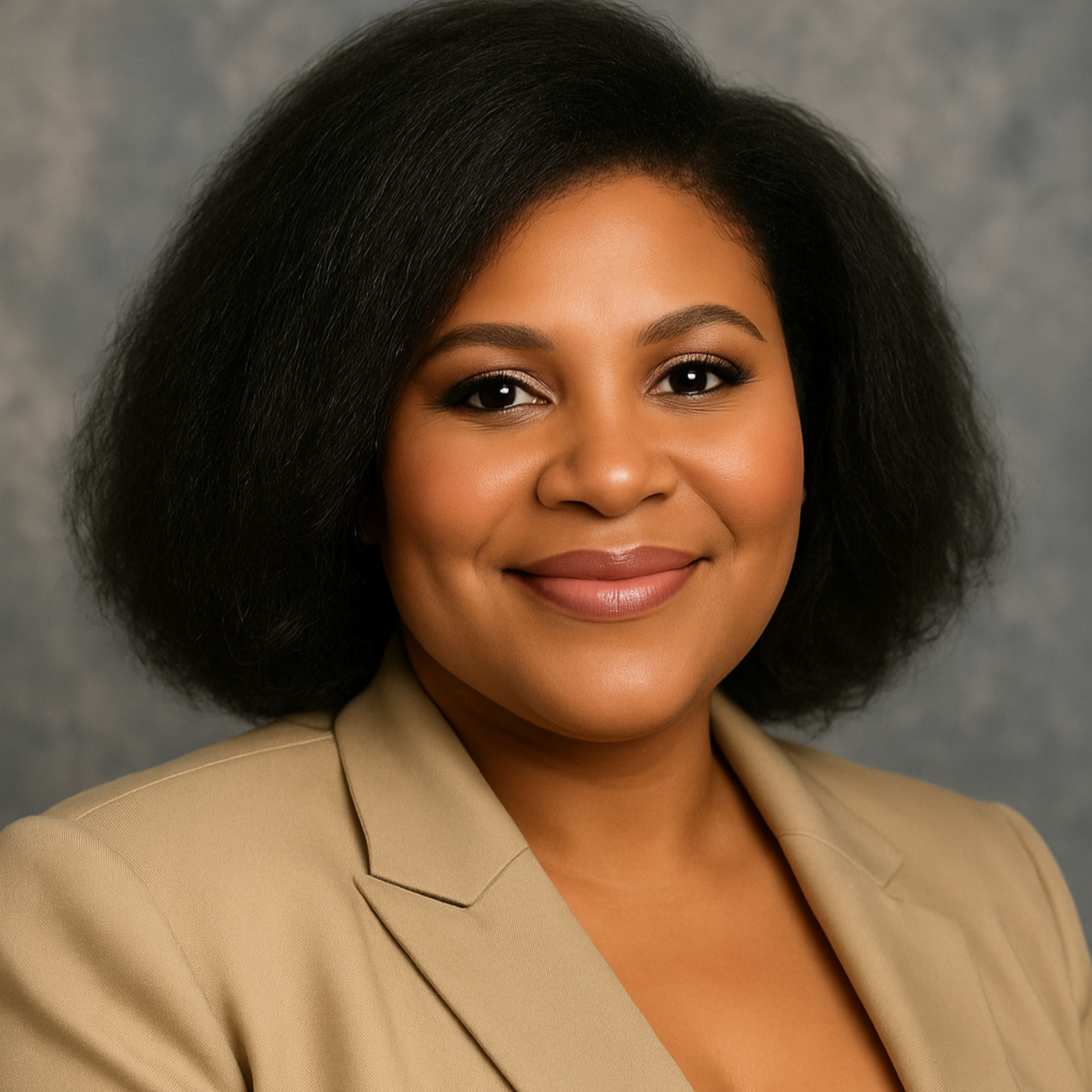
Neuroplasticity and Faith: How Romans 12:2 Literally Rewires Your Trauma
Tonight's Episode
Can your brain actually change after trauma? Science says yes — and Scripture has been saying it for two thousand years.
In this episode of Elisha's Space, counselor and author Elisha Lee bridges the science of neuroplasticity and faith — showing how Paul's words in Romans 12:2 are not just theology. They're neurobiology. And how the faith practices you already know literally rewire your trauma responses.
If you've been healing, praying, and still feeling stuck — this episode is for you. This isn't about trying harder. It's about understanding the biology God built into you.
🧠 WHAT YOU'LL LEARN IN THIS EPISODE
✦ What neuroplasticity is — and why it changes everything for trauma survivors
✦ How trauma physically changes the brain (amygdala, hippocampus, prefrontal cortex) — explained without shame
✦ The Greek word metamorphoo in Romans 12:2 — and what it reveals about brain science y
✦ Why Romans 12:2 is a neuroplasticity protocol hiding in plain sight
5 Ways Faith Practices Literally Rewire Your Brain:
→ Scripture meditation and cognitive reappraisal
→ Prayer and parasympathetic nervous system activation
→ Christian community as co-regulation
→ Gratitude and the brain's negativity bias
→ Worship and whole-brain integration
✦ A guided Neural Renewal Practice (pause and do it with me)
✦ A 7-Day Neuroplasticity Challenge you can start today
📖 SCRIPTURES REFERENCED
• Romans 12:2 — "Be transformed by the renewing of your mind" (metamorphoo = structural transformation)
• Philippians 4:8 — "Think on these things" (a neuroplasticity protocol before neuroscience had a name)
• Psalm 34:8 — "Taste and see that the Lord is good" (embodied, present-moment awareness)
• Hebrews 10:25 — Co-regulation through community
• 2 Corinthians 10:5 — "Taking every thought captive"
• Isaiah 40:31 — Renewal of strength
✨ THE 7-DAY NEURAL RENEWAL CHALLENGE
Do all three, every day, for seven days:
- A scripture anchor — read one verse slowly each morning
- A somatic check-in — hand on chest, notice 3 things (60 seconds)
- A gratitude record — one specific, sensory moment from today
You are literally building new neural pathways. This is anakainosis in practice.
💬 KEY QUOTE FROM THIS EPISODE
"His peace is not dependent on your circumstances being resolved. It is a regulated nervous system in the presence of a safe God."
🌿 FREE RESOURCE — The S.T.A.R.T. Guide
Your first step toward nervous system safety — a somatic regulation guide built for trauma survivors in faith communities.
👉 Download at: https://elishas-space.onpodium.com
ABOUT ELISHA LEE
Elisha Lee is a counselor, author, entrepreneur, and Founder of Restoring You Christian Counseling. Elisha's Space is a sanctuary for faith-based trauma healing, nervous system regulation, and the kind of honest conversations that actually change things.
The Sanctuary Style Method bridges clinical psychology with spiritual guidance — because your biology and your theology were always meant to work together.
CONNECT + CONTINUE HEALING
🌐 Website & Resources: https://elishas-space.onpodium.com
Podcast: Elisha's Space — available on all major platforms
If this episode helped you, share it. Text it to one person you know is struggling.
Elisha Lee: You've been in the Word, you've been praying, you've been doing everything the church told you to do. And maybe you've been doing everything the therapist told you to do too. And something in you is still responding to the past, still flinching at a certain tone of voice, still waking up at 3 a.m. with your heart already racing, still collapsing into your shame. After a moment of anger and you couldn't explain and couldn't stop, and the question you haven't said out loud, maybe because it feels too dangerous, is this. Am I too damaged to be different? I want to answer that question today, scientifically and scripturally. And I want to show you that your body, your brain, and your God were designed for exactly the kind of change you've been afraid to hope for. Welcome to Elisha Space, a sanctuary for healing growth and for the kind of honest conversations that actually change things. I'm Elisha, your host, a counselor, an author, and someone who has sat in the same step places you have. If you've been listening for a while, I see you and I'm glad that you're back. If you're new here, welcome home. Today's episode is practical, clinical buttonsal. Today we are talking about neuroplasticity and we are talking about Romans 2. And we are going to discover that when Paul wrote about the renewing of your mind, he was not writing poetry. He was describing a neurobiological process that science wouldn't formally validate for nearly 2,000 years. The title of this episode is Neuroplasticity in Faith. How Romans 12.2 literally rewires your trauma response. So stay with me. Before we go anywhere, I want to invite you to take a breath with me. If you've been in your head today, if you drove here, if you're folding laundry, if this is the first quiet moment you've had, I want you to come into your body for just a moment. Take a breath in through your nose. Hold it gently. And exhale slowly through your mouth. One more time in through the nose. Feel your chest and belly expand. And out slowly completely. You are here, you're safe, and what I'm about to share is not just information, it is permission. So receive it as such. Here is what I see in my counseling practice over and over again. Someone comes in. They've been a believer for 20 years. They love God. They have forgiven the people who hurt them, or at least they thought they had. They read their Bible. They have accountability. They are doing everything right and their body is still stuck. Their nervous system is still running a threat protocol that was written 30 years ago. And when I explain what is actually happening neurologically, the first thing that happens is tears. Not because it's sad, because it's the first time it's made sense. Because what most of us were told in the church. In our families, sometimes even in therapy, is that healing is mostly about deciding, about choosing to forgive, about choosing to trust, about choosing to believe something different. And deciding is real, choice is real. I'm not minimalizing that, but healing is also biological, structural, and God, in his design, made it so that our biology and our theology are not in conflict. They are always meant to work together. Let's talk about your brain. For most of human history, and well into the twentieth century, scientists believe that the brain was essentially fixed after childhood. The connections form in those first years of life, and after that the brain is largely static, set, unchangeable. That idea was wrong. What neuroscience has confirmed is that your brain is neuroplastic. Neuron. Referring to your neurons, your nerve cells, plastic, meaning changeable, moldable, adaptable. Your brain can grow new neural connections. It can reorganize existing pathways. It can quite literally be rewired. The mechanism behind this is sometimes summarized as Heb's law. Neurons that fire together. wired together. When two neurons activate at the same time, repeatedly the connection between them strengthens. The pathway becomes more efficient, more automatic, more like a highway than a dirt road. This is why habits form. This is why responses become automatic. And this is why trauma gets stuck in the body long after the event is over. When something traumatic happens Your brain and nervous system encode that threat. The sounds, the sensations, the emotional meaning of it as a survival pattern. And your nervous system, which is brilliant and loyal, keeps that pattern on alert. Because the last time it encountered something similar, it needed to respond fast. So the problem isn't that your nervous system is broken. It's that it is doing exactly what it was designed to do. protect you. But the threat is gone and it doesn't know that yet. Knowledge isn't just power for trauma survivors. Knowledge is safety. When we experience trauma, whether that's childhood harm, religious abuse, relational betrayal, or a single overwhelming event, or the slow drift of chronic stress, three regions of the brain are affected in ways you need to understand. The amedulla, your brain's threat detection center, becomes hyperactivated. Its sensitivity dial gets turned up. It starts scanning for danger constantly, even when you're at the kitchen table having breakfast. The hippocampus, which is responsible for processing memories and placing them in proper time contacts. This is the part that says, that was then, this is now. The hippocampus actually shrinks under prolonged stress, which is why which is part of why trauma memories don't feel like memories. They feel like present reality. And the prefrontal cortex, the part of your brain responsible for rational thought, for self-regulation, for making meaning. The prefrontal cortex essentially goes offline. When the amygdala is firing. This is not weakness. This is not a lack of faith. This is not failure to just let it go. This is a nervous system trained to keep you alive when the tools it has. And here is where it gets hopeful. Because neuroplasticity means none of this is permanent. These pathways can change. New patterns can be learned. The hippocampus can regrow. Studies on trauma survivors and treatment have documented measurable hippocampal growth with sustained safe intervention. The amygdala can be recalibrated. The prefrontal cortex can be trained to regulate more effectively. Your brain can heal, not as a metaphor, as a neurobiological fact. And now I want to take you to Romans 12.2. Do not conform to the pattern of this world. But be transformed by the renewing of your mind. Most of us have heard this verse so many times that we have stopped hearing it. I want you to hear it today with fresh ears. Because there are two Greek words in this verse that will change everything. The word transformed is metamorphoo. Your recognized part of that word, it's the same root as metamorphosis, the same word we use to describe. A caterpillar becoming a butterfly. This is not surface change. This is not behavior modification. This is not trying harder. Metamorphoo describes a fundamental structural change, an inside out transformation of the very architecture of what was there before. Paul is not describing willpower, he is describing neuroplasticity. Now the phrase the renewing of your mind is The Greek word for renewing is anakinosis. It means a renovation, not a demolition. A renovation takes the existing structure and rebuilds it into something new, something functional, something livable. Your brain, your actual physical, God made brain was designed for anakinosis. The Apostle Paul, writing in the first century, was describing a biological process that Christian neuroscience Is only beginning to formally map. This isn't visualization. This is physiology. I want to take a moment here because I know someone is listening right now who has been told, maybe by a well-meaning pastor, maybe by a parent, maybe by your own inner critic, that if you were really surrendered, if you were really trusting, you would be healed by now. I want to speak directly to you. Healing takes time not because God is withholding from you, but because your biology is part of the miracle. He made your brain, he made its plasticity, and he made it so that transformation happens in relationship with him, with safe others, and with your own body's capacity to learn. His peace is not dependent on your circumstances being resolved. It is a regulated nervous system in the presence of a safe person. So what does this mean practically? How do faith practices actually create neuroplastistic change? Let me give you five specific mechanisms. Number one, scripture meditation creates new neural pathways. Philippians 4.8. Whatever is true, whatever is noble, whatever is right, whatever is pure, whatever is lovely. Think about such things. This is a neuroplasticity protocol. When you deliberately direct your attention towards what is true, not what feels true, but what is true, you activate different neural networks. You strengthen the connection between your prefrontal cortex and your emotional regulation centers. You practice what neuroscientists call cognitive reappraisal. And research shows it measurably decreases amygdala. reactivity over time. Paul wrote Philippians from prison. He wasn't describing toxic positivity. He was describing what he had learned through practice to do with a mind under threat. Number two, prayer regulates the nervous system. Prayer, specifically slow, contemplative, intimate prayer, activates the sympathetic nervous system, the same branch we use to activate with breathing exercises. The rest and digest branch. Studies on contemplative prayer show measurable changes in brain activity, including in the prefrontal cortex, the anterior cingulate cortex, and the insula, which is responsible for interoception, our ability to sense what is happening inside our own bodies. When you pray, you are not just communicating with God, you are training your nervous system. And what it feels like to be safe. Number three, Christian community provides co-regulation. We are wired for a relationship. Human nervous systems regulate each other. This is called co-regulation. And it happens automatically through eye contact, voice tone, and physical presence. Hebrews 10 25. Let us not give up on meeting together, as some are in the habit of doing. But let us encourage one another. This was not just organizational advice for the early church. This is biology. When you are with people who are regulated, whose nervous systems are calm and present, your nervous system learns from them. You borrow their regulation until you can build your own. This is why isolation is so dangerous for trauma survivors, and why Safe Community is genuinely therapeutic. Number four, gratitude practices reshape the brain's negativity bias. The brain, by design, scans for threats more readily than it registers safety. For trauma survivors, this bias is amplified. Gratitude practices, deliberately noting what is good, what is safe, what is true, activate the brain's reward circuitry and over time shift the brain's baseline orientation from Threat detection towards what researchers call a broadened and built state. Psalms 34.8. Taste and see that the Lord is good. Taste, see. These are sensory embodied present moment words. David was inviting his readers into the practice of noticing goodness, of training the nervous system towards safety. Number five, worship integrates the fragmented brain. Music is neurologically unique. It engages the left and right hemispheres simultaneously, activates the limbic system, the motor system, and the prefrontal cortex. For trauma survivors who often experience fragmentation where different parts of the self are disconnected, the integration that embodied worship provides is not just spiritual, it's a neurological. Let your nervous system hear that you are not running from it. Before we move into the practice, If you are finding this episode helpful, I want to ask you to do one thing right now, even before you finish listening. Share it. Text it to one person. Not because I need their numbers, but because someone you know is sitting in the same confusion, wondering what is wrong with them. And sometimes the most healing thing isn't another appointment. It's just finally having language for what you're living. Okay? Let's do it. I want to walk you through a practice I call the neural renewal practice. It's grounded in somatic neuroscience and in the ancient pattern of Lectio Divina, sacred embodied reading of scripture. If you're driving, please hold this for later. This is for when you can be still. Find a comfortable position. Let your feet be flat on the floor. Seal the ground underneath you. Place one hand over your chest. Notice the warmth of your own touch. This simple act activates the vagus nerve, the same nerve that regulates your heart rate, your breath, and your body's sense of safety. Now I want you to bring Romans twelve two to mind, not to analyze it, not to perform it, just let it be present. Be transformed by the renewing of your mind. Say it quietly, internally, or aloud if you're alone. Take a breath in, slowly through your nose. And on the exhale, release the word transformed. Notice what happens in your body when you receive that word, not as a command, but as a promise. Your brain is hearing this. Your nervous system is receiving it. Neurons are firing. Connections are forming. This is not metaphor. This is not wishful thinking. This is anakinosis. Neuroplasticity in the presence of the living God. Take one more breath in. And exhale slowly, completely. When you're ready, bring your awareness back to the room. Let's pray. Father, thank you that you made us with brains that can change, that you built plasticity into the very structure of our neurons before we ever needed healing. You had already designed the mechanisms for it. Father, I am grateful that you made these bodies, that you knit together the very nervous systems that we are learning to regulate. For everyone listening today who has been trying to heal and wondering why it's taking so long, would you speak into the biology of it? Would you show us that your grace is sufficient even in the slow work? That metamorphude is a process, not a moment. Renew our minds, Father, not just our thoughts, our neural pathways, our default responses, our embodied memory of who we are, and who you are to us. Let your peace, which passes understanding, which is a regulated nervous system in the presence of a safe God, be what guards our hearts and minds in Christ Jesus. In his name, amen. Before I let you go, I want to give you a challenge. Seven days, three practices. Day one through seven, do all three every day. Practice one, a scripture anchor. Choose one verse about your identity, God's character, or the promise of your healing. Romans twelve two, Isaiah forty thirty one, Psalms fifty one ten. Any of these work beautifully. Read it once in the morning, slowly, like you're hearing it for the first time. You're not performing a devotional, you're building a neuropathway. Practice too, a somatic check. Once a day, 60 seconds is enough. Place your hand on your chest. Notice three things. The warmth of the contact. Where your breath is going. And one thing in your environment that feels safe right now. You are training your nervous system to notice safety, not just threat. That is anaconosis in practice. Practice three, a gratitude record, not a list of blessings to perform, one specific sensory moment from today that you can taste and see. The coffee that was warm, the light through the window, one text from a friend that said, I was thinking of you one thing every day for seven days. That's it. And you will be literally measurably creating new neuropathways. If you take this challenge, I want to hear about it. Come find us. Tell me what God is doing in your brain. If this episode helped you, if something in here gave language to something you've been living, share it. Text it to one person you know is struggling. Because sometimes the most healing thing isn't another appointment or another program. Sometimes it's just finally knowing that your biology isn't betraying you. That your brain was made for this. That Paul knew what he was writing. That God knew exactly what he was building when he built you. You can find all our episodes, the start guide, and more at elishaspace.onpodium.com. And until next time, you are not too much, and you are not too far, and you are not alone.
 Apple Podcasts
 Castbox
 Castro
 Goodpods
 Moon FM
 Overcast
 Pocket Casts
 Podbean
 Podcast Addict
 Podcast Republic
 Spotify