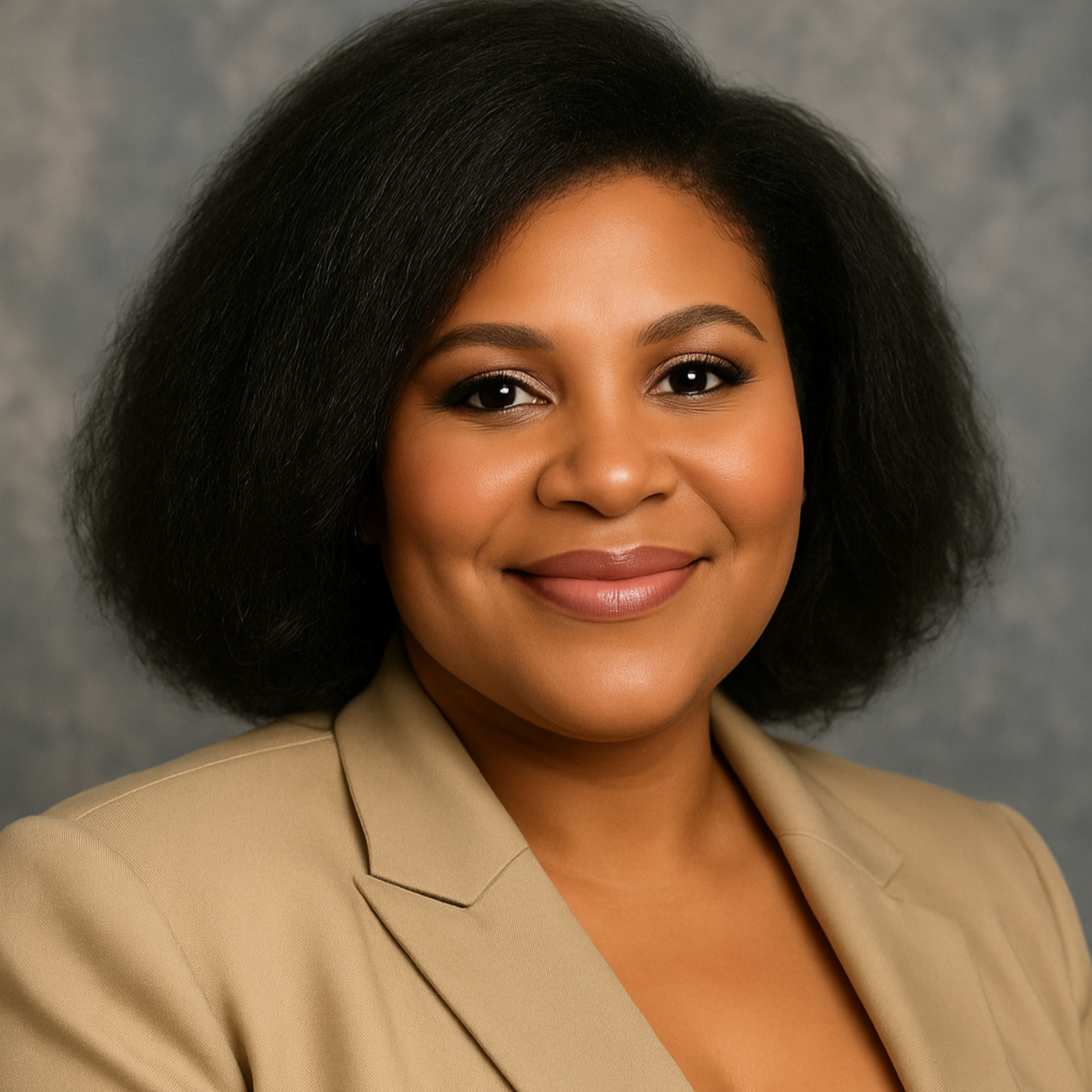
Spiritual Trauma and Physical Anxiety: Understanding and Healing from Within
Tonight's Episode
Are you struggling with unexplained anxiety, insomnia, or chronic tension that seems to have no clear cause? The root of these symptoms may lie in your spiritual trauma. In this episode, Elisha explores how spiritual trauma physically manifests as anxiety, blending counseling strategies with faith-based perspectives for comprehensive healing.
Elisha unpacks polyvagal theory, somatic neuroscience, and spiritual trauma healing to give you a clear understanding of why your body holds spiritual wounds differently from your mind. Discover the 5 ways certain spiritual environments can dysregulate your nervous system and learn the R.E.S.T. Framework — Regulate, Experience, Surrender, Trust — complete with practical exercises to promote nervous system regulation and trauma recovery.
This episode also introduces Somatic Body Prayer, a healing practice designed to nurture your whole being and explains why co-regulation is a powerful form of neurological medicine, not simply emotional support. Tune in for an enriching discussion on faith, counseling, and personal growth that offers hope for overcoming overwhelm and spiritual burnout.
Elisha's Space: Your heart is racing and you're not in danger. Your chest is tight and nothing happened today. You wake up at 3 a.m. and your body is vibrating with a fear that has no name and you've prayed about it, you've rebuked it, you've claimed scriptures over it and it's still there. And somewhere on the back of your mind, a voice tells you that this means your faith isn't strong enough. I am here today to tell you that voice is wrong and your body is not broken. Your body is doing exactly what it was designed to do. It's just responding to something that most people never talk about it. Today, we're going to talk about it. Welcome back to Elisha Space. I'm Elisha, counselor, author, entrepreneur, and this is the place where we have the conversations that the rest of the world tends to skip over. If you are new here, I am so glad you found this episode. And I want to say upfront, wherever you are in your journey, Whether you're just beginning to name what happened to you spiritually, whether you're years into healing, or whether you're in that murky middle place where you're not quite sure what you believe anymore, you are welcome here, all of you. Today's episode is one I've needed to record for a long time because I sit across from people every week who come to me for one thing. and they think that thing as anxiety. They tell me about the racing heart, the insomnia, the digestive issues, the chronic tension headaches, the sense of dread that lives in their chest like a permanent tenant. And when I start asking questions about their history, their communities, their spiritual lives, a pattern emerges every single time. There is an unseen link between spiritual trauma and physical anxiety that is not being discussed enough, not in the church, not in most therapy offices, and not in the broader mental health conversation. Today, we are going to discuss it. We are going to go deep into the science, into the scripture, and into the practical, because I am not going to leave you with a beautiful framework and no tools to use. So settle in, get comfortable. and let's breathe first. Before we go into the teaching today, I want us to actually drop into our bodies because this episode is about the body and it would be ironic to process all of this from the neck up. So wherever you are right now, driving, walking, sitting, folding laundry, I want you to take one moment to feel your feet. Notice the ground beneath you. This is called orienting and it is one of the first tools your nervous system needs to signal safety. Now let's breathe together. This is the four, four, six pattern. Inhale through your nose for four counts. One, two, three, four. Hold for four. One, two, three, four. And exhale slowly through your mouth for six. One, two, three, four, five. six again inhale two three four hold two three four exhale two three four five six one more time inhale two three four hold two three four exhale two three four five six good Notice your shoulders. See if you can let them drop just a fraction. That exhale you just took. That six count breath out. That is your vagus nerve activating. That is your body's built in calming system responding to a signal you gave it. We're going to talk a lot more about that today, but I wanted you to feel it first because the body learns through experience, not just information. Okay? Let's go. Dr. Russell van de Koke, whose work I reference constantly in this space, wrote a book that changed the way the clinical world understands trauma. And the title says everything. The body keeps the score. Four words that have restructured how I work with clients. The body keeps the score. Not just the mind, not just the memory, the body. What he found across decades of research is that traumatic experiences are not just stored as memories in the brain. They are encoded in the body's nervous system, in muscle tension, in gut flora, in the way your heart rate responds to a particular tone of voice, a particular phrase, a particular smell, long after the threat is gone. Here is where it gets specific to what we're talking about today. Spiritual trauma, the wound that comes from having sacred space, spiritual authority, or God's name used to harm, control, or diminish you. It's not just a theological crisis. It is a body-based wound. Because what happens in high control or spiritually abusive environments doesn't just happen to your beliefs. It happens to your nervous system repeatedly over time until your body stops distinguishing between church and danger. And by the time many of my clients find their way to my office, their nervous systems have been running a low grade emergency signal for years, sometimes decades. And they come to me wondering why they're anxious. Let me take you into a little bit of neuroscience. And I promise I'm going to make this accessible. This is not a lecture. This is a map. And you deserve to have a map of your own body. In the 1990s a neuroscientist named Dr. Steven Porkus developed what he called polyvagal theory. And what it describes is so important for trauma survivors that I use it as a foundation in almost every clinical case I work with. Here's the short. version. Your nervous system has three primary states, three modes. The first is ventral vagal. This is your rest and connect state. This is where your nervous system lives when it feels safe. You can think clearly. You can connect relationally. You can feel joy. You can learn your body is regulated. The second is sympathetic activation. This is your fight or flight response. Your body perceives a threat, real or perceived, and it floods your system with cortisol and adrenaline. Heart rate accelerates, breathing shortens, muscles tighten. Your digestive system slows down because your body doesn't care about digesting lunch right now. It cares about survival. And the third is dorsal vagal collapse. This is freeze, shut down. When the threat is so overwhelming and so inescapable that the nervous system stops fighting and simply goes numb. You might know this as depression that descends like a fog, disassociation, feeling completely disconnected with your own life. Now, here's why this matters. Many high control spiritual environments are neurologically environments of chronic threat. not always dramatic threat, not always shouting or obvious abuse. Often it's subtle. It's the Sunday morning service where you never know if you're going to be called out from the pulpit. It's the constant surveillance of your behavior, your relationships, your emotional life. It's the theology of punishment, the God who is always watching for your failures. It's the systematic dismantling of your trust. in your own perceptions. That is called chronic stress. And when your nervous system lives in chronic stress, when it is activated month after month, year after year, something happens physiology that cannot simply be resolved by trying harder to believe. Your HPA axis, that is your hypothalamic pituitary adrenal system. The cascade that regulates your stress hormones begins to misfire. Your cortisol levels become dysregulated. Your vagal tone, the flexibility of your nervous system to move between states, weakens. And that's what looks like on the outside is anxiety that seems to come from nowhere. A body that cannot fully relax. even in safe environments, sleep disturbances, digestive issues, chronic tension, a sense of impending doom that has no logical source. This is not a faith problem. This is a nervous system that was shaped by its environment and you can reshape it. That's the whole second half of this episode. I want to tell you about a woman I'll call Grace. Grace came to me after leaving a ministry she had been a part of for 11 years. On paper, she was doing well. She had a new church, a much healthier one. She had a therapist. She was reading the right books. She was doing everything she was supposed to. But her body had not gotten the memo. She told me she would wake up every single morning at 4 47 a.m. Almost to the minute. with her heart pounding, no nightmare, no sound, just terror. And then she'd spend the next two hours trying to pray herself back to calm, which sometimes worked and sometimes made it worse because even the act of praying had become associated with the environment that hurt her. She also had, and she was almost embarrassed to tell me this. She had developed what she called a church smell response. Certain scents, candles, a particular cleaning product, even the smell of a printed bulletin would trigger an immediate physical reaction. Her chest would tighten. Her hands would go cold. She'd feel nauseated. When she described this to me, she said, is something wrong with me? I feel like I'm going crazy. And I said, Grace, absolutely nothing is wrong with you. Your body is doing something incredibly sophisticated. It learned in that environment. It learned to associate certain sensory cues with threat. And now it's trying to protect you, even when you don't need protection anymore. What Grace was experiencing has a name. It's called condition threat response. And it is one of the most common and least discussed presentations of spiritual trauma. Her anxiety wasn't irrational. It wasn't a lack of faith. It was a nervous system that had been trained in a particular environment and was still running that programming long after she had left. I want to talk about the specific ways that certain spiritual environments, and I'm going to be descriptive rather than accusatory here, because my goal is understanding, not condemnation. Create the conditions for nervous system dysregulation. I'll name five. The first mechanism is fear-based theology. When the primary motivation for spiritual behavior is fear, fear of hell. fear of divine punishment, fear of God's withdrawal. The nervous system processes that as chronic threat signal. Neurologically, A real threat and an imagined threat activate the same pathways in your brain. The amygdala, your threat detection center, does not distinguish between a lion and a thought. If the thought is fear-laden enough, the body responds as if the lion is real. And when that theological framework surrounds you seven days a week in services, in small groups, in devotional material, in the voices of the people you love and trust, the body is receiving a near constant low-grade threat signal. Over time, that is physiologically exhausting, and it produces exactly the kind of baseline anxiety that so many of my clients describe. The second mechanism is unpredictability. Research on stress consistently shows that unpredictable stressors are significantly more damaging to the nervous system than predictable ones. It is better neurologically to know that something painful is coming than to live in constant uncertainty about whether it will. Many spiritually harmful environments are characterized by inconsistency. Rules that change. leaders whose approval is never guaranteed. Standards that shift. What was celebrated last week is condemned this week. What the spirit is saying today contradicts what the spirit said in last year's prophecy. Living in that environment activates chronic hypervigilance, a state of perpetual scanning and threat monitoring. Your nervous system never gets to rest. because it can never predict what's coming next. For most survivals, this hypervigilance outlasts the environment by years. They leave and the nervous system doesn't because hypervigilance was the strategy that kept them safe. And the body doesn't give up survival strategies that easily. The third mechanism is emotional suppression. Many high control spiritual environments with the best of intentions communicate that certain emotions are not acceptable. Anger is sin. Doubt is weakness. Grief is a failure of faith. Depression means that you have an open door to the enemy. The message stated or implied is manage your emotions to maintain acceptance. Neurobiologically, This is catastrophic over time. When we suppress emotion, when we consistently override our body's attempt to process experience, we don't eliminate the emotion. We drive it deeper into the body. this is what Peter Levine, the developer of somatic experiencing therapy, describes as frozen residue, emotional energy that was never completed, never fully processed, gets locked into the body tissues as chronic tension, digestive dysfunction, and over time, anxiety and depression. The body was designed to feel in order to heal. When that process is systematically interrupted, especially in sacred space, where the interruption comes with divine authority, the body pays the price. The fourth mechanism is chronic shame. Shame is arguably the most physiologically disruptive of all the primary emotions. Research by Dr. Brené Brown, whose work I love, and others, shows that shame activates the same neural pathways as physical pain. It is not just uncomfortable, it is neurologically painful. In environments where shame is deployed as a tool of control, where your worth is constantly contingent on your performance, your compliance, your conformity, the nervous system is receiving a repeated pain signal. And chronic pain, even emotional pain. This regulates the nervous system in ways that manifest physically. The chest tightens, the contraction, the inability to breathe fully, the perpetual feeling of smallness in your own body. Shame literally contracts the body and a contracted body is a body that cannot rest. The fifth mechanism. is the one that gets disclosed the least, the loss of safe relational connection. Dr. Stephen Porges's polyvagal theory emphasizes something called co-regulation, the phenomenon by which our nervous systems actually calm and regulate each other in safe relationship. A calm, safe presence communicates safely to your nervous system through facial expression, tone of voice, body language, and conversely, the loss of safe community. The sudden isolation that so often accompanies leaving a high control environment is not just emotionally painful, it is physiologically destabilizing. Your nervous system lost its co-regulators, the people whose calm presence told your body. You're okay, you're safe. And then those people were suddenly gone, sometimes overnight. And your body has been trying to find that signal ever since. This is why isolation is such a potent tool of spiritual control and why rebuilding safe relational connection is not optional in healing. It's neurological medicine. Now. I need to pause here and say something important. For those of you who have had scripture weaponized against you, I want to approach this next part with great care because the Bible is not going to be used here to dismiss what your body is experiencing. It is going to be used to validate it. The Bible is, in fact, one of the most somatically honest texts ever written. When Paul writes in Romans 8 that creation groans and that we ourselves groan inwardly, the Greek word is stanozo. It describes a physical embodied sound of longing and suffering, not metamorphic physical. When Jesus encounters the widow, at the Nan in Luke 7, a woman whose only son has just died. The scripture says he had compassion on her. The Greek word is splenkenesemai, which literally means he was moved in his gut, in his intestines. The divine took on a body and that body responded to human pain semantically. The Psalms are full of semantic language. My heart is in anguish within me. The tears of death have fallen on me. Fear and trembling come upon me and horror overwhelms me. That's Psalms 55. That's David describing what we would now clinically recognize as a panic attack. The psalmist's body was not outside his spirituality. It was his spirituality. His groaning was his prayer. and yours can be too. Your physical anxiety is not a sign that God has abandoned you. In a very real sense, it is evidence that you are still alive, ⁓ that your body is still trying to protect still doing its job, ⁓ even in the aftermath ⁓ of something that never have happened. The task now is not to silence the body. The task is to teach it gently, consistently, over time, that it is safe. Okay, tools. Let's talk about what you can actually do with all of this. I've developed a framework. I call it REST, rest, not because Healing is passive, but because for many survivors of spiritual trauma, the first and most radical act of healing is learning to stop running. REST, R-E-S-T, stands for regulate, experience, surrender, trust. I'm going to walk you through each one and give you a concrete practice for each. are regulate. This is vagal toning. Regulate is the foundation. Before your mind can process what happened to you spiritually, your body needs to feel safe enough to process it. This is where vagal toning comes in. Techniques that directly activate the vagus nerve, your body's primary rest and digest pathway. I want to give you three that you can do right now, today for free. Number one, humming or toning. The vagus nerve runs through your throat. Vibration activates it. So humming, even humming a worship song you love, even humming the tune without the words, if the words feel complicated right now, creates a direct neurological pathway to calm. Try it for two minutes tonight before bed. Hum something. Notice what happens in your chest. Number two, cold water exposure. Splashing cold water on your face or holding your wrist under cold water activates the dive reflex, an automatic slowing of the heart rate. It sounds simple. It is, and it works. When a panic response is building and your breathing is shortening, cold water on your face can interrupt the cycle before it peaks. Number three, the 446 breath, extended exhale. We did this at the top of the episode, but I want you to understand why it works. The extended exhale, breathing out longer than you breathe in, is the most direct signal your body can send itself. that it is safe. The exhale activates the parasympathetic nervous system. Every long exhale is your body saying, the threat is passed, we are okay. Practice this outside of anxiety moments so that when an anxiety moment comes, your body already knows the pattern. Experience is the invitation to feel. E stands for experience. This is the somatic body prayer. Experience is the invitation to feel rather than override what's happening in your body. And for those of us whose spirituality has been complicated, I want to offer something I call somatic body prayer. This is not a performance. There are no right words. Here's how to do it. Sit comfortably. Close your eyes if that feels safe or soften your gaze downward if you prefer eyes open. Bring your awareness to your body and simply ask, where am I holding something right now? Notice where there is tension, tightness, heaviness, numbness. And then rather than trying to fix it, pray it away. Simply bring it gently into your awareness and say, I see you. You are allowed to be here. And then if it feels true for you, place your hand on that area of your body and say, God, you know what lives here. I am not hiding it from you. That's it. That's the whole prayer. You are not performing faith. You are practicing honesty, which in my clinical experience is the most profoundly healing spiritual act available to us. You don't have to have answers. You don't have to have the right theology. You just have to tell the truth about what your body already knows. ⁓ S stands for This practice of safe co-regulation. Surrender. And I want to use that word carefully ⁓ because has been weaponized and harmful environments to mean compliance. I am reclaiming it here because the kind of surrender I'm describing is not the loss of yourself. It is the choosing to allow yourself to be held. What I mean practically is this. Your nervous system cannot heal in isolation. You were not designed to co-regulate alone. Co-regulation, the calming that happens in the presence of a safe regulated person is not weakness. It is neuroscience. So your assignment is identify one person in your life whose presence feels genuinely safe, not someone who fixes, advises, or theologically reframes your experience. Someone who can simply be with you without an agenda. Spend time with that person. not necessarily talking about your healing, just in the presence. A walk, a meal, a phone call. That is not a small thing. That is your nervous system receiving a biological signal that it has been waiting for. And if you don't have that person yet, I hear you. That is its own grief. Building safe community after spiritual trauma is hard and slow, and sometimes it requires professional support. And that's okay, T is trust, anchoring in the body through scripture. The final practice is trust. And specifically, I want to give you what I call an anchoring verse practice. This is different from simply quoting scripture at your anxiety. That approach, using doctrine to override embodied experience, is part of what many of us were taught. And for many of us, it stopped working because the body doesn't process language the way the mind does. The practice is different. Choose one very short phrase of scripture that is grounding for you. Something that connects to your nervous system, not just your theology. Some of my clients use, I am with you always. Others, you are held. One person I work with simply uses beloved. When you feel anxiety rising, after you've done the 446 breath, after you've oriented to your body, speak that phrase slowly. aloud if possible with your hand on your heart not as a magic formula but as a way of seeing to your own nervous system something in me still knows where safety lives something in me still knows how to find it trust is not the absence of anxiety trust in the context of healing is the willingness to return to the safety signal, even when your body is still running the old program, especially then. That is courage and it is available to you. Before I let you go today, I want to sit with you for one moment. If you have been carrying unexplained anxiety, if you have been lying awake at night wondering how your body won't calm down, why your body races in places that should feel safe, why you feel like a stranger in your own skin, I want you to hear me. You are not crazy. You are not faithless. You are not broken. You are a person whose nervous system was shaped by an environment that it had to survive. And survival systems are not shameful. They are evidence of your resilience. They are evidence that you made it. The work now, the sacred, slow, embodied work is teaching your body that the survival is over. that it is allowed to rest, that safety is possible again. That work takes time. It is not linear. There will always be days that feel like regression. And I need you to know that regression is part of healing, not evidence against it. So your challenge is to choose one practice from the REST, Rest Framework. and commit to it for five days. Just one, the humming, the body prayer, the co-regulation, the anchoring verse, five days. See what shifts, not in your theology, not in your circumstances, but in your body. And then come back and tell me, because I am here, I am paying attention. And every message, every comment, every story you share, It matters. You are not doing this alone. I love you. I'm praying for you. I'll see you next time on Elisha Space. If today's episode gave you something to hold on to, would you share it with one person who needs it? Maybe someone whose body has been carrying more than their mind can explain. Leave a review if you haven't already. It takes 30 seconds. and it helps this conversation reach the people who need it most. Subscribe and come find us in the community. Show notes, resources, and everything we discussed today are waiting for you there. This is Elisha Space. Take good care of your body this week. It's been working very hard for you.
 Apple Podcasts
 Castbox
 Castro
 Goodpods
 Moon FM
 Overcast
 Pocket Casts
 Podbean
 Podcast Addict
 Podcast Republic
 Spotify