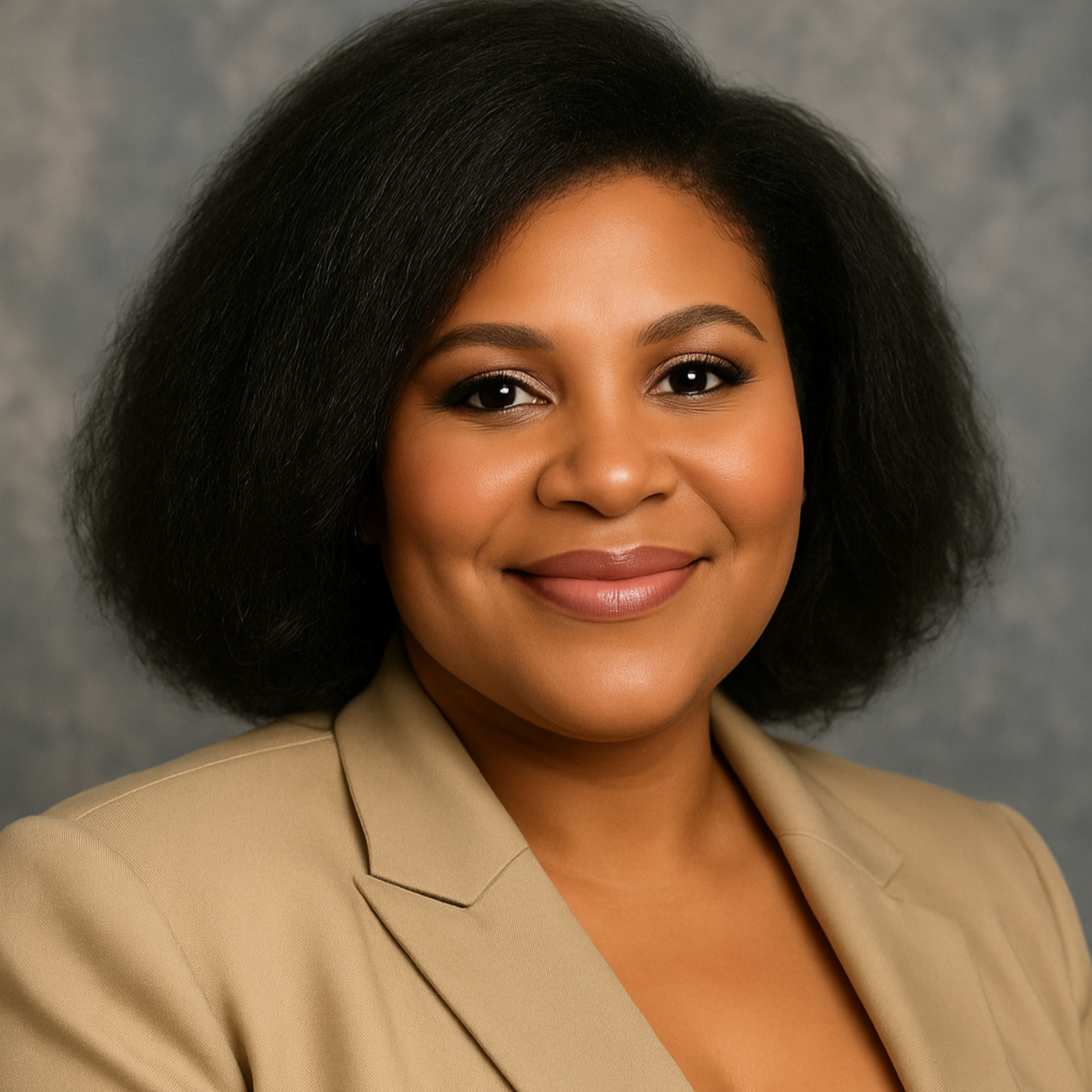
The Missing Piece in Your Recovery | Integrative Counseling and Peer Support
Tonight's Episode
Your nervous system wasn't designed to heal alone. Counselor Elisha Lee unpacks integrative counseling, the neuroscience of co-regulation, and what peer-based recovery actually means for trauma survivors. Includes a guided somatic practice and closing prayer for those healing from community wounds. #IntegrativeCounseling #MentalHealth
Elisha's Space: You've done the therapy. You sat in the chair, you've named the trauma, you've done the breathing exercise, you've read the books. Maybe you've even listened to episodes of this podcast and taken the notes. And somewhere in all of that work. You have gotten better. That is real. But there is still this ache, isn't there? This specific kind of loneliness that lives somewhere between your sternum and your throat. The one that shows up when you leave a really good session and come home. And there is no one in your actual life who knows what it felt like to finally say that thing out loud. That ache has a name and today we're going to give it a clinical home because it deserves one. Welcome to Elisha Space, a sanctuary for healing growth and for the kind of honest conversations that actually change things. I'm Elisha, your host, a counselor, an author, and someone who has sat in the same stuck place as you have. If you are new here, welcome home. If you've been listening for a while, I see you and I'm glad you're back. Today's episode is practical, clinical but pastoral. We are talking about something that sits Right at the intersection of neuroscience, recovery science, and the ancient theology of community. And we are going to talk about why. For many of you, individual therapy has been necessary, but not sufficient. Not because therapy wasn't working, but because your body, your actual physical nervous system, was not designed to heal in isolation. The clinical term for What you're exploring today is integrative counseling. And I want to give that term a real home in your vocabulary today, because it is more than a buzzword. It is a model of care that holds the science of peer recovery, the somatic reality of co-regulation, and the spiritual architecture of community all at once. So stay with me. Before we go to clinical content, I want to spend about 90 seconds with you because what we're talking about today is going to ask something of the part of you that learned to survive alone. That part decided somewhere along the way that needing people was a liability. If that part of you needs a breath before we continue, let's do that together right now. If you're in a place where you can let your eyes close or soften, place one hand on your chest right over your sternum. Breathe in through your nose slowly for four counts. One, two, three, four, two. Hold. And release through your mouth, let it be audible if it needs to be. One more time, inhale and And exhale. Good. That is your nervous system being reminded that right now you are safe. You are not in the room where things were hard. You are here. We are going to go through this together. Let me tell you something that I say to nearly every client who walks into a therapeutic relationship with me and says, I've been in therapy for years. But I still feel so alone in my healing. I believe them. And I want you to hear this clearly. That is not a failure of the therapy, and it is not a failure of you. It is the natural, predictable result of a recovery model that treats healing as a solo project. Here is what the research has shown us. And I mean this in the most clinical sense before we get to anything spiritual. Stephen Porge is the researcher behind polyvagal theory. And if you've been here for a while, you know we walk through the vagus nerve often. His work tells us that the social engagement system of our nervous system is the first line of defense against threat. Before fight, before flight, before freeze, your body looks for a safe face. Scans for co-regulating presence, and when it cannot find one, it defaults to the survival responses that so many of you are spending years trying to heal from. What that means in plain language is this: your nervous system was literally wired to use other people to feel safe, not as a luxury, not as a spiritual extra, as a biological necessity. And here is where the isolation paradox comes in. Trauma, by definition, disrupts your ability to trust people. It teaches your nervous system that people are unpredictable. That safety is something you manufacture alone inside your own control environment. So trauma pulls you toward isolation while healing requires connection. And if no one names that paradox, you will spend years doing all the right work in a container that is missing half the ingredients. Individual therapy is essential. I am a clinician. I believe in the therapeutic relationship deeply, but for complex trauma, for religious trauma, for the kind of systematic wounding that happened in community, the body of Christ, your family systems, and institution. Healing must eventually move through relationship to be complete. That is the integrative counseling model, and that is what we are going to unpack today. So let's define our terms because I think this phrase gets used loosely and you deserve precision. Integrative counseling is the therapeutic approach that does not commit to a single modality as a whole answer. It draws from multiple evidence-based frameworks. Cognitive behavioral work, somatic therapy, attachment theory, relational models, trauma-focused approaches, and in clinical contexts like mine, spiritual integration. And it weaves them together based on what the specific client needs are. It is at its core a recognition that a human being is more than their thoughts, more than their behaviors, more than their symptoms. A person is a body, a mind, a soul, and a relational being. And a counseling model that is truly integrative will honor all those dimensions. And one of those dimensions, the one most often left out of the individual therapy model. Is the relational dimension, the peer dimension in recovery science? Peer support is not casual friendship. I want to be careful here because this word peer gets flattened into something informal. And it is not informal. Peer support as a clinical model is a structured form of care delivered by someone with lived experience. Of the same or similar struggle. It is not simply a support group where people take turns talking. It is a relationship in which one person's regulated, recovered nervous system becomes a resource for another person's healing. There is a name for that in the clinical world. It is called co-regulation. ⁓ Your nervous does not regulate only from the inside. It co-regulates with the nervous systems around it. When you sit next to a calm person, your cortisol begins to drop. When you are witnessed by someone who has been where you are and is no longer drowning in it, your amygdala receives a signal that what you are living through is survivable. That is not metaphor, that is neurobiological fact. Knowledge isn't just power for trauma survivors. Knowledge is safety. So when we talk about peer-based recovery models and the integrative counseling framework, we are talking about a recognition that you need both, the trained clinician who has the maps and the person who has walked the terrain. Now I know that for many of you, the word community does not feel safe, and I want to speak to that directly before we go further. Because I think it is the most important nuance in this entire conversation. For survivors of religious trauma, and I know many of you carry this. Community is not a neutral word. It is the word for the place where you were controlled, where your questions were silenced, where accountability looks like shame, where belonging was conditional. Where the person who was supposed to be safe used their authority to wound you. For you, community and danger live in the same room in your nervous system, and suggesting that you need community to heal can feel like being told to walk back into the fire and call it therapy. I want you to know that I see that, and I want you to know something else. Your body knows the difference between community as control and community as co-regulation. Toxic community, the kind that produced your trauma, has specific somatic signatures. Your shoulders come up, your breath gets shallow, you disassociate you begin to perform safety rather than feel it. Your nervous system goes into what Por just calls a social engagement system hijack. You smile. You comply, you look fine because the cost of not looking fine is too high. Therapeutic community has a completely different somatic signature. Your shoulders drop, your breath deepens without effort. You can hear your own thoughts. You do not have to manage your face. There is a difference between proximity and safety. And your body knows which one it is in. The goal is not to push you back into any community. The goal is to help you learn what safety in community feels like within your body. So you can begin to distinguish between the two, and so that you can slowly, carefully, on your own timeline, begin to build the relational container your healing requires. Let your nervous system hear that you are not running from it. So, what does therapeutic, peer-based, integrative community actually look like? I want to give you four markers, not a program, not a formula, four things to look for, and four things to notice in your body when you are in it. The first is safe witnessing, a therapeutic peer community is one where you are seen without an agenda. No one is trying to fix you, correct you, or use your story to feel better about theirs. There is space for your experience to simply be true. For many of you, this will feel strange at first. You will be waiting for the but the refrain that diminishes what you just said when it doesn't come. Your nervous system may not know what to do with that. That disorientation is actually a sign that something different is happening. Stay with it. The second is shared story without comparison. Peer support is not a space where someone's worst story cancels out your pain. It is a space where Me Too functions as medicine, where you hear someone describe the exact shape of the thing you carry, and something in you exhales for the first time in years. That exhale That is your ventrovagal system recognizing resonance. That is your body receiving co-regulation through the vehicle of a shared human story. The third is accountability held in grace. One of the wounds that survivors of religious trauma carry is a distorted picture of accountability. Accountability that look like surveillance, confrontation, or shame. therapeutic peer community holds you to your own growth without weaponizing your gaps. The question is not, why did you do that with an accusatory tone? The question is, what is happening in your body when that happened? And someone who asked that question already understands something about how healing works. The fourth is communal spiritual practice, and this one is specific to what we do here at Elisha Space because it is the piece that most secular peer recovery models are missing. There is a particular kind of healing that happens when you pray with another person, not for them or at them with them. When two nervous systems enter the presence of the same safe god simultaneously, when the regulated breath of one person becomes a pacemaker for the unregulated breath of another, this isn't visualization, this is physiology. It is also theology, and the two have never been in conflict. Hebrews ten twenty four and let us consider that How we may spur one another on towards love and good deeds, not giving up meeting together. That was written before polyvagal theory, before mirror neurons, before we had the neuroscience vocabulary to name what was already present in the design of the early church. The body of Christ was, from the beginning, designed to be a co-regulatory community. I want to lead you through a practice now. This one is specifically designed to help your nervous system begin to experience what it feels like to receive another person's regulated presence. Even in imagination, because your nervous system does not always distinguish between what is real and what is vividly imagined, and we can use that. Find a comfortable position, let your spine be long if it wants to be. Let your hands rest open in your lap, palms up, a posture of receiving. Take a breath in. And breathe out slowly. I want to bring you to mind one person, living or no longer with you. Who has ever made you feel genuinely, somatically safe, not just someone who was kind, someone in whose presence your body could breathe differently, a grandparent, a mentor, a therapist, a friend from before the hard years. If you cannot find a person right now, you may use the imagined presence of Jesus walking towards you with no agenda, no correction, only welcome. Place them across from you in your imagination, not doing anything, just present. Notice what happens in your body. Is there softening? Is there an exhale that comes on its own? Is there tightening? The nervous system anticipating the catch. Just notice, don't judge. Now imagine that their breathing is slow and even and let your breathing begin to match it. Not forcefully, just an invitation and allowing. This is co-regulation. This is your nervous system learning what it feels like to receive safety from another, even in imagination. This is the real neural pathway being formed. You are teaching your body that another person's presence can be safe. When you're ready, take a deep breath in. And let it go. You can open your eyes. I want to pray with you before we close. Father, I am grateful that you made these bodies, that you knit together the very nervous systems that we are learning to regulate, and I am grateful that you did not design them to operate alone. I am praying today for those who hear the word community and feel something tighten, who have been burned in places that were supposed to be safe, who learn to survive by becoming their own island. Whether that happened in a church, a family, a marriage, or a system that was supposed to hold them. Father, your word says that it is not good for the human to be alone. And I believe that diagnosis extends beyond any single relationship. I believe it names something architectural about what you built us for. So I am asking you today to rewire that community meaning for us. Not to push us back towards what wounded us, but to give us the discernment to recognize safe presence when it comes, to give us the courage to let our guard down. One inch, one breath, one honest conversation at a time. His peace is not dependent on your circumstances being resolved. It is a regulated nervous system in the presence of a safe God. And we are receiving that today. Amen. Your challenge this week is simple and it is not easy. Identify one person, one in your existing life with whom you are going to have one honest exchange this week. Not a crisis conversation, Not the whole history, just one true thing about where you are actually at right now. It might be a text, it might be a phone call, It might be finally showing up to a support group you've been considering for three months and introducing yourself to one person. The form doesn't matter, the practice of allowing yourself to be known, and whatever small, somatic, appropriate increment your nervous system can hold, is the beginning of the community your healing needs. If you are looking for a structured space to begin that work, visit us at elisha space.com. The start guide is there, and it will give you a framework for starting in your own body before you bring it to another person. If this episode helped you, if it gave you a word for something you've been carrying without one, share it. Text it to one person you know is struggling. That is how this work reaches the people who need it. I'll be back with more honest conversations that actually change things. Until next time. You are not too much, you are not too far, and you are not alone.
 Apple Podcasts
 Castbox
 Castro
 Goodpods
 Moon FM
 Overcast
 Pocket Casts
 Podbean
 Podcast Addict
 Podcast Republic
 Spotify