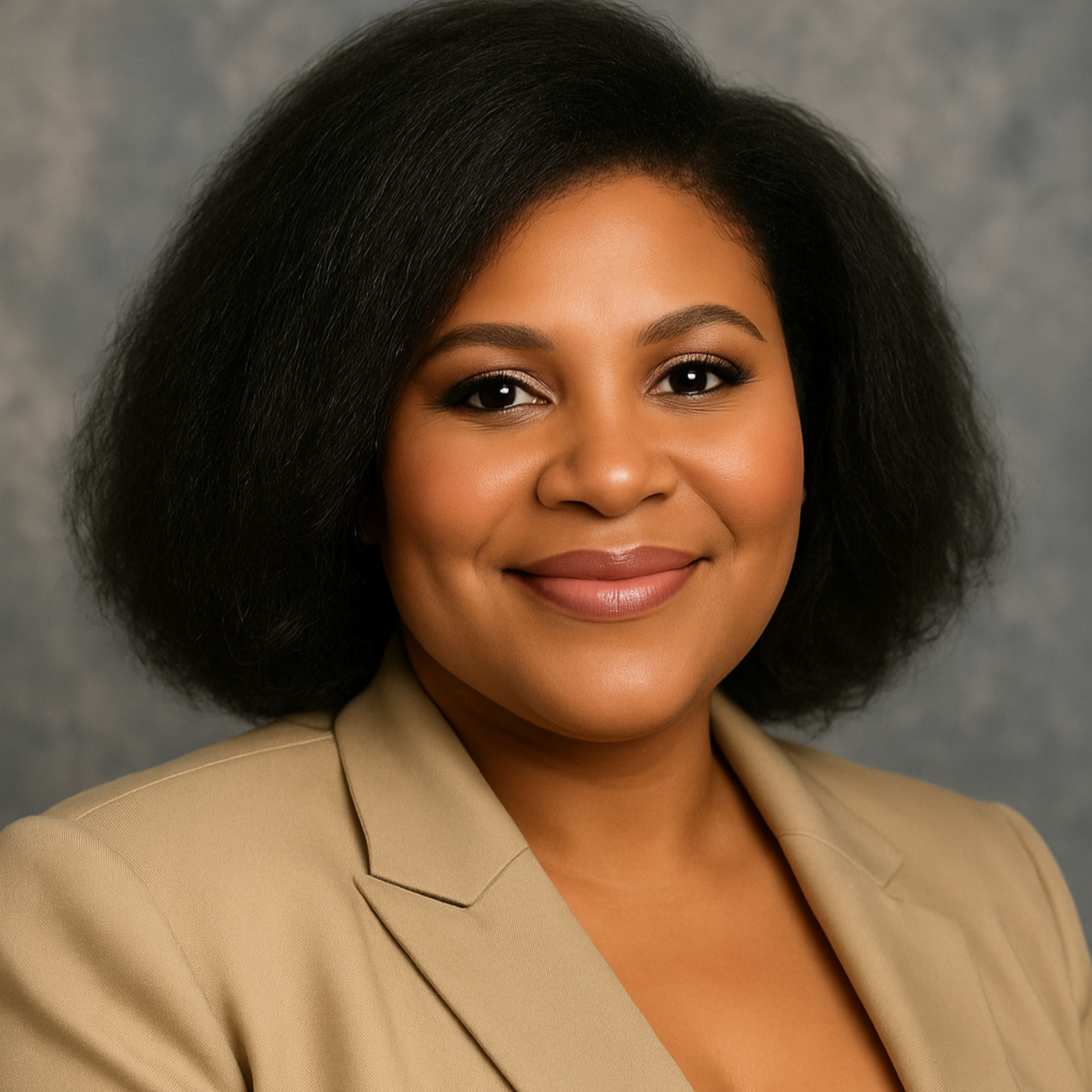
What Trauma-Informed Church Actually Looks Like — And Why Most Congregations Still Aren't There
Tonight's Episode
You left that small group feeling more alone than when you arrived. That's a trauma literacy failure — not yours. Counselor and host Elisha Lee breaks down what trauma-informed care should look like in pastoral care, small groups, and counseling ministry, and why most churches aren't there yet. Clinical. Biblical. Practical. Elisha's Space.
Elisha Lee: You sat in that small group. Maybe it was a Wednesday night. Maybe it was a Sunday after service when someone passed around a sign-up sheet and wrote care group at the top. Someone asked how you were really doing. And for one terrifying moment you thought, maybe this is the place. Maybe these are the people. So you said it. You named the thing. The marriage you ended violently, the childhood you don't talk about, the way your hands still shake. When someone raises their voice, the panic attacks during worship that you've been hiding for three years and the room got quiet. And then someone said, Have you tried just giving it to God? Or we'll put you on the prayer list. Or I know someone who went through something similar. They forgave. And now they are completely healed. Maybe that's the step you're missing. And you left that circle feeling more alone than when you walked in, more exposed, more ashamed. Not because those people didn't love you. They did, but because that room was not equipped to hold what you brought into it. That is not a pastoral failure. That is a trauma literacy failure. And today we're going to talk about what. should have happened instead. Welcome to Elisha Space, a sanctuary for healing growth, and for the kind of honest conversations that actually change things. I'm Elisha, your host, a counselor, an author, and someone who has sat in the same stuck places you have. If you're new here, welcome home. If you've been listening for a while, I see you. And I'm glad you're back. Today's episode is one I have been sitting with for a long time. It is clinical, it is pastoral, and if you are a trauma survivor who is still embedded in a faith community, still trying to figure out if you can stay, still trying to figure out why it keeps you feeling unsafe. This one is for you. Today we are talking about trauma-informed care, what it actually looks like. what it should look like inside the local church and why the majority of congregations in twenty twenty five and twenty twenty six are still not there. So stay with me. Trauma-informed care is one of the fastest growing frameworks in behavioral health right now. Hospitals are adapting it. Schools are training teachers in it. Social work programs have made it a core curriculum requirement in the church. The church is largely still catching up. Now, before we go any further, I want to be clear about something. I am not here to church bash. I love the body of Christ. I have seen genuine spirit-led healing happen inside congregations. I have watched communities rally around survivors with remarkable tenderness. But I am also a counselor and I sit across from clients week after week who came to their church first before they came to me. And what happened in that room, in that prayer circle, in that pastor's office, in that small group. Either moved them towards healing or it sent them backwards. And most of the time it sent them backwards. Not because the church is malicious, but because the church is underprepared and underprepared in the context of trauma costs people dearly. It costs them years. Sometimes it costs them their faith. Knowledge isn't just power for trauma survivors, knowledge is safety. So let us build some knowledge today. Let's talk about what trauma informed care actually is, why it matters for the church specifically, and what it would look like practically in three specific places: pastoral care, small groups, and counseling ministry. And then we're going to talk about why most congregations are not there yet, not to condemn them, to understand the gap. Because understanding the gap is the first step to bridging it. Let me start with a definition. Because I've noticed that trauma informed has become something of a buzzword. And like most buzzwords, the more it gets used without definition, the less it means. Trauma informed care is not a technique, it is not a checklist, it is an orientation, a way of approaching every person, every conversation, every community gathering. With the underlying assumption that the person in front of you may have a trauma history that is actively shaping how they experience this moment. Substance Abuse and Mental Health Services Administration, SAMHSA, the Federal Agency on Behavioral Health, identified six core principles of trauma informed care. I want to walk you through three of them today because they apply most directly to how the church operates. The first is safety, not just physical safety, though that matters. Psychological safety. Safety means A person can be in a space without their nervous system activating into a threat response. It means the environment communicates without words. You are not in danger here. You do not have to perform. You do not have to protect yourself. For a trauma survivor, the nervous system is constantly scanning the environment for cues of safety or danger. The amygdala. The brain's threat detection center processes incoming information before the prefrontal cortex even has a chance to reason about it. This is not paranoia. This is neurobiology. So when a survivor walks into a church environment and the culture communicates, even sadly, that vulnerability is met with judgment. That grief must resolve quickly. That doubt is spiritually dangerous. The nervous system reads that before the sermon begins, the body has already decided whether this place is safe. The second principle is transparency and trustworthiness. Trauma, at its core, is almost always a violation of trust. Abuse is a trust violation. Abandonment is a trust violation. Spiritual manipulation, which is its own category of trauma and one I care deeply about, is a trust violation. So for a survivor to re-engage with any institution, including the church, that institution must be consistent, clear, and honest about what it is and what it isn't. What does this look like in practice? It looks like a church that is clear about its theological positions without punishing curiosity. It looks like a pastor who can say I am not a licensed therapist and this conversation has a limit. Let me refer you to someone who is. It looks like a small group facilitator who says before the first session, here is what we do with what you share here, and here is what we don't. Transparency isn't just good manners. For a trauma survivor, transparency is repair. And the third And perhaps the most countercultural for the church is empowerment, voice and choice. One of the most consistent features of traumatic experiences is that choice is removed. The survivor had no say, no power, no ability to stop what was happening. So a trauma-informed approach restores what trauma stole. And that means in every interaction asking, does this person have a choice here? Do they have a voice? Are we empowering them or are we deciding for them? This is genuinely radical in church culture because church culture, particularly in hierarchical traditions, often operates on the assumption that the pastor knows, the elder board decides, and the congregation follows. That structure may serve a theology. It does not serve a survivor. All right, let's get practical because I don't want this episode to stay in the theoretical. I want you to be able to walk back into your church or walk into a conversation with your pastor with a concrete picture of what this could and should look like. Three domains pastoral care, small groups, counseling ministry. Domain one pastoral care a trauma informed pastor enters every care conversation with what I call a posture of witness before a prescriber. Their first job is not to fix, their first job is to hold. Concretely, when a survivor discloses something, the pastoral response is thank you for trusting me with this. Before it is, here's what I think you should do. It means before praying with someone, before placing hands on them. Before even placing a hand on the shoulder. You ask, may I pray with you? May I place a hand on your shoulder? That question is not weakness, that question is trauma informed. For many survivors of physical or sexual abuse, an unexpected touch, even a loving one, activates the threat response before the mind can register the intent behind it. It also means understanding the difference between Spiritual bypassing and genuine theological comfort. Spiritual bypassing is using spiritual language to avoid the psychological and emotional reality of what someone is carrying. God has a plan delivered to someone who has just disclosed abuse is not pastoral care. It is avoidance stressed in scripture. And your listeners know the difference, even if they can't name it. Genuine theological comfort is what Paul describes in 2 Corinthians 1 4, who comforts us in all our troubles so that we can comfort those in any trouble with the comfort we ourselves receive from God. The comfort Paul is describing is not abstract, it is earned through suffering. It sits with the person, it doesn't rush towards resolution. A trauma-informed pastor is Also knows where their lane ends. They understand that receiving repeated trauma disclosures without clinical training creates something called vicarious trauma. Secondary traumatic stress in the helper, and they know that referral is not rejection. Referral is one of the most profound acts of care a pastor can offer a survivor. Domain two, small groups. Small groups are, in theory, one of the most healing environments the church can offer. Shared vulnerability, mutual support, co-regulation through genuine community. These are the exactly the ingredients that help the nervous system learn that connection is safe again. But in practice, small groups are one of the most common sites of re-traumatization inside the church. Why? Because they frequently operate without facilitators who understand trauma responses and trauma responses emotional flooding, disassociation, hypervigilance shutting down in the middle of a conversation can look to an untrained eye like spiritual immaturity, like a lack of faith, like disruption. A trauma informed small group looks different. It starts with an orientation, not a lengthy disclaimer. A brief regular acknowledgement. We are a group that welcomes all of who you are. You don't have to share anything you're not ready to share. Your presence here is enough. This is what we call in clinical practice setting the container. The container is a psychological boundary that tells the nervous system this is a defined, bounded, safe space, and it needs to be re-established regularly. Not just once at the beginning of a series. It means facilitators are trained to recognize when someone in the group has moved outside their window of tolerance, that zone of arousal in which a person can actually process, think, reflect, and engage. When someone is crying so hard they cannot speak, or when someone has gone visibly flat and withdrawn. A trauma informed facilitator knows to gently redirect, to offer a break, to not push harder for catharsis. Catharsis that outpaces integration is not healing, it is rewounding. It means language is chosen carefully. Phrases like just forgive or God wouldn't give you more than you can handle, however well intentioned, are not trauma informed. They communicate that the survivor's pain has an expiration date and they haven't reached it yet. A trauma informed phrase sounds more like you are carrying something heavy and I am not going to rush you towards anywhere you're not ready to go. Domain three, counseling ministry. Many churches have some form of a lay counseling ministry. Whether it's a care team, a biblical counseling program, or simply an elder design for support conversations. And the quality of this ministry when it comes to trauma varies enormously. A trauma informed counseling ministry begins with this truth pastoral support is not the same as clinical care. And we need both. There is a tendency in some church cultures, particularly those that operate from a scripture sufficiency framework, to position biblical counseling as a complete substitute for clinical therapy. I want to say this with as much pastoral care as I can muster. That is dangerous. For a survivor of complex trauma, child abuse, domestic violence, religious trauma. The interventions required for genuine healing include nervous system regulation, trauma processing, and sometimes pharmacological support for depression and anxiety that has become biologically entrenched. These are clinical interventions. They require clinical training. A lay counselor with a heart full of scripture and a lack of clinical training is not equipped to provide them, and the attempt to However sincere can cause harm. A trauma informed counseling ministry is clear about this. It trains its care team in the basics of trauma responses. What it looks like, what it doesn't look like, how to hold a disclosure without trying to process it in one sitting, and it maintains a robust, vetted referral network of licensed clinical therapists. Ideally, therapists Who are also people of faith, who can hold both the clinical and the spiritual without collapsing one into the other. This is not a compromise of faith. This is what integration looks like. If you are just joining us, welcome in. We are talking today about trauma-informed care in the church, what it is, what it should look like, and why most congregations are not there yet. Stay with me. We are getting to the why right now. So, why aren't we there yet? I want to offer you four honest reasons, not as indictments, as context. Because I genuinely believe the church can get there, but not until we mean what is in the way. First, a theological misunderstanding of suffering in many frameworks, particularly in traditions that lean heavily on sanctification theology. Suffering is primarily framed as a refining process. Count in all joy when you encounter trials of various kinds. And that theological truth is not wrong, but it has been over applied in pastoral care in a way that communicates if you are not yet healed, your faith is insufficient. This is a category error. Trauma is not a faith defic deficit. Trauma is a neurological event. The body holds it in the hippocampus, the amygdala, the somatic memory, and treating it as a spiritual problem exclusively. It's like telling someone with a broken leg they need to pray harder before you'll hand them a cast. Second, cultural discomfort with the liminal space. Church culture, broadly speaking, is uncomfortable with things that don't resolve. We have an escological hope. We believe in endings and redemption and all things working together. And that hope is real and it is beautiful. But it can create an impatience with the middle, the in-between, the place between the wound and the healing where things are still messy, still raw, still inconclusive. Trauma survivors live in that liminal space, sometimes for years. A trauma-informed congregation needs to be able to say, we are with you in the in-between. There's no timeline we are imposing on your healing. Third, a structural training gap. Pastors in most seminaries do not receive clinical trauma training. This is not a character flaw. This is a structural gap. They are trained in hermeneutics, preaching, church governance, sometimes basic counseling theory, but not in the neuroscience of trauma, not in how to recognize when a parishioner is in a functional freeze response versus a spiritual dry season. Not in the difference between complex PTSD and depression. That gap is beginning to close. Some seminaries are integrating trauma informed pastoral care into their curriculum. Some denominations are investing in continuing education for their clergy. But we are in the early stages of that shift. The majority of pastors in active ministry right now are were trained before trauma literacy became a part of the conversation. Fourth, power dynamics that can mirror harm. This one really requires the most care, so I want to hold it gently. Some church structures, particularly those organized around strong, centralized, unaccountable pastoral authority, can inadvertently recreate the dynamics of the environment where trauma originally occurred, the authority figure who must not be questioned, the expectation of compliance without explanation, the loyalty culture that treats dissent as betrayal. For a survivor of coercive control, whether in a family system, a relationship, or a prior religious context, these structural features can activate the threat response before a single Harmful thing is said, the shape of the system is the trigger. A trauma informed congregation examines its structures, not to dismantle legitimate authority, but to ask honestly, is our governance model one that is a trauma survivor can navigate without being re traumatized by its shape? That is a question worth sitting with. Let me close the the teaching portion of today's episode with this. If you are a trauma survivor who is sitting on a congregation that is not yet trauma informed, and most of you are, I want to give you three things to hold on to. One, your experience is data, not deficiency. If you have left a pastoral conversation feeling worse, left a small group feeling more exposed and less held, left a church interaction. Feeling more ashamed than when you arrived. That is information about the system's capacity, not information about your worth. You are not too much. Your story is not too hard. The room was not big enough for it. That is not your failure. Two, you are allowed to set a limit. You do not have to disclose everything to someone who has not demonstrated they can hold it. Trauma informed participation in your own faith community means you get to be strategic about what you share with whom and when. That is not deception, that is self-protection. And for a trauma survivor, self-protection is an act of stewardship over your own healing. Three, you can be the catalyst if you are in a position of leadership, or if you have a relationship with your pastor or small group leader, you can name what you need. You can share this episode. You can say, I want this community to become a place where survivors feel genuinely safe. What would it take to begin moving in that direction? That conversation. even if it's uncomfortable, even if it's initially misunderstood, is prophetic. It is exactly the kind of truth telling the body of Christ needs from the people in it who understand what healing actually requires. Before we close, I want to give something to your body because we have talked a lot today about systems and frameworks and what the church needs to do differently. And I know that for some of you, this conversation has stirred something, maybe grief, maybe anger, maybe the specific familiar tightening that happens in your chest. When you are sitting with the truth of something painful. Let's do something together. Just a moment, just three breaths. If you're driving, keep your eyes open and your hands on the wheel. If you're somewhere you can close your eyes, go ahead. Place one hand on your chest, just rest it there. Feel your own heartbeat. Your nervous system has been working hard today. Listening, remember, maybe grieving a little. That is real work, and your body deserves acknowledgement for it. Now, breathe in slowly through your nose. Let the air fill your belly first, then your chest. Hold it gently and release slowly through your mouth. Let the exhale be longer than the inhale. One more time, breathe in. Hold and breathe out. Let your hands soften. Let your shoulders drop. Your nervous system just shifted even slightly towards safety. This isn't visualization, this is physiology. Your body is designed for this and you are allowed to feel safe even when the systems around you haven't caught up yet. Let's pray together. Father, I am grateful that you made these bodies, that you knit together the very nervous systems that we are learning to regulate. You designed the vagus nerve, you designed the biological capacity for co regulation, for the way one regulated nervous system can help another. It's Find its way back to safety. You design that and it is a miracle and you design community, not as a performance space for already healed people, but as a hospital for the broken, as a place where the body of Christ could be literally what it was always called to be a body that holds its own. God, so many of us have walked into the hospital and been handed a broom before we were given a bed. We name that today. We grieve it not with bitterness, with honesty, because you are the God who is not afraid of our grief. We ask boldly that you would raise up congregations that look more like what you always intended. Congregations where the first question is not when will you be over this, but what do you need and how long do you need it? Congregations where pastors are willing to say, I was not trained for this, and that ends today. And for every pastor who is listening, give them courage, the humility, the shepherd's instinct that leads the ninety nine to find the one who has been made unsafe by the very community that was supposed to hold them. And for every person in my audience who has sat in a circle and felt more alone leaving than they did arriving, God be their safe harbor in the gap, in the space between what the church is and what it is becoming. In that liminal aching in between, would you be enough? You are you have always been. His peace is not dependent on your circumstances being resolved. It is a regulated nervous system in the presence of a safe God. In Jesus' name, amen. Your challenge for this week is this. Name one space in your church community where you do not feel psychologically safe. Just one. Write it down. You don't have to show it to anyone. You don't have to bring it to your pastor this week. Simply name it. Because trauma survivors are so practiced at normalizing the unsafe that we sometimes lose our ability to even identify it. So this week, identify it, sit with it, let yourself say this does not feel safe, and I am allowed to want more. And if your church is already doing this well, If you have found a community that holds space for the messy middle, that refers rather than replaces, that asks before it assumes. Share this episode with your pastor. Thank them. That is rare, and rare things deserve to be named. If this episode helped you, share it. Text it to one person you know is sitting in a congregation and feeling like too much. They need to know they are not alone. And They are not wrong for wanting more. You can find me and the Start Guide, your free somatic regulation resource at Elishaspaceonpodium.com. Until next time, you're not too much, you're not too far, and you are not alone.
 Apple Podcasts
 Castbox
 Castro
 Goodpods
 Moon FM
 Overcast
 Pocket Casts
 Podbean
 Podcast Addict
 Podcast Republic
 Spotify