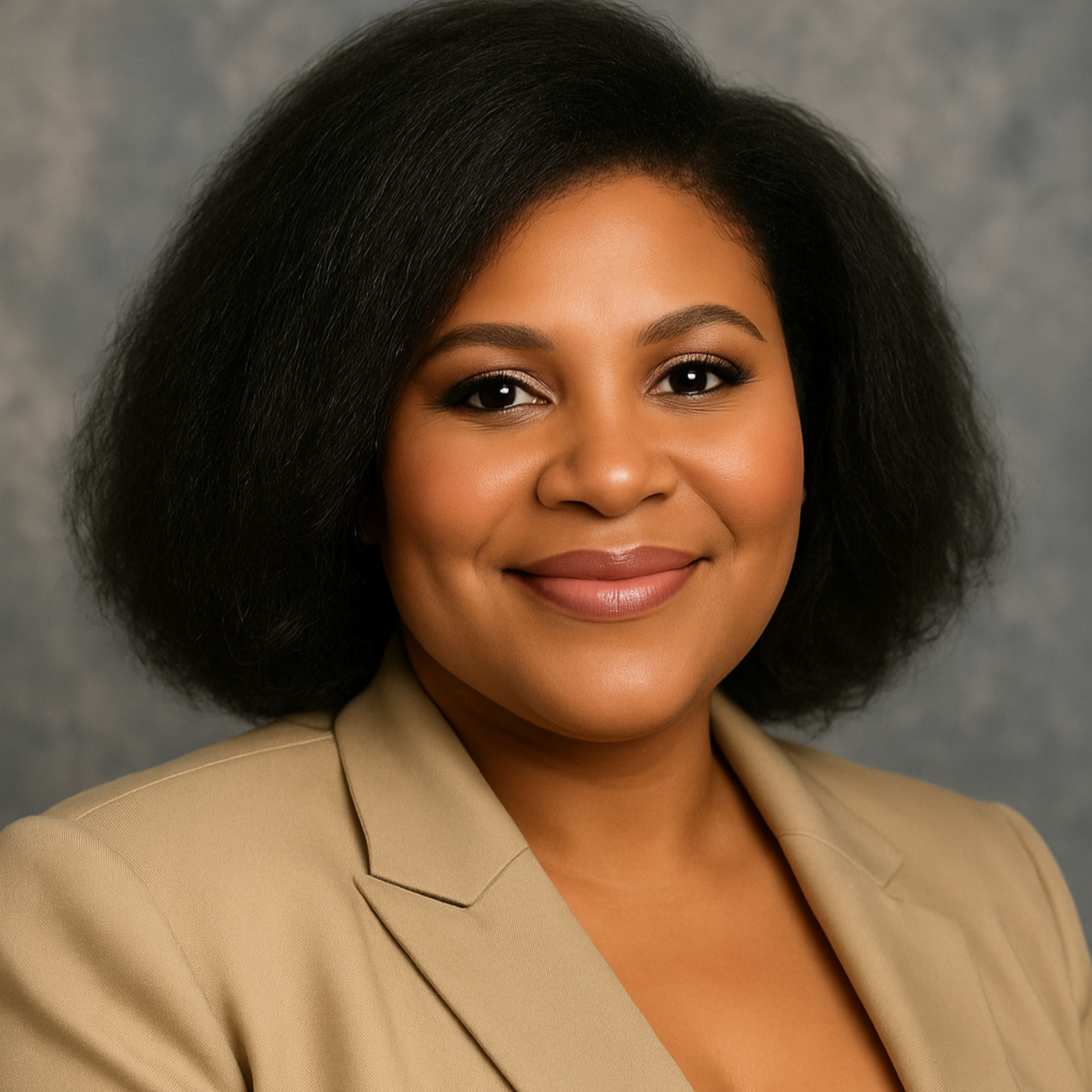
You Are Not Too Much; You Are Carrying Too Much
Tonight's Episode
Have you spent years believing you were the problem?
Too emotional. Too sensitive. Too needy. Too much.
In this episode of Elisha's Space, counselor, author, and entrepreneur Elisha gently but boldly reframes one of the most damaging lies told to women in trauma and in faith communities — that your depth is a defect.
The truth? You are not too much. You are carrying too much. And there is a difference — and that difference is everything.
In this episode, Elisha covers:
✔️ Why "you are too much" is almost always a projection — not a truth about who you are
✔️ What chronic emotional overload does to your nervous system — and why shrinking yourself was a survival strategy, not a character flaw
✔️ What Scripture actually says about bearing burdens — and what it was never meant to ask of you
✔️ The C.A.L.M. Protocol — a practical, step-by-step framework for identifying what belongs to you and what you've been carrying that was never yours
✔️ How to begin setting down what God never asked you to pick up — one intentional step at a time
This episode is for you if:
→ You are exhausted from being the one who holds everything together
→ You've been told your emotions are "too much" — by a parent, partner, or church community
→ You're recovering from people-pleasing, emotional enmeshment, or trauma bonds
→ You love deeply but often feel empty — and you're not sure why
→ You're ready to stop performing "fine" and start healing for real
This Week's Closing Challenge: Identify one thing you are carrying that doesn't belong to you. Write it down. Say it out loud. And take one step toward letting it go.
Elisha's Space is a sanctuary for healing, growth, and authentic conversation — where clinical wisdom meets spiritual truth. Hosted by Elisha, a licensed counselor, author, and founder of Restoring You Christian Counseling.
🔔 Subscribe so you never miss an episode.
💛 Share this episode with a woman in your life who needs to hear it.
⭐ Leave a review — it helps more women find this space.
Connect with Elisha: 🌐 Restoring You Christian Counseling | Catonsville, MD
Elisha Lee: Before I say anything else, I just need to ask you something. How long have you been telling yourself that you're the problem? How long have you been shrinking, turning down the volume on your own needs because someone looked at you and said with their words or with their silence, you are too much. Maybe it was a parent. Maybe it was a partner. Maybe it was a church community that preached submission so loudly it drowned out your dignity. And somewhere along the way you believed it. You started editing yourself, apologizing for your feelings, laughing off your pain, performing fine when everything inside you was anything but. I want to offer you something different today because I have sat across from hundreds of women in my counseling office, brilliant, faith-filled, resilient women. And what I see is not someone who is too much. What I see is someone who is caring too much. There is a difference. And today, We are going to name it, feel it, and with God's help, begin to set some of it down. Welcome to Elisha Space. I'm Elisha. Let's go deeper. This is a space for healing, for honest, authentic conversation, and for the kind of growth that doesn't ask you to pretend you're okay. If this is your first time here, welcome, friend. I'm so glad you found your way. And if you've been here before, you already know. We don't do shallow here. Wherever you are, and before we go any further, I want you to do something with me. Whether you're driving, walking, sitting on the floor of your bathroom, because that's the only quiet space you have, I want you to take a breath. Breathe in your nose for a count of four. One, two, three, four. Hold for four, one. two, three, four. Now breathe out slowly through your mouth for six. One, two, three, four, five, six. Do it one more time. In for four, hold for four, out for six. Notice where you feel that in your body. Notice your shoulders. Notice your jaw. Notice the space between your sternum, that tight guarded place that rarely gets permission to soften. This breath is not a technique. It is a signal. You are telling your nervous system you are safe right now. You can be present. Okay, let's talk. I want to start with something clinical because I think naming what's happening in your body is the first step to liberation. When we were told repeatedly that we are too emotional, too needy, too sensitive, or too much, our nervous system doesn't just hear criticism, it hears threat. And in response to that threat, Your brain does one or two things. It either says, I need to fight this. I need to prove I'm not what they say I am. Or it says, I need to shrink. I need to become smaller so I am no longer a target. Both of those responses are survival strategies. I want you to hear that clearly. Shrinking yourself was not weakness. It was wisdom. It kept you safe. But here's what happens when you stay in survival mode long past the threat. You begin to carry what was never yours to carry. You carry other people's emotions, their anxiety, their disappointment, their unspoken expectations. You carry the roles you were handed. before you were old enough to choose. The peacemaker, the fixer, the one who holds it all together. You carry the grief of relationships where you gave everything and received very little in return. You carry the spiritual weight of being told that suffering and silence is holiness. And after a while, All of that weight starts to look like you. You forget it's something you picked up. You start to believe it's something you are. This is what clinicians call enmeshment. When the boundaries between you and the burdens around you become so blurred that you no longer know where you end and the weight begins. And I want to say something directly. Enmeshment is not faithlessness. It is not humility. It is not love. It is a trauma response. The research on chronic emotional overload, particularly in women, shows that sustained carrying of other people's emotional labor activates the same neural pathways as chronic physical pain. Your body is literally hurting. Notice where you feel that in your body right now? Is it your chest, your throat, your lower back, that place that never quite relaxes? That is not weakness. That is your body telling you the truth that your mind has been too afraid to speak. Now I want to go to the word because I know that for many of you, is the framework through which you make sense of suffering. And sometimes that same framework has been ⁓ used against you. You've been handed scriptures about bearing one another burdens. and told it means you must absorb everyone's pain without complaint. You've been told that dying to self means erasing yourself. You've been taught that asking for help is a lack of faith. And friend, I need to gently, firmly, lovingly push back on all of that because the same Paul he wrote, bear one another's burdens and Galatians 6.2 wrote just three verses later in Galatians five, for each one shall carry his own load. Both are true and the tension between them is intentional. Yes, we are called to come alongside one another in seasons of crisis, but we are not called to carry what belongs to someone else as a permanent condition of our existence. And then there is Jesus, the one who said, come to me, all you who are weary and burdened and I will give you rest. Matthew 11 28. He didn't say, come to me when you've already handled everything. He didn't say, come to me after you've proved you've tried hard enough. He said, come just as you are right now with all of it. Here's what I want you to understand about the theological framing of too much. The enemy loves to take your sensitivity, the very thing God wired you with for empathy, for connection, for healing, and label it a flaw. Because if he can convince you that your death is a defect, you will spend your entire life trying to hold what was never broken. You were not made too sensitive. You were made deeply perceptive and the world and the kingdom needs that. The question is not how do I become less? The question is what am I carrying that God never asked me to pick up? I want you to sit with that for a moment. What are you carrying that God never asked you to pick up? I want to give you something practical today, a framework I use with my clients, something you can come back to when you feel that similar weight pressing down on you. I call it the Calm Protocol, C-A-L-M. And I want to walk you through each piece. C, check in with your body. Before you can set anything down, You have to know what you're holding. Take 30 seconds. Close your eyes if it's safe to do so. Ask yourself, where am I holding tension right now? Scan from the crown of your head down to your feet. Your body is an honest witness. It will tell you what your mind is trying to manage. A, acknowledge without judgment. Once you've found the tension, name it. out loud if you can. I am carrying anxiety that isn't mine. Well, I am holding grief that I haven't given myself permission to feel. I am exhausted from performing, okay? Not, I am so weak for feeling this. Not, I shouldn't feel this way. Just, this is what is here. Acknowledgement is not agreement. It is not giving up. It is the first act of honest stewardship over your own interior life. L. Locate the origin. Ask yourself, is this mine? This is the one of the most powerful questions you can practice. Is this anxiety mine or did I absorb it from someone in my household? Is this guilt mine or was it handed to me by someone who needed me to feel responsible for their choices? Is the shame mine or is it the residue of a relationship that required me to make myself small? Some of what you're carrying has your name on it and some of it does not. You are only responsible for the things that actually belong to you. ⁓ Move towards restoration. The final step is not about instant healing. It is about one small intentional movement towards your own flourishing. That might look like a conversation with a counselor. It might look like saying no to one thing this week that you agreed to out of fear. It might look like sitting in your car for five extra minutes before you walk into your house, giving yourself a decompression zone. It might look like picking up your Bible and reading Matthew 11 28 until it stops feeling like a platitude and starts feeling like a lifeline. You don't have to carry it all today. You just have to take one step towards setting something down. I want to give you permission today, not because you need my permission, but because sometimes when we've been told for so long that our needs are inconvenient, we need to hear from a voice outside our own head that it is okay to stop. It is okay to stop performing strength you don't have. It is okay to stop managing everyone else's emotional experience. while yours goes unwitnessed. It is okay to say, I cannot carry this for you anymore. That is not abandonment. That is differentiation. And it is one of the most healthiest things a human being can do. You know what I've noticed in my work? the women who are called too much are almost always the ones who never have been given enough, not enough support, not enough space, not enough of someone saying, see you. You don't have to hold all of this alone. So I'm saying it now. ⁓ I see you. I see the of you that smiles through the hard things because you've learned that your pain makes other people uncomfortable. I see the version of you that gives and gives and gives and then lies awake at night wondering why you feel so empty. I see the version of you that is deeply, profoundly, beautifully full, full of feeling, full of faith, full of capacity to love and has been told that fullness is a problem. It is not a problem. It is a gift that has not yet been given the right container. And healing, real healing, is the process of building that container, of learning to hold yourself the way God always intended. As we close today, I want to pray over you because I believe that what we've talked about isn't just therapeutic, it's spiritual. Lord, for the woman listening who has spent years believing she was the problem, I pray that you would speak the truth of her identity louder than every voice that tried to diminish her. Let her know that she is not too much. Let her know that she is exactly who you make her to be and give her the courage, one step at a time, to set down what was never hers to carry. In Jesus' name, amen. Before you go, your closing challenge for this week, I want you to identify one thing you are carrying that doesn't belong to you. Write it down, say it out loud, and then symbolically or literally, Let it go. You can journal it. You can speak it in prayer. You can share it with a trusted friend or your counselor, but name it because what you can name, you can begin to release. You are not too much. You are carrying too much. And there is a difference. And that difference is everything. Thank you so much for being here in this space with me. If this episode touched something in you, I'd love for you to share it with another woman who needs to hear it. Leave a review, subscribe, and come back next time. Until then, take care of you, because you matter, and this is your space.
 Apple Podcasts
 Castbox
 Castro
 Goodpods
 Moon FM
 Overcast
 Pocket Casts
 Podbean
 Podcast Addict
 Podcast Republic
 Spotify