Your Body Won't Calm Down: 5 Faith-Based Regulation Tools
Tonight's Episode
When your body won't calm down — when you've tried every breathing technique and your nervous system is still stuck — you need tools that go deeper. In this episode, I'm giving you five faith-based nervous system regulation tools that most therapists don't teach and most pastors don't know.
These aren't top-down tools that require your mind to be calm before your body follows. These are bottom-up practices that start in the body — through interoception, proprioception, the felt sense,and the somatic completion of protective reflexes. Each one is grounded in clinical neuroscience and paired with a scriptural anchor, because the God who designed your nervous system also left you a pattern for peace in His Word.
In this episode:
- Tool 1: Pendulation — swinging attention between distress and resource (Somatic Experiencing)
- Tool 2: Interoceptive Anchoring — training your body to sense its own internal signals
- Tool 3: The Felt Sense Dialogue — accessing the body's pre-verbal knowing (Gendlin's Focusing)
- Tool 4: Gravity Anchoring (Root Regulation) — letting the ground hold you through proprioceptive release
- Tool 5: Somatic Boundary Practice (The Push-Away) — completing the body's protective reflex
Plus a guided breathing exercise, a prayer for nervous system healing, and a 7-day challenge to help you discover which tool your body needs most.
If you've tried grounding, mindfulness, and breathing and your body is still dysregulated — this episode is for you. There are tools beyond the basics. Your body can learn them.
Download the free S.T.A.R.T. Guide (Step-by-Step Somatic Regulation): 🔗 https://elishas-space.onpodium.com
Connect with Elisha:
🌐 Website: www.restoringyouchristiancounseling.com
📱 Find the podcast wherever you listen
If this episode helped you, share it. Text it to one person you know is struggling. Just say: "There are tools beyond breathing. This episode changed what I thought was possible."
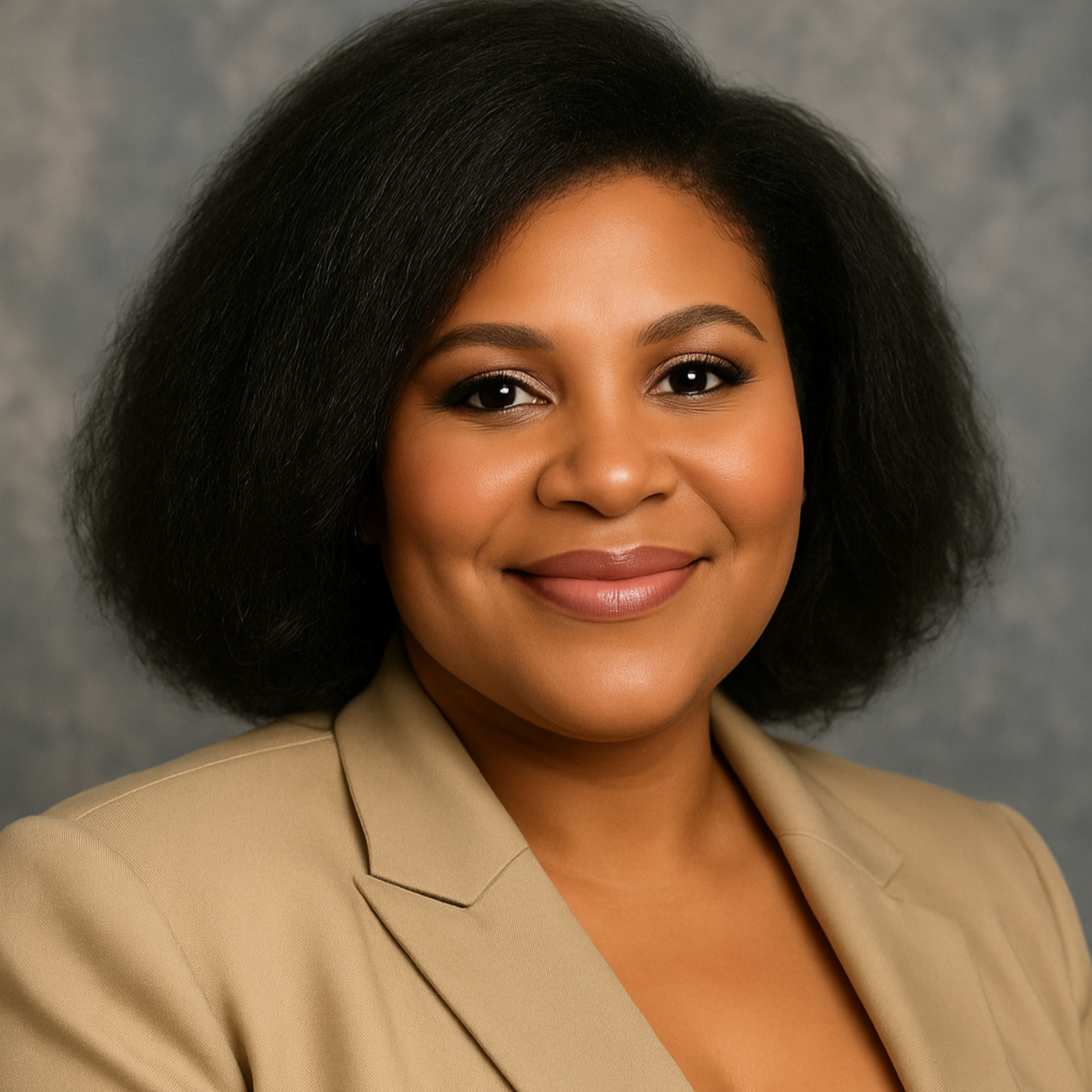
— Elisha is a counselor, author, and the founder of Restoring You Christian Counseling. Her channel, Elisha's Space, bridges clinical trauma recovery with Christian faith — offering somatic tools, theological reframing, and nervous system education for women navigating the intersection of faith and healing.
This content is for educational and inspirational purposes and is not a substitute for professional counseling or medical care. If you are in crisis, please reach out to a licensed mental health professional or call 988.
#NervousSystemRegulation #SomaticHealing #Pendulation #Interoception #FeltSense #SomaticExperiencing #BodyBasedHealing #NervousSystemSafety #TraumaRecovery #FaithBasedHealing #VagusNerve #ChristianMentalHealth #SomaticExercises #TraumaInformed #ChristianCounseling #AnxietyRelief #NervousSystemHealing #BottomUpRegulation #Proprioception #SomaticBoundaries
Elisha's Space: You know the basics. You've tried the deep breathing, you've tried the box breathing, the four seven, eight, the inhale for four, hold for seven, exhale for eight. And sometimes it helps. And sometimes your body laughs at you because it's too activated to receive a breath pattern, too flooded, too far gone for the tools everyone already knows. Maybe you thought, I've tried all of this. Nothing works. But what if the issue is that you're doing the wrong tools? What if you haven't been given the right ones yet? Today I'm going to give you five regulation tools that go deeper than breathing. Tools most therapists don't teach, most pastors don't know, and most Instagram infographics skip entirely. These are the tools that work when the basics don't So stay with me. Welcome to Elisha Space, a sanctuary for healing growth and for the kind of honest conversations that actually change things. I'm Elisha, your host, a counselor, and author, and someone who has sat in the same stuff places you have. If you've been listening for a while, I see you and I'm glad you're back. Welcome home. Today's episode is practical clinical but pastoral. We're going beyond the basics, beyond breathing, beyond grounding, beyond the tools you've already heard a hundred times. These are five practices drawn from somatic experiencing. Interoception research and the theology of the body that work when your nervous system is too activated for the entry level stuff. Here's what I want you to understand: the basic tools. Breathing, grounding, mindfulness. They're not bad. They're entry points, but they're top-down tools, which means they start in your mind and try to talk your body into calming down. And when your nervous system is in a high state of activation, when you're in fight or flight or freeze. Your cognitive brain, your prefrontal cortex goes offline. It literally reduces its activity. You can't think your way out of a state you didn't think your way into. The tools I'm giving you today are bottom-up tools. They start in the body. They don't require your mind to be online. They don't require you to think positive thoughts or reframe your perspective. They work through sensation, through movement, through the pro preoceptive and interoceptive systems. The body's own internal wiring. To send safety signals upward to the brain. And I'm going to pair each one with scripture because I believe the God who knit together your enteric nervous system, your vagus nerve, your proprioceptive receptors in your joints and feet, that God left you a pattern for peace that runs through the body, not around it. Knowledge isn't just power for trauma survivors, knowledge is safety. And today the knowledge I want to give you is this. There are tools beyond the ones you've been taught. And your body can learn them. So let's do it. Tool number one, pendulation. This is the cornerstone of the Peter Levine Somatic Experiencing work. And I would bet most of you have never heard of it. But it is one of the most powerful tools in trauma recovery. Here's the principle. When you're activated, when anxiety, fear, or overwhelm is running through your body, your attention narrows to the activation. You feel the tight chest, you feel the racing heart, you feel the clenched jaw, and your entire awareness gets sucked into the distress like watered down a drain. Every bit of your activation is in the storm. Pendulation is the practice of deliberately swinging your attention, like a pendulum, between the distress and a place of resource in your body. A place of resource is any part of your body that feels neutral, calm, or even remotely okay. Maybe it's your hands resting on your lap. Maybe it's your feet on the floor. Maybe it's the back of your head against a headrest. It doesn't have to feel amazing. It just has to feel not activated. Here's how you do it. First, find the activation. Where is the distress in your body? Don't name the emotion, name the location. My chest, my throat, my stomach. Now find the resource. Where in your body is there even a small island of calm or neutrality? Maybe your hands, maybe your feet, maybe your right ear, it doesn't matter where. Just find one place. Now swing your attention to the resource. Stay there for five seconds. Just notice my hands feel warm. They're resting. They're okay. Now, swing back to the activation. Don't try to fix it. Don't try to make it go away. Just visit it. My chest is tight. I feel the tightness. Stay for three seconds. Now back to the resource. Five seconds. Back to the activation. Three seconds. Resource. Here's what's happening. Each time you visit the resource, you're giving your nervous system a taste of safety, a microdose of regulation. And each time you return to the activation, you're showing your nervous system that the distress is survival. because you just left it and came back. You're not drowning in it, you're pendulating. This isn't visualization, this is physiology. You're training your nervous system to hold both. Distress and safety at the same time. That's the definition of resilience. Not the absence of activation, but the capacity to return to safety after being activated. The scriptural anchor, Ecclesiastics 7 14. In the day of prosperity be joyful, and in the day of adversity consider. God has made the one as well as the other. Pendulation is the embodied practice of that verse. You hold the adversity, you hold the prosperity. You don't collapse into one or deny the other. Your body learns to swing between them. Because God is present in both. Tool number two, interoceptive anchoring. This is different from a body scan. A body scan is about relaxing, noticing tension, and trying to release it. Interoception is about building the skill of sensing your body's internal signals at all. And for many trauma survivors, this is the missing foundation. Here's why. Trauma disrupts interoception. brain's ability to perceive what's happening inside your body. Heartbeat, digestion, temperature, hunger. The signals get blunted or disturbed you might not feel hunger until you're dizzy. You might not feel anxiety until you're already in a panic. There's a gap between what your body is doing and what your mind can perceive. Interoceptive anchoring is the practice of narrowing that gap. Of training your interoceptive awareness like a muscle so that you can sense your body's signals earlier before they become overwhelming. So here's the practice right now, without touching your chest, without checking your pulse, can you sense your heartbeat? Not with your fingers from the inside. Don't worry if you can't, many people can't at first. That's not a failure. It's a starting point. Your interoceptive awareness is a trainable skill. Try this instead. Place your hand on your belly and just notice. Is your belly warm or cool? Is there movement? Is it still? Is there tightness or softness? Now move your hand to your chest, just rest it there. Notice your heartbeat through your hand. Feel the rhythm. Even faintly. Don't try to change it, just sense it. Now without your hand, can you feel your heartbeat from the inside? Try. That cycle, hand on, feel through the hand, then try to feel from the inside. That's the training. You do it daily, and over time your interoceptive accuracy improves. You start catching your body signals earlier. You feel the first whisper of activation before it becomes a shout. You feel the first hint of calm before it becomes a wave. This is what the research calls increasing interoceptive accuracy. And studies show it's one of the most effective bottom-up approaches to nervous system regulation. You're not trying to change what your body does, you're learning to listen to it sooner. The scriptural anchor, 1 Corinthians 6.19. Do you not know that your body is the temple of the Holy Spirit within you? A temple is a place of presence, of communion, of listening. Interoceptive anchoring is the practice of turning your body into a place where you can listen, where the spirit's still small voice isn't drowned by a body you can't feel. God designed your body to communicate with you. Interoception is learning the language. Tool number three, the felt sense dialogue. This comes from Eugene Gendelin, a philosopher and psychologist who worked alongside Carl Rogers. He discovered something fascinating in his research. The single biggest predictor of success in therapy wasn't the therapist's technique. It was the client's ability to access what he called the felt sense. A vague pre-verbal bodily knowing what that sits beneath words. That felt sense is not an emotion, it's not a sensation, it's the body's way of holding a whole situation, a relationship, a memory, a question, as a single felt quality. It's that something you feel in your chest when you think about your mother, before you can name what it is. It's the weight in your stomach when you think about going home for the holidays before you can articulate why. Most of us skip right past the felt sense and go to the story. We go to the narrative, the explanation, the analysis. Ginlin's practice called focusing is about staying with the felt sense long enough for it to speak. Here's the practice. Bring to mind something that's been unresolved for you. A situation, a relationship, a question? Don't dive into the story. Just let your awareness drop into your body and ask, what is the feel of this whole thing in my body right now? Don't name it yet. Don't say it's anxiety or it's sadness. Just let the felt quality be there. It might feel like a weight, a tightness, a buzzing, a heaviness, an emptiness. Now here's Gyndolin's key move. Gently ask the felt sense What are you about? Or even simpler, what do you know? Don't answer from your head. Wait for the body to answer. It might take a while. The felt sense is slow. It doesn't speak in sentences, it speaks in shifts. A subtle release, a deepening of the breath, a softening. When the body answers, you'll feel it. Something moves, something unlocks. And when something shifts, even a one-degree shift, acknowledge it. Say to your body, Yes, that's right. That acknowledgement deepens the shift. It tells the body, I hear you, keep going. This is different from interoceptive anchoring. Interoception is about sensing signals. The felt sense dialogue is about meaning. The body's own understanding of your life, which is often wiser than your analytical mind. The scriptural anchor, Habakkuk 2.1. I will stand at my watch and station myself on the ramparts. I will look to see what he will say to me. The prophet waits. He stations himself. He doesn't chase the answer. He creates the conditions for it to arise. The felt sense dialogue is that posture. Standing watch over your body, waiting for what it knows, trusting that God placed wisdom in your flesh that your mind hasn't accessed yet. Your body knows things your theology hasn't articulated yet. The felt sense is where that knowing lives. Tool number four, gravity anchoring, or what I call root regulation. This tool uses your proprioceptive system, your body's sense of where it is in space, and specifically the receptors in your feet, your joints, and your connection to gravity. Most grounding techniques tell you to feel your feet on the floor. That's fine, but it's superficial. Gravity anchoring goes deeper. It's about letting your body receive the truth that the ground is holding you, that you don't have to hold yourself up, that something else is doing the holding. Here's why this matters: when your nervous system is activated, your body braces, your muscles contract against the ground, your feet grip, your jaw clenches, your shoulders rise towards your ears. Your body is trying to hold itself together. Literally. The bracing is a survival response. It says I have to hold myself up because no one else will. Gravity anchoring interrupts that. Here's the practice. Take off the shoes if you can, stand, or sit with both feet flat on the floor. But standing is better for this one. Now shift your weight forward slightly onto the balls of your feet. Feel the pressure there, the ground pushing up against you. Now shift your weight back into your heels and feel the change. The ground catches you differently. Now let your weight settle back into your full foot, heel and ball the whole soul. And here's the key instruction. Stop holding yourself up. Let the ground do it. Feel the weight of your body transferring into the floor. Your feet, your ankles. Your knees, your hips, let each joint stack on the one below it, and let gravity pull through each one. Not as a collapse, but as a release, a handing over. You are handing your weight to the ground. Now if you're standing, bend your knees slightly, just a micro bend. Feel how that changes your sense of support. You're not rigid anymore. You're grounded, rooted. Here's the neurological mechanism. Your proprioceptive receptors in your feet, your ankles, your joints are sending signals to your cellbellum and brainstem about your relationship to gravity. When you consciously release into gravity, these signals tell your nervous system the ground is there, the ground is solid, something is holding me, and that message received through the body. Not through theology, begins to downregulate the sympathetic activation. The scriptural anchor is Psalm 62. He alone is my rock and my salvation, my fortress. I shall not be greatly shaken. The psalmist doesn't say, I will not be shaken. He says, not greatly shaken. There's room for trembling. There's room for the ground to feel uncertain, but the rock. The ground beneath the ground holds. And gravity anchoring is the bodily practice of that trust. Your feet meet the floor. Your weight is received. You are held by something you cannot control. And that is the beginning of peace. We're at four tools, one more. If your body is already doing something, maybe your feet pressed a little harder onto the floor, maybe your shoulders dropped a fraction of an inch. That's not nothing. That's your nervous system receiving safety through a channel you weren't using before. Stay with me for the last one. Tool number five, the somatic boundary practice, the push away. This is the tool that surprises people the most because we tend to think of regulation as softening, relaxing, letting go. But some nervous systems can't soften until they've been allowed to say no. With the body, not with words. Here's the principle: your body has a defensive reflex called the extension reflex. When you push against something, your body activates the muscles of extension triceps, shoulders, chest, core. And that pushing motion sends a signal to your nervous system that you are defending yourself. You are protecting your space. You are seeing with your body this far and no further. For trauma survivors, especially those who were not allowed to say no. Whose boundaries were violated, whose stop was ignored, the body may have never completed this reflex, the push got interrupted, the no got swallowed, and the nervous system is still holding the incomplete impulse, which keeps it in a state of vigilant activation. The somatic boundary practice completes this push. Here's how it works Find a wall, stand facing it. Place both hands on the wall at shoulder height and push. Not a casual lean. Push. Let your arms extend. Let your shoulders engage. Let your whole body participate in the action of pushing something away. If you're not near a wall, press your palms together in front of your chest and push left hand against right hand and let the resistance be real. Keep pushing, let your breath be steady. And notice what happens in the body. Not your mind, your body. Some of you will feel a surge of energy. Some of you will feel a wave of emotion, maybe anger, maybe relief, maybe tears. That's the incomplete reflex completing. Your body is finishing what it was never allowed to finish. Now, when you're ready, slowly, slowly release the push. Let your hands come down and notice the space that opens. Your body just said no. And the nervous system registers that boundary as safety. You don't need a threat in the room for your body to benefit from this. The practice itself, the completion of the push is what down regulates. The scriptural anchor. Proverbs 423. Above all else, guard your heart for everything you do flows from it. Guarding is not a passive posture, it's active. It requires a boundary, a wall, a push, and your body knows how to guard. It was designed to. The somatic boundary practice isn't about aggression, it's about completion. About letting your body finish the sentence it started years ago. No, this is mine. You cannot have it. And when the body completes that sentence, the nervous system can finally stand down. Because the boundary, the one it was waiting for permission to set, is set. Before we close, I want to guide you through a brief integration. You've received five tools: pendulation, interoceptive anchoring, the felt sense dialogue, gravity anchoring, and the somatic boundary pactress. Don't try to remember all of them. Your body will gravitate toward the one it needs most. Trust that. So right now, wherever you are, choose one. Maybe pendulation. Swing between a place of distress and a place of resource. Maybe interoceptive anchoring. Hand on your chest, feeling your heartbeat from the inside. Maybe the felt sense. Sitting with a vague, pre-verbal knowing in your body. Maybe gravity, feet on the floor, letting the ground hold you. Maybe the push, hands on the wall, completing the boundary your body needs to set. And spend the next sixty seconds with it. I'm not going to talk through this part. The music is going to carry you and you just be with your body. When you're ready, no rush, let your hands come to rest, let your shoulders drop, let your jaw soften, let your feet stay where they are. He did it. Your nervous system just practiced something new, something beyond the basics. And that that is where real regulation begins. Father, I am grateful that you made these bodies, that you knit together the very nervous systems that we are learning to regulate. I'm grateful that you didn't stop at the breath, that you gave us gravity and proprioception and the capacity to sense our own heartbeat from the inside. That you gave us the felt sense, a knowing deeper than words, that you gave us the extension reflex, the body's own way of saying enough. For the one listening right now who has tried every tool they know and their body is still stuck, I ask that you would meet them in the new places, in the pendulation, in the interoception, in the felt sense, in the gravity, in the push, that you would show them that healing isn't about trying harder with the same tools. It's about discovering the ones. They were never given. And for the one whose body is holding an incomplete no, a boundary that was never allowed to close, I ask that your spirit would give them permission, permission to push, permission to guard, permission to let their body finish what it started. I bless these bodies, I bless these nervous systems, I bless the wisdom you placed in the flesh, the interoceptive signals, the felt sense, the gravity receptors in the joints and feet. And I ask that every tool practice today would become not just a technique, but a doorway. a doorway back to the truth that they are fearfully and wonderfully made. In your mercy and in your peace. Amen. If this episode helped you, share it. Text it to one person you know is struggling. Just say, have you heard of pendulation? Or the felt sense? There are tools beyond breathing. This episode changed what I thought was possible. Here's your seven day challenge. For the next seven days, pick one tool, just one, and practice it daily. Day one, try pendulation. Day two, interoceptive anchoring. Day three, the felt sense dialogue, and so on. By day seven, you'll know which one your body needs. Don't track whether you feel better. Track whether your body felt safer. That's the metric. Not happiness, not productivity, safety. If you want the start guide, my free step-by-step resource for somatic regulation. The link is in the description. It walks through these tools and more with space to journal what your body notices each day. You can find me at elishaspace.onpodium.com. You can find this podcast wherever you listen. And if this episode met you in a real place, leave a review. Not for the algorithm, but for the person searching right now who needs to know that there are tools beyond the ones they've been given. Until next time, you're not too much, and you are not too far, and you are not alone.
 Apple Podcasts
 Castbox
 Castro
 Goodpods
 Moon FM
 Overcast
 Pocket Casts
 Podbean
 Podcast Addict
 Podcast Republic
 Spotify