The Missing Piece in Religious Trauma Recovery | Collective & Community Healing
Tonight's Episode
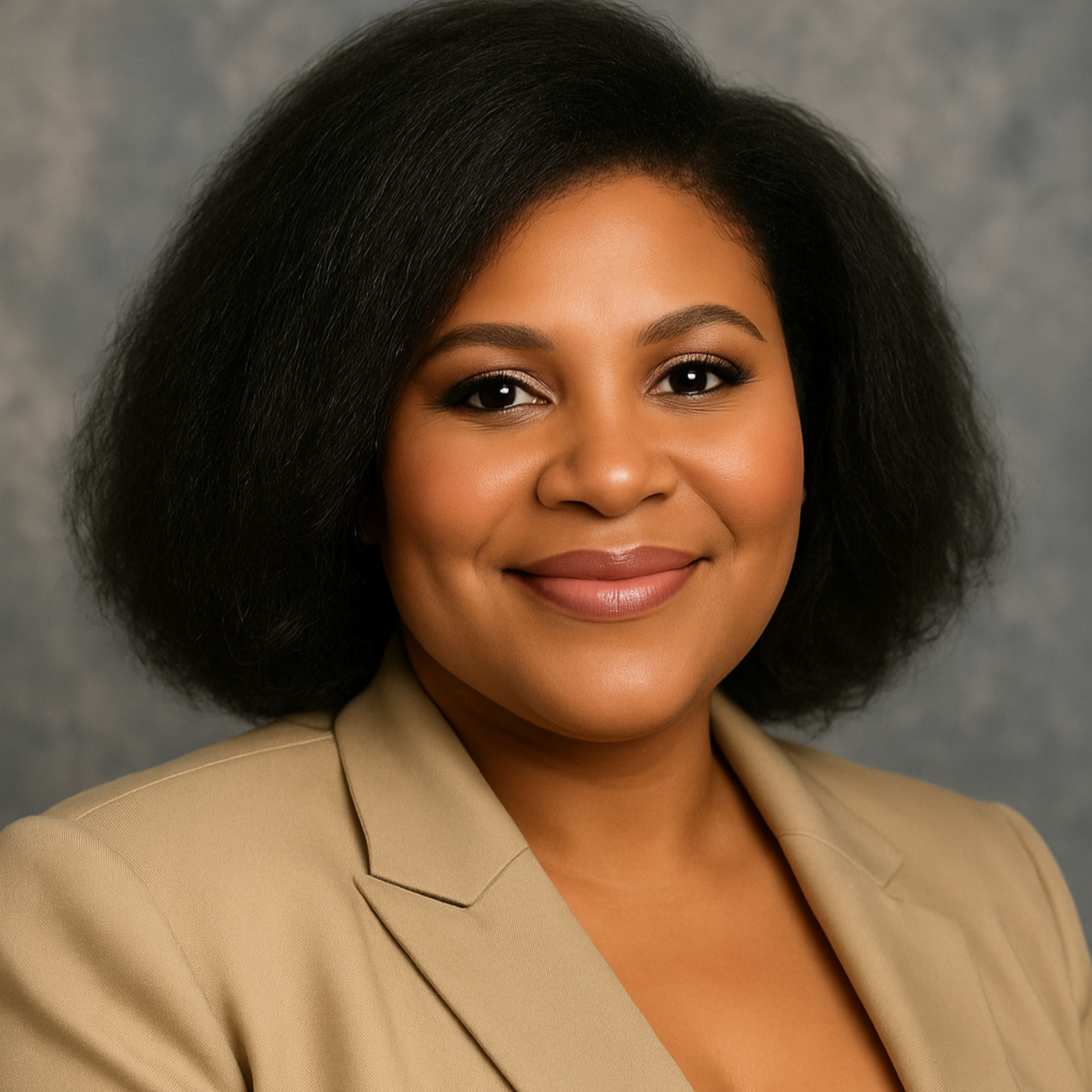
Healing from religious trauma requires more than individual therapy. In this episode, counselor Elisha explores the neuroscience and theology of collective healing — why your nervous system needs safe community to fully recover from church hurt and spiritual abuse, and how the Sanctuary Style Method applies to building one. Includes a guided somatic practice. elishas-space.onpodium.com
Elisha's Space: You left. Maybe you did it quietly, just stopped going one Sunday and never went back. Maybe you left loudly, in conflict, in grief, in anger. Maybe someone left you first, excommunicated, shunned, erased from the community you had built your whole life inside of. Either way, you left. ⁓ And you thought that was the hard part. But here's what nobody warned you about: the silence on the other side. The way Sunday mornings become grief you can't explain to anyone who wasn't there. The way you can't find the words for what you lost, because it wasn't just a building, it was a world. It was a language. It was the people who knew your name, the way you find yourself months or even years later, still scanning for safe community, still longing for something sacred and communal, and still terrified of what that might cost you again. If that is where you are today, you are in exactly the right place. Welcome to Elisha Space, a sanctuary for healing growth and for the kind of honest conversations that actually change things. I'm Elisha, your host, a counselor, an author, and someone who has sat in the same stuck places you have. If you've been listening for a while, I see you, and I'm glad that you're back. Today's episode is practical, clinical, but pastoral. We are talking about collective and community-based healing specifically for those of you recovering from religious trauma, spiritual abuse, and church hurt. And we're going to address something that individual therapy, as valuable as it is, cannot fully give you. The healing that only comes and happens in relationship, in community. In the presence of safe others. I also want to introduce something today that I have been developing, an application of the Sanctuary Style Method, not just to one-on-one recovery, but to the question of what safe communal healing looks like, what it requires structurally, what it must protect against, and how you begin to build it, even if you are starting from scratch. So stay with me. I want to start with what I call the double bind of healing after religious trauma. And I want to name it clinically because naming it is the beginning of understanding it. Here is the bind. You were hurt in the community and you need community to heal. Not the same community, not a community that replicates the same structures, but community nonetheless. Let me show you why. Dr. Matthew Lieberman at UCLA has spent years studying what he calls the brain's social pain network, the neural circuitry that activates when we experience social rejection. And what his research confirms is this: the brain processes social exclusion through the same neural architecture as physical pain. When you are cast out of a faith community, shunned, silenced, erased, it doesn't just hurt emotionally. It registers in your nervous system as survival threat. You were built for belonging. That is not a spiritual metaphor, that is a neurological fact. And Stephen Porges' polygagal theory goes even further. The vagus nerve, that wandering nerve we've talked about before, the one that governs your world of safety in the world, has a branch specifically dedicated to social engagement. The ventral vagal system. And it does something remarkable. It regulates in relationship. It co-regulates. It borrows cues of safety from the voices, faces, and presence of other human beings. Which means you cannot fully heal in isolation. No matter how hard you work on yourself, no matter how many books you read or journal entries you write. Or individual therapy sessions you complete. At some point, your nervous system needs to relearn that community doesn't always mean danger. And it can only learn that in the presence of actual people. Knowledge isn't just power for trauma survivors, knowledge is safety. So when the place you were taught was the safest place on earth, the church, the small group, the family of faith becomes the source of your deepest wound. Something in your nervous system gets caught in a loop. It is wired to seek community. It is also wired to avoid the thing that almost destroyed it. That confusion is not weakness. That is your system doing exactly what it was designed to do. It is tracking threat. It is trying to protect you. And it is also grieving because something that was supposed to be sacred betrayed you. And that grief deserves to be named. Now I have observed two predictable patterns in survivors and I want you to listen for which one you recognize in yourself. The first pattern is complete isolation. The pain of betrayal is so acute and the nervous system's threat categorization so broad that any form of organized community, even secular. Even therapeutic feels dangerous. So survivors build a life of solo recovery. They read, they journal, they go to individual therapy, all of which is legitimate and necessary. But eventually they hit the ceiling because there are things that solo work cannot give you. The second pattern is premature re-entry, moving into a new community too quickly, a new church, an online survivor group, an alternative spiritual space, because the nervous system has built enough internal scaffolding to distinguish safety from familiarity. And this is where I need to be careful with you. Not every community marketed as a healing space is actually structured for healing. Some survivor communities with the best intentions in the world can become sites of collective dregulation. Spaces where shared trauma becomes the organizing principle rather than shared growth, where the dominant nervous system tone is activated and hypervigilant and where re-traumatization happens not through malice but through insufficient structure. Not every Facebook group is a sanctuary, not every alternative church, not every online forum. So what does a genuinely healing community look like? How do you evaluate one or begin Building one when your trust has been stripped down to the studs. That is exactly what we are going to work through today. Let me give you the biological and theological case for why collective healing is not optional. It is architecturally built into who you are. Dr. Bessel Vanderkoelk, if you have read The Body Keeps the Score, you know his work, argues from decades of clinical research that trauma is fundamentally a disconnection. Not just from your own sense of safety, but But from other people, from your own body, from the flow of ordinary life. And his central conclusion about recovery is this: the most important factor in healing from trauma is the restoration of social connection. Not connection in the abstract, not connection in theory, safe, attuned. Witnessed connection. Here is what that looks like physiology. When you are in the presence of a safe person, someone whose own nervous system is regulated, who is not scanning you for what you might do, who receives your story without flinching, your mural nerves activate, your ventrovagal system begins to come online. And without any conscience effort on your part, your body begins to borrow safety from the person across from you. This is co-regulation. And it is not a spiritual concept alone, though it absolutely has a spiritual dimension we are going to reach in a moment. It is first a biological one. Oxytocin, the neurohormone released in the context of safe relational contact, down regulates cortisol. It tells the stress response system, you can rest now. You are not alone. And here is what makes them relevant for survivors of religious trauma specifically. Oxytocin levels are Often chronically suppressed in people who have experienced betrayal by trusted authority figures. The very physiological mechanisms for bonding and trust has been damaged by the experience of having trust violated in a sacred context, which means that rebuilding it requires the thing that damaged it: relationships. Built in a structurally different container. This isn't visualization, this ephysiology. Now the theological bridge Ecclesiastics four nine through ten, two are better than one because they have a good return for their labor. If either of them falls down, one can help the other up. But pity anyone who falls and has no one to help them. Before neuroscience had language for co regulation. Solomon had language for it. The observation is not romantic, it is functional. Some weights are not designed to be carried alone. The witness matters, the presence matters, the shared bearing matters. Of the load matters and Galatians six two. Carry each other's burdens, and in this way you will fulfill the law of Christ. The word translated burdens in the Greek barrows means an overwhelming weight, not a minor inconvenience, a crushing load. The text is explicit. Some things exceed the capacity of one nervous system. They require communal bearing. What was taken from you was not only a building, a theology, or a Sunday routine, it was a version, however imperfect, however corrupted, of being known and held in the presence of people who were supposed to share your values. That loss is real. That grief is legitimate. And the longing you still carry for sacred community is not naivete. It is the image of God in you recognizing what you were built for. I want to talk about something specific now, and that is why survivor-led communities carry a particular kind of medicine for people recovering from religious trauma. Dr. Judith Herman, whose foundational text, Trauma and Recovery, remains one of the most important clinical works on this subject, describes three stages of trauma recovery. Stage one is establishing safety. Stage two is remembrance and mourning. Stage three is reconnection, the rebuilding of the capacity for ordinary life and meaningful relationship. And Herman is very specific. Survivor groups in peer communities are frequently the catalyst for that third stage. Not because they replace individual therapy, they do not, but because they offer something that professional relationships by definition cannot mutuality. To be in a room with someone who says I was there too. I know exactly what that room smells like. I know what it felt like to be told my perception was wrong. I know the specific grief of losing your church family in a single afternoon. And who says it while clearly being on the other side of that experience? That is not just emotionally validating. It is neurologically reparative. It begins to update the nervous system's threat prediction model. It provides evidence the body can feel. Maybe community doesn't always mean danger. Maybe there are rooms I can breathe in. Now, here is what makes religious trauma specifically different from other forms of trauma and why survivor community is uniquely important for it. One of the most insidious features of high control religious environments is what I've come to call isolation theology, the embedded teaching, sometimes explicit. Often communicated atmospherically, that the world outside this community is dangerous, that your perceptions cannot be trusted without spiritual authority to validate them, that leaving means loss of family, of identity, of divine favor, sometimes of eternity itself. That theology does not. Just shape belief. It shapes the nervous system. It teaches your body to code inside as safe and outside as threatening. Even when the inside is the actual site of harm. Recovery from isolation theology requires new experimental evidence at the nervous system level. It requires contact with community that is safe and outside the original structure. It requires people who left and were not destroyed by it, who lost the community and found themselves still standing. That is the medicine that survivor-led spaces carry. Now I want to walk you through something that I have been developing clinically, the application of the Sanctuary Style Method to collective and community-based healing. The Sanctuary style method was originally developed for individual recovery, specifically for nervous system safety and shame healing. But what I have found in my practice. And what the neuroscience supports is that every principle within its maps directly onto what a safe healing community must provide. The principles are not different. What changes is the architecture. So let me walk you through each one. And as I do, I want you to hold two questions simultaneously. Where did my previous faith community fail this principle? And What would it look like for a new community to embody it? Principle one, safety is structural, not merely spiritual. In high control religious environments, safety was almost always framed as spiritual attainment. You would feel safe if your faith was strong enough, if you were in right standing with leadership, if you had sufficiently submitted your will. But safety is first a neurological state, and it requires structural cues to be established, predictability, transparency, freedom to question without consequence, clear accountability for leadership, an absence of threat embedded in the relational architecture. A community that tells you safety is conditional on compliance is not offering you safety. It is offering you compliance wrapped in the language of peace. A genuinely healing community builds safety into its structure before it builds anything else. That means no information hierarchies. Designed to protect power, no silencing culture, no coercive accountability, no unquestionable leaders. If you are evaluating a new community, and I hope you are doing this slowly and carefully, this is the first question. Is safety here structural or conditional? Principle two shame cannot survive witness truth. doctor Kirk Thompson in the Soul of Shame makes an observation that I believe is one of the most clinically important insights of our generation. Shame is not primarily an internal experience. It is a relational wound. It tells you not to be Just that you have done something wrong. It tells you that you are wrong, that there is something defective in your core naturally that, if fully seen, would cause you to be expelled. And shame metastasizes in silence. It feeds on hiddenness. It cannot survive being spoken into the presence of someone. Who receives it with grace and does not flinch. This is the theological logic underneath confession, not as a mechanism for punishment or penance, but as an act of unhiding, the declaration This is what I carry met with I see you and you are still here. A healing community build structures for witness truth telling, a small group with genuine covenant of confidentiality, a peer support cycle, a facilitated space for testimony. The specific format is less important than the function. Your story requires an audience. of safe witnesses to complete its healing. Principle three, co-regulation is a communal practice, not just a personal one. We talked about the neuroscience of co-regulation, the way a regulated nervous system can lend safety to a dysregulated one. In a group context, this becomes a collective feel. When one person in your healing community Becomes activated, triggered, flooded, pulled back into this threat state. The regulated nervous systems of the people around them provide the environmental cues of safety needed to come back down. This does not require everyone in the group to be fully healed. It requires the group to be collectively oriented. Toward regulation rather than towards activation. You have experienced the opposite of this. You have been in rooms where collective anxiety, urgency, and shame were the governing nervous system tone, and where that tone was used to increase compliance and suppress individual discernment. That is what Emotional manipulation and religious environments do. It dysregulates the group to make them easier to control. A healing community intentionally practices collective regulation. It opens shared time with intentional grounding. It names when something is activating and chooses to pause rather than press. It slows down when someone is flooding rather than accelerating through it. We are going to practice this together in a few minutes. Principle four Spiritual Reconstruction requires communal deconstruction. Deconstruction, the necessary dismantling of harmful theological frameworks that were used to control, shame or harm you is one of the most misunderstood processes in religious trauma recovery. Many survivors attempt it in complete isolation. And while solitary reflection is part of it, I want to propose something. The beliefs that were installed in community are most effectively examined in community. When you hear another survivor articulate the specific theological claim that you couldn't quite name. When someone puts language on the harm that was done, something shifts at the nervous system level, not just intellectually, somatically. The body recognizes being understood in a way that solo reading cannot replicate. And when a trusted voice says, not from a page, but in relationship, that interpretation was weaponized. And it is not the whole of what scripture has to say. The nervous system receives that as new relational evidence, not just new information. A healing community creates space for theological deconstruction that is unhurried. It does not rush survivors towards new certainty. It honors the sacred disorientation of the in between. The place where old certainties have dissolved and new ones have not yet formed. It asks the questions that were forbidden, and it stays in the room when those questions are uncomfortable. Principle five. Covenantal accountability restores what spiritual authority destroyed. Spiritual abuse is at its core, a betrayal of authority. Someone in a position of spiritual trust used that position to harm. And one of the lasting wounds of that experience is a distorted relationship with With accountability itself. Some survivors become allergic to any form of structured accountability, understandably. Others, having had dysregulated authority as their only model of safety, seek out new, highly authoritarian structures because the familiar pattern, however harmful. At least feels recognizable. A healing community practices what I call covenantal accountability. Accountability rooted not in hierarchy or fear, but in mutual commitment. We agree together how we will treat one another. We establish together what happens when that covenant is broken. We hold it with honesty and grace rather than punishment and shame. This is how trust and leadership is rebuilt. Not by avoiding all leadership, but by experiencing leadership that is transparent, accountable, and willing to be wrong. If a leader in your healing community cannot say, I made a mistake. That is diagnostic. Genuine authority does not need to be infallible to be trustworthy. Before we move to prayer, I want to give you something you can take into your healing community or practice right now wherever you are. This is the Sanctuary Breath Circle. I use it as an opening practice in any group healing context. It is designed to establish a shared physiological baseline before any content is discussed to move the collective. Nervous system from threat scanning into social engagement mode to tell everybody in the room you are safe to be here. If you're listening alone today, you can do this practice now. Imagine the people in your healing community around you, or simply allow it to be a breath prayer beneath you and God. Find a comfortable position, both feet flat on the floor. Let your hands rest open on your thighs, palms facing up as an active receiving rather than gripping. Notice where your body is holding tension right now. Your jaw, your shoulders, the muscles behind your eyes. You don't have to release it yet, just notice it. Now, breathe in through your nose slowly for four counts. One, two, three, four. Hold gently at the top just two counts. One, two. And release through your mouth slowly for six counts. The exhale is where your vagus nerve begins to down-regulate the stress response. The exhale is the work. One, two, three, four, five, six. Again for four. Hold out for six. One more time, and on this final breath, I want you to breathe in with the word belonging, not belonging to a church system, not belonging to a theology or a pastor's interpretation of who you are, belonging to the God who made you, belonging to the safe community that exists or is becoming, belonging to yourself in. Slowly for four. Hold. And breathe out belonging. Let your nervous system hear that you are not running from it. You are landing in it. Is there tension there? Notice whether anything shifted even slightly. A fraction of release in the jaw, a small drop in the shoulders. That is your ventrovagal system coming online. That is your body beginning to believe it might be safe. The early church, the first century model we read about in Acts, was not a Sunday service. It was a community of practice. People met in homes, they broke bread together, they shared material resources, they confessed to one another, mourned together, and celebrated together. They held each other's practical survival alongside. their spiritual formation. Acts 2, 42 through 47 gives us this picture. They devoted themselves to the apostles' teachings and to fellowship, to the breaking of bread and to prayer. All the believers were together and had everything in common. They broke bread in their homes and ate together with glad and sincere hearts. Before it became an institution with buildings In budgets and brand identity, the church was a healing community, a co-regulatory space, a place where your survival was bound to the survival of the person beside you. What was taken from you was not just a building or a set of beliefs. It was a version corrupted and weaponized, but pointing towards something real, of being known and held. And shared life with people committed to the same things. And I want to say this carefully, but I want to say it clearly. The abuse you experienced was not the essence of what Christian community was designed to be. It was a corruption of it, a profound one, a harmful one, one that deserves to be named as such. You are not naive for still longing for what it promised. You are not damaged beyond the possibility of safe community. You are not wrong for grieving what you lost. What it required now is discernment, slowness, a framework, the sanctuary style framework for what safety actually looks like when structurally rather than what it promises to feel like. His peace is not dependent on your circumstances being resolved. It is a regulated nervous system in the presence of a safe God. Let's go before God together. Father, we come to you today carrying something heavy, not just individual grief, but the communal grief of people who were hurt inside the walls of what was supposed to be your house. God, we name what happened. We do not cover it in the language of unity and moving forward. We say clearly and without apology what was done in the name of faith that produced shame, isolation, fear, and harm, that was not your design. You did not ordain that. Father, I am grateful that you made these bodies, that you knit together the very nervous systems that we are learning together to regulate. You built into us the need for safe community. You built the ache for belonging into the architecture of who we are. That ache is not weakness, it is not immaturity, it is a fingerprint of yours. God we pray for those who are still in isolation, those who left the church and have not yet found ground safe enough to stand on. Lord, be their ground today. Speak in this moment as the voice of a safe other. Regulate something in their body that they haven't been able to regulate on their own. We pray for those who are beginning to risk community again, tender, watchful, testing every room before they breathe normally in it. Lord, give them discernment Sharp enough to distinguish the discomfort of growth from the signal of genuine danger. Give them the courage to stay when it is safe and clear. Unmistakable permission to not leave when it is not. And we pray for those who are building healing communities, for the leaders, the facilitators, the pastors who have been through enough to know what not to build. Give them wisdom to structure safety before they structure anything else. Give them the regulated nervous system presence that tells a survivor's body you can breathe here. You made us for each other. You built repair into the relational fabric of creation. And so we trust that what was broken in community can carefully, slowly, with the right people be healed in community. Amen. Okay, I want to leave you with something you can actually do because that's what we do here. We don't just hold a concept, we practice it. Your challenge for the next seven days is what I'm calling the Sanctuary Circle Inventory. Day one and two, name your current community landscape. Who are the three to five people in your life with whom, when you are in their presence, your nervous system settles. Not people who have answers, not people who fix you, People in whose presence you can breathe normally. Write their names down. That list is the beginning of your sanctuary circle. Days three and four identify one gap. Is there a community, a therapy group, a survival circle, an online space that you've been curious about but haven't stepped into? Name the resistance honestly. Ask yourself: is this a generalized threat response? All community is dangerous, or is this specific discernment? This particular community showed me these specific red flags. Those feel different in the body. One is a pattern, one is information. Days five and six, practice the sanctuary breath circle with one safe person. You don't have to name the framework, Just say, I'm working on something about breathing together. Can we try this? Notice what happens in your body when you regulate alongside someone else. Notice what that tells you. Day seven, write one sentence about what safe community means to you now, not what you were taught it should mean, not what it used to mean. What does your nervous system say it feels like? Let your sentence become a compass for what you're building towards. Now, if you want to go deeper, if you want the clinical and spiritual framework for this work in your hands, visit us at ElishaSpace. The start guide is there and it is your first step. And if you are a counselor, a pastor, a group facilitator, or a community leader who wants to bring the sanctuary style method into how you structure your community, reach out. The work is too important. To stay theoretically. Before I let you go today, I want to acknowledge something. If the episode stirred something in you, if it called up grief or anger or longing or fear, that is not a sign that you are too wounded to heal. That is a sign that your nervous system is paying attention. And that is where every recovery begins. If this episode helped you, share it. Text it to one person you know. is still in isolation. Someone who left the church and hasn't yet found their footing. This contact is free because it needs to reach people who need it most. Find all our episodes, resources, and the start guide at elishaspace.onpodium.com. Until next time, you are not too much, you are not too far, and you are not alone.
 Apple Podcasts
 Castbox
 Castro
 Goodpods
 Moon FM
 Overcast
 Pocket Casts
 Podbean
 Podcast Addict
 Podcast Republic
 Spotify