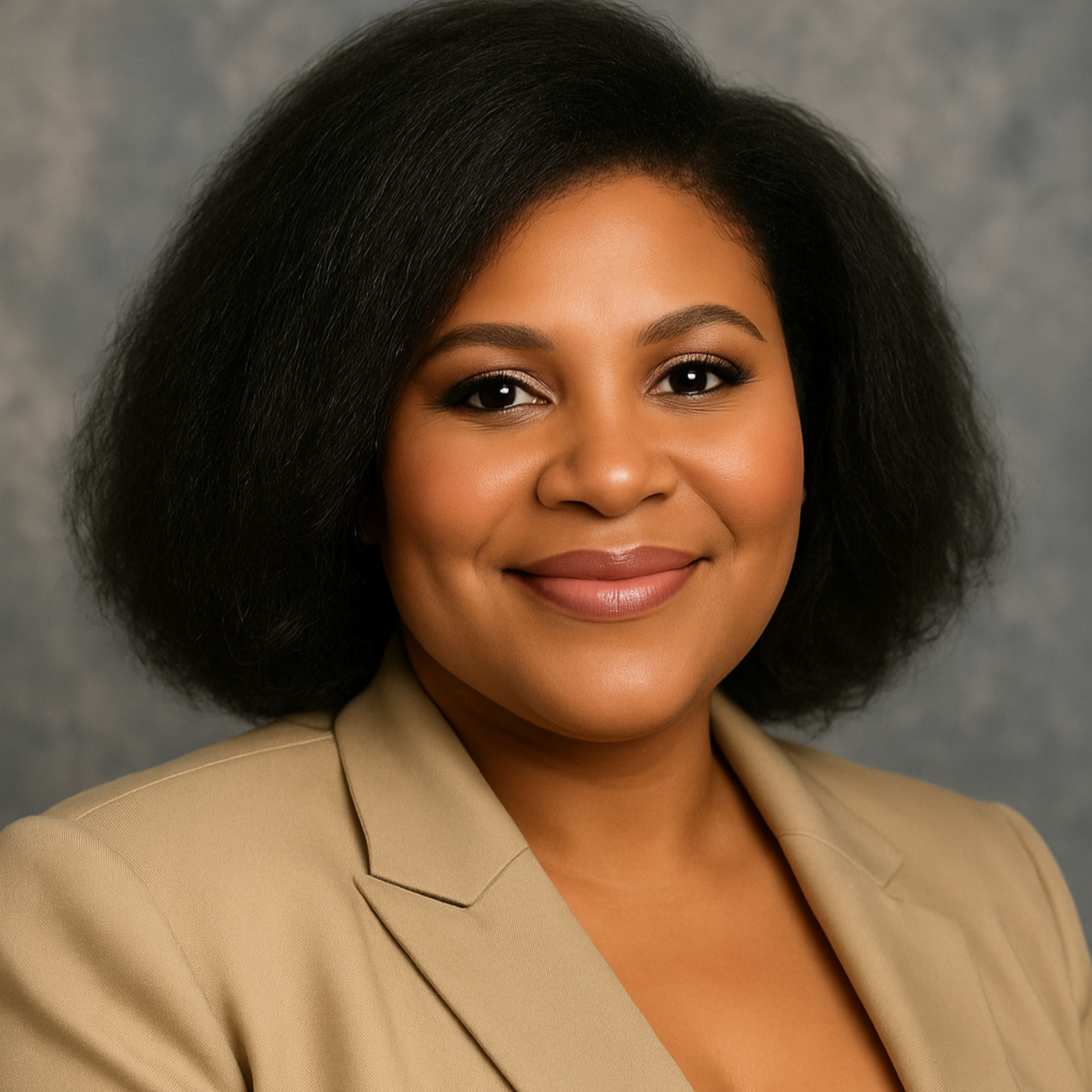
Why Your Body Holds the Trauma Your Mind Won't Admit: A Christian Guide to Somatic Healing
Tonight's Episode
Your body remembers what your mind has tried to move past. In this episode, Elisha unpacks somatic therapy through a clinical and scriptural lens, addresses skepticism head-on, and walks you through three body-based nervous system tools — with a guided practice and prayer close. This is physiology rooted in faith.
Elisha Lee: You are sitting in church, the worship music is playing. Everyone around you has their hands lifted. And somewhere in your chest there's this tightness, this low hum of something that won't let go and you don't know why. Or maybe you do know why. But you've been told if you just pray more, if you just trust more, if you just surrender more, the body would follow. But it hasn't. And then someone says the word somatic therapy, and your first instinct maybe is suspicion. Is this Christian? Is this just therapy trying to replace God? Is this new age under a different name? I would have spend this episode answering those questions honestly, clinically and pastorally, because your body is not working against your faith. Your body is doing its job, and today I'm going to show you what that job is and how to work with it, not against it, in a way that is deeply scripturally grounded. Stay with me. Welcome to Elisha Space, a sanctuary for healing growth and for the kind of honest conversations that actually change things. I'm Elisha, your host, a counselor, an author, and someone who has sat in the same stuff places you have. If you're new here, welcome home. If you've been listening for a while, I see you and I'm glad that you're back. Before we go anywhere today, I want you to arrive. Find a comfortable position. If you're driving, keep your eyes open and just soften your grip on the wheel. Take one breath in through your nose. Slow, count to four. Hold it at the top just for a moment. Now exhale. Slow through your mouth. Take six counts. Let your shoulders drop. One more time, in through your nose. Hold and out, all the way out. Let your body settle into wherever you are. Good, you're here. Let's do it. A while back I released an episode on somatic therapy and the response to your responses told me that we needed to go deeper because the questions you were asking weren't just what is this? They were the harder questions. Is this biblical? Can I trust my body? My pastor says to focus on the spirit, not the flesh. What do I do with that? Those are good questions. Those are honest questions, and they deserve more than a ten minute answer. So today's episode is a follow up and a deepening. If you heard that episode, think of this as the next room. If you didn't, this one stands on its own. But I'd encourage you to go back. Here is what we're going to do today. First, I'm going to address the theological objection head on, because if you spend this whole episode with that question sitting unanswered in the back of your mind, none of the tools will land. Second, I'm going to explain what somatic therapy actually is, not the social media version. the clinical version and why it is not only compatible with Christian faith, it may be the most theologically consistent approach to healing we have. Third, I'm going to give you three practical semantic tools right here today. Tools that are body based, evidence backed, and spiritually integrated. And then we're going to close in prayer together. Today's episode is practical clinical but pastoral. Let's start with the elephant in the room. Is somatic therapy Christian? I'm not going to dance around this. I am going to give you the full answer. The word semantic comes from the Greek soma, which means body. The same word the Apostle Paul uses in Romans twelve, one, I urge you, brothers and sisters, in view of God's mercy, to offer your bodies your soma as a living sacrifice. The same word used throughout the New Testament to describe the body of Christ. the physical, incarnate Son of God, who wept, who was tired, who asked for the cup to pass from him, who swept drops of blood in a garden when his nervous system encountered what was coming. The incarnation is the most radical body-affirming statement in all of theology. God did not sidestep the body, he entered one. So when I hear people say somatic therapy is unbiblical, what I hear is a theology that has quietly absorbed a form. of Greek dualism that says the body is lesser than or separate from the spirit, that the body is just a container and what happens to it doesn't really matter. That is not biblical Christianity, that is Gnosticism. The Bible is one of the most body forward texts in history. The Psalms are full of somatic language. My heart and my flesh cry out for the living God. David doesn't separate them, he says both. Lamentations describes grief in the body. My eyes fail from weeping. I am in torment within. My heart is poured out on the ground. The body is not a problem to transcend. The body is the sight of our humanity, and therefore the sight of our healing. Now here's the nuance I want to hold with you. Somatic therapy as a clinical modality was not developed by Christians. Like most of psychology, it emerged from secular research. And like most of secular research, it discovered things that scripture has always said. The clinical research is catching up to what God built. Knowledge isn't just power for trauma survivors, knowledge is safety. And when I understand that my nervous system was designed by God to respond exactly the way it does, That dysregulation is not a spiritual failure. It is a physiological response to a fallen world. I can stop adding shame to my suffering. So is somatic therapy Christian? The tools themselves are not inherently spiritual. What makes your healing Christian is the context you do it in, the God you bring into the room, and the theological grounding you integrate throughout. That is what we do here at Elisha Space and that is exactly what we're going to do today. Let me give you the clinical foundation and I'm going to keep it grounded because I want you to be able to explain this to your pastor, your spouse, your skeptical friend. The core premise of somatic therapy is this. Trauma is not only a memory, it is a physiological state that gets stored in the body. This is not a theory anymore, this is neuroscience. Dr. Basil van der Kolk, and if you haven't read The Body Keep Score, I want you to put it in your list. Documented decades of research showing that traumatic experiences don't just leave psychological marks. They leave neurological ones. When your nervous system encounters something overwhelming, and overwhelming can mean violence, yes, but it can also mean chronic neglect, emotional abandonment. religious abuse, being in a home where love was conditional, your body activates a survival response. Fight, flight, or freeze. Your amygdala, the alarm center of the brain, fires. Cortisol and adrenaline flood your system. Your prefrontal cortex, the part that reasons, that prays, that thinks in language, goes partially offline. This is not weakness, this is design. Your body does this to keep you alive. But here's what happens for many of us, especially those who grew up in environments where it was not safe to fight, not safe to flee, and not safe to express what you're feeling. The threat passes, but the nervous system doesn't get the signal that it's over. So the body stays activated, hypervigilant, on guard, braced. And over time that activation becomes the baseline. You stop noticing it because it just feels like you. I call this being stuck between surviving and healing. The in-between space where you know God saved you, you believe He is good, and yet your body, your nervous system, still responds as though danger is present. Here's the clinical key and theological reframe I want you to hold. This isn't visualization, this is physiology. Your nervous system cannot distinguish between a memory and a present threat. When you think about the thing that happened or when something in your environment triggers the memory, your body responds as though it is happening right now. This is why talking about it sometimes isn't enough. Because the trauma isn't only stored in the language centers of the brain, it's stored in the brainstem, in the body tissue. And the way you hold your shoulders when you're afraid, and the way your throat closes when you try to speak truth. And talking, which is beautiful and important, and I am not minimizing it, talks to the cortex. But the brainstem needs a different language. It needs the body. That is what somatic therapy does. It speaks the language the survival brain understands sensation, movement, breath, grounding, safety cues. It doesn't bypass the mind. It gives the body a way to complete what the threat interrupted. And when we do that inside a Christian framework, we are doing what Paul prayed in First Thessalonians 5 23, that God would sanctify us wholly, spirit, soul, and body. not one without the others. Let your nervous system hear that you are not running from it. Before I give you the three tools, I want to pause and say if what you're hearing today is resonating, if you're realizing that some of what you've been carrying in your body has been unnamed and unaddressed, I have a free resource I want to put in your hands. It's called the Start Guide. It's a somatic regulation guide built specifically for this community. For People who are navigating trauma recovery inside their faith. It's not a workbook, it's a practical guide. Five tools, five minutes each, designed for the in-between moments of your day. You can find it at Elisha's SpaceonPodium dot com. I'll also put the link in the show notes. Now let's get practical. Three tools. Each one is clinical. Each one has a scriptural anchor. Each one you can use today. Tool one is the physiological side. There is one breath pattern that down regulates your nervous system faster than anything else we know of. Researchers at Stanford identified it and named it the physiological side. Here's how it works. You take a deep breath in through your nose, and then before you exhale, you take a short inhale on top of it. A sniff essentially, like you're topping off the tank. And then a long, slow exhale through your mouth, longer than the inhale. Let it be twice as long. What that double inhale does is fully inflate the air sacs in your lungs, the alveoli, which had par partially collapsed under stress. And the long exhale activates the parasympathetic branch of your nervous system. The vagus nerve responds, your heart rate drops, your cortisol begins to clear. Two physiological signs in a row can meaningfully shift your nervous system state in under sixty seconds. This isn't visualization, this is physiology. And here's your scriptural anchor for this too. The Hebrew word for spirit is Rosh. It means spirit, wind, and breath. The same word. He breathed into his nostrils the breath of life. And then man became a living being. God's first act of activation in the human body was breath. Breath is not a therapy add-on. Breath is where God started. When you do this, you can pray it. You breathe me into being. Breathe me back to safety. Tool two Vagal toning through humming. The vagus nerve and this is one of my favorite pieces of anatomy to teach runs from your brainstem down through your throat, your heart, your lungs, your gut. Vagus literally means wandering in Latin. It wanders through your whole body. And one of the most direct ways to activate it, to signal to your nervous system that you are safe is through vibration in the throat. Specifically humming, singing, chanting, even humming a hymn under your breath. There is a reason that communal worship has been a feature of every human civilization in recorded history. There is a reason the psalms were sung, not recited. Sung, the physical act of producing sound with your voice, of vibrating your vocal cords, your chest, your sternum, communicates safety to the vagus nerve. This is co-regulation through sound. So here is your tool. The next time you are dysregulated, anxious, flooded, shut down, I want you to start humming. It doesn't have to be loud, it doesn't have to be a full worship song. Just close your mouth and let sound move through your chest. Feel the vibration in your sternum, in your throat. If you want to pair it with something, use a hymn or a scripture song that is already in your body. Something your nervous system already associates with safety. It is well with my soul. Be still and know. Great is thy faithfulness. Let your nervous system hear the song before your mind catches up. TUL three. Grounded hands on chest posture. This is the practice I come back to more than almost any other, and it is the most accessible one I know. Place both hands on your chest right over your heart. Let the pressure be firm but gentle, like a hand on a shoulder. Feel the warmth of your own hands. Feel your chest rise and fall. Now say out loud if you can, or whisper it, I am here, I am safe, I am not alone. What is happening physiologically? Self-touch activates the same receptors that respond to being held by another person. It releases oxytocin, the bonding hormone. It signals to the nervous system, I am not in danger, someone is with me, even when that someone is you. And theologically, there is a profound truth embedded in this gesture. When you place your hands on your own chest, you are touching the dwelling place of the Holy Spirit. Do you not know that your body is a temple of the Holy Spirit who is in you? First Corinthians six nine. You are not alone in this body. You have never been alone in this body. His peace is not dependent on your circumstances being resolved. It is a regulated nervous system in the presence of a safeguard. I want to walk you through a short integrated practice using all three tools we just covered. This will take about two minutes. If you're driving, you can do the breath and the humming. If you can safely stop, do all three. Let's begin. Find your breath. Place your hands on your chest. Take a deep inhale through your nose. Add a small sniff at the top and exhale long slow all the way out. Again inhale. Second breath at the top. Exhale slow, let your shoulders drop. Now begin to hum softly Whatever comes naturally. or calm the first hymn that comes to mind. Feel your chest vibrate beneath your hands. Now out loud or in a whisper, I am here, I am safe, I am not alone. You breathe me into being, breathe me back to safety. Let your nervous system hear that you are not running from it. I want to leave you with a challenge this week. For the next seven days, I want you to practice one of these three tools daily, just one. Pick the one that feels most accessible. The physiological side when you wake up, a hummed hymn when your body tightens, hands on your chest with those three sentences before you sleep, and And I want you to notice not what you feel, but what shifts even slightly. Because healing is rarely dramatic. It is usually incremental. Small moments of regulation that over time build a new baseline. You are not waiting for a miracle to allow your body to begin to recover. Your nervous system is already capable of learning safety. You just have to show it slowly in small doses that safety is real. If this episode helped you, share it. Text it to one person you know is struggling. Send it to the friend who tells you she's fine, but you know her body is exhausted. This work doesn't go viral because it's flashy. It spreads because someone who needed it passes it forward. Let's close together. If you're somewhere you can close your eyes, go ahead and close them. Hands on your chest if you like. Father, I am grateful that you made these bodies that you knit together, the very nervous systems that we are learning to regulate, that you did not design us to carry what we have been carrying alone. For every person listening to this who has been told that their body is an obstacle to their faith, would you speak the truth over them today? That they are Soma, that they're our body and spirit together, and that you came for all of them, not just the parts that are easy to manage. For the ones who've been breezing for so long they don't remember what resting feels like, let today be the first small moment of softening. Not a breakthrough, just a breath. One breath is enough. For the ones who are afraid that going into the body will mean going back into the memory, remind them that your presence goes with them. That the same God who walked with Daniel in the fire is present inside their nervous system right now. Not waiting on the outside of their fear, but already there inside it. Teach us to say with the psalmist, My heart and my flesh cry out for you, both, not one without the other. Both. We receive your peace not as the absence of difficulty, but as regulated presence in the middle of it. In Jesus' name, amen. Until next time, you are not too much, you are not too far, and you are not alone.
 Apple Podcasts
 Castbox
 Castro
 Goodpods
 Moon FM
 Overcast
 Pocket Casts
 Podbean
 Podcast Addict
 Podcast Republic
 Spotify