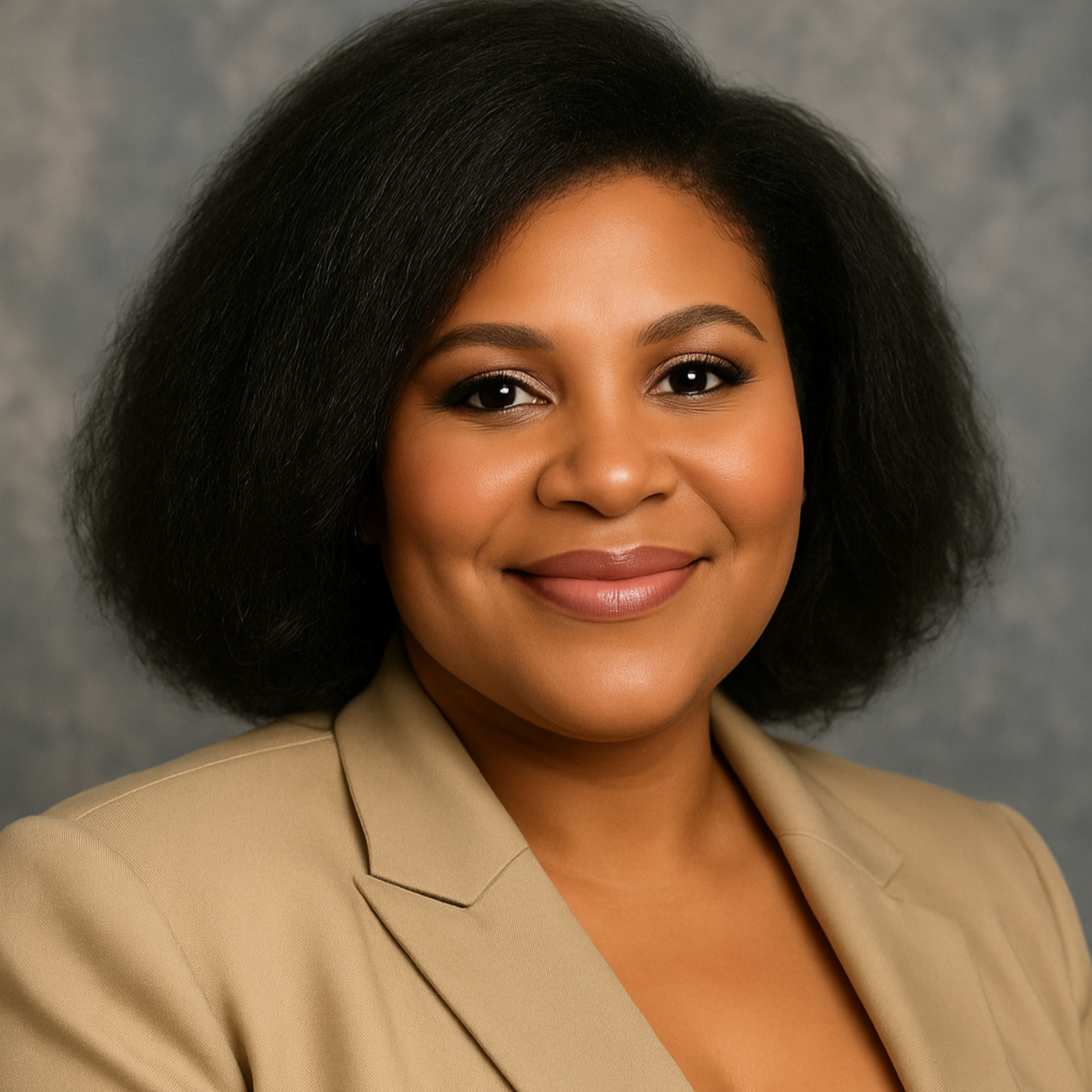
The Unseen Scars: What Spiritual Abuse Does to the Body & Brain
Tonight's Episode
What does spiritual abuse actually do — not theologically, but biologically — to the human body and brain? In this documentary-style episode, counselor and author Elisha breaks down the neuroscience and physiology of religious trauma: how the HPA axis becomes dysregulated, how chronic spiritual abuse physically alters brain structure, and why so many survivors are sitting in doctors' offices with autoimmune conditions, chronic pain, and treatment-resistant depression — without anyone connecting the dots back to what happened to them inside a church.
This episode covers:
✦ What Religious Trauma Syndrome actually is (Dr. Marlene Winell)
✦ How the body's stress response becomes permanently dysregulated
✦ The three brain regions physically altered by complex trauma (amygdala, hippocampus, prefrontal cortex)
✦ Polyvagal Theory and what nervous system "collapse" looks like in survivors
✦ Betrayal Trauma and why spiritual abuse is neurologically distinct
✦ The physical symptoms no one is connecting to your church experience
✦ A theological reframe that holds both science and faith
This episode is clinical. But it is also pastoral. You will leave with both understanding and hope.
💛 If this helped you, text it to one person you know is struggling.
📩 Work with Elisha: Book an Initial Consultation
🌿 Restoring You Christian Counseling: Website
#spiritualabuserecovery #religioustrauma #nervoussystemhealing #polyvagaltheory #traumaandthebody #Christiancounseling #spiritualabusesymptoms #bodykeepsthescore #religioustraumasyndrome #traumahealing #faithandanxiety #churchhurt #betrayaltrauma #complexPTSD #Christianmentalhealth #somatichealing #HPAaxis #amygdalatrauma #cultrecovery #ElishasSpaceElisha Lee: I sat in that church for 22 years. I sang the songs. I served in the ministry. I gave my tithe even when I couldn't pay rent. And I believed, truly, completely believed that God lived in that building. And then I left. And for three years after I walked away, I couldn't sleep through the night. My body would jolt awake at 2 a.m. And I wouldn't know why. My hair began to fall out. My rheumatologist diagnosed me with an autoimmune condition she described as unusual for your age. I was 34. I had panic attacks in parking lots because the worship music from a passing car sounded too familiar. I went to four different doctors. None of them asked about my church. This is a composite story, but it is not a rare one. Welcome to Elisha Space, a sanctuary for healing growth and for the kind of honest conversations that actually change things. I'm Elisha, your host, a counselor, author, and someone who sat in the same stuck places you have. If you're new here, welcome home. And if you've been listening for a while, I see you. And I'm so glad you're back. Today's episode is different. It is heavier than what I usually bring you. It is more clinical and I need you to know that from the beginning so you can't decide whether today is the day you are ready for it because today we are going inside into the body into the brain into the biology of what spiritual abuse actually does to a human being not the theology not physiology but biologically ⁓ because many survivors are sitting in doctor's office says getting diagnosis fibromyalgia ⁓ POTS, chronic fatigue treatment resistant, depression, without anyone in that room connecting the dots back to what happened to them inside a church. Today we connect the dots. This episode is clinical, but it is pastoral. And I promise you, I am going to hold your hand the entire way. So stay with me. Before we go further, a word. This episode contains direct discussions of spiritual abuse, religious trauma, psychological manipulation, chronic illness, and the physiological impact of complex trauma. If you are currently inside an abusive religious environment, this episode may feel destabilizing. Please take care of yourself first. This episode will be here when you are ready. And if you are a therapist, a pastor, a physician, parent listening right now, stay with me. What I'm about to share is not anecdotal. It is backed by decades of peer-reviewed trauma research, and it will change how you see your people. Chapter 1, The Invisible Wound. Most of us, when we hear the word spiritual abuse, picture a compound somewhere isolated. We picture extreme situations, corrosion, isolation, a leader claiming to speak directly to God. And yes, those situations exist and they are devastating, but spiritual abuse does not require a compound. It happens in mainline churches, in evangelical mega churches, in Catholic parishes. in tight-knit home churches, in charismatic communities, anywhere, anywhere that spiritual abuse is used to override a person's autonomy, their sense of self, or their access to their own relationship with God. Spiritual abuse is possible. Dr. Marlene Wynell, a psychologist who coined the term religious trauma syndrome, describes it as a complex of symptoms that grow from the need to remain in or to recover from a religious system that is psychologically harmful. It is not just about leaving a church. it is about what that system did to your nervous system long before ⁓ you had the language name it. And here is what I need you to hold as we move through this episode together. The most insidious feature of spiritual abuse is that it is invisible. There are no broken bones. There is no bruising that can be photographed. The wounds are internal in the neural pathways, in the immune system, and the part of your brain that is supposed to tell you that you are safe. So when survivors say, I don't know what happened to me, I just know something is wrong. They are right, something did happen. And today I'm going to show you exactly what. Chapter 2, The Body Under Siege. I want to start with a woman I'll call Sarah. All client composites in this episode are fictional. They do not represent any single individual. Sarah came to my practice after 15 years in a high control religious community. By the time she sat across from me, she had been diagnosed with lupus, irritable bowel syndrome, and a thyroid condition, her endocrinologist described as unusual for her age. She was 34 years old. did not come to me as a trauma survivor. ⁓ came to me because she could not stop crying in church. Those were her exact words. I don't even know why I'm crying. I think I'm fine. She was not fine and her body had been saying so for a very long time. Here's the science. When a person exists inside a spiritually abusive system, their nervous system operates in a state of chronic low grade threat. And the threat is not always overt. Sometimes it looks like a Sunday sermon designed to keep you feeling like you are never quite enough. Sometimes it looks like leadership that communicates suddenly but consistently that your questions are dangerous. Sometimes it looks like a community that will love you, but only if you comply. The brain does not distinguish between a physical threat and a relational one. It cannot differentiate between a predator in the woods and a pastor who uses God's name to silence you. To your nervous system, it is the same signal. And when that signal is chronic, When you live inside hypervigilance Sunday after Sunday, year after year, your HPA axis gets stuck. Your hypothalamic pituitary adrenal axis. Let me tell you what that means in plain Your HPA axis is your body's stress response system. ⁓ When you perceive a threat, your hypothalamus signals your pituitary. which signals your adrenal glands to flood your body with cortisol and adrenaline. Those hormones are brilliant in an acute emergency. They sharpen your senses. They flood your muscles with energy. They were designed to help you survive a short-term crisis. They were never designed to run continuously. In chronic trauma environments, the HPA access becomes dysregulated. It either gets stuck on flooding your body with cortisol perpetually, or it becomes so burned out that it stops producing adequate cortisol at all. Both states are dangerous. Both are measurable. Both appear in the blood work of complex trauma survivors. And chronically elevated cortisol does this to the body. It destroys the gut lining. It suppresses immune function. It drives systematic inflammation. It disrupts sleep. It disrupts architecture. It alters thyroid dysfunction. It dysregulates reproductive hormones. Spiritually abused people do not just get their theology broken, their bodies get broken with it. So stay with me. Chapter Three, The Brain That Learned To Survive. In 2014, Dr. Bessel van der Kolk published what many of us in the trauma field consider the most consequential book of the decade, The Body Keeps the Score. And the central argument of that book, built on decades of neuroscience and clinical research, is this. Trauma is not just a memory. It is a biological event that physically alters the structure of the brain. I want to walk you through what that means for the survivor of spiritual abuse understanding is the step towards something that changes ⁓ Knowledge isn't just power for trauma, survival ⁓ knowledge is safety. Let's start with the amygdala. Your amygdala is your brain's threat detection center. It is fast, it is automated. And in survivors of chronic trauma, it becomes hypersensitive. It is scanning constantly for signals of danger. For the spiritual abuse survivor, those signals have a very specific profile. The sound of a particular worship song, the specific cadence of authority in someone's voice, the phrase, the Bible clearly says, that was used to shut you down. the smell of a room where something happened that you were told didn't happen. These are not irrational triggers. These are your brain doing exactly what it was trained to do. The amygdala learned this thing is dangerous, flag it every time. But here is what I need you to really hear. Chronic amygdala activation actually changes the physical structure of the brain. Neuroimaging research has identified measurable changes in three specific regions in complex trauma survivors. One, the prefrontal cortex, the seat of rational thought, discernment and executive functioning loses volume under chronic stress. This is physical. This is measurable. The part of your brain designed to help you think through a threat becomes structurally compromised. Two, the hippocampus, your brain's memory filing system. also loses volume. This is why trauma survivors so often struggle to construct coherent narratives of what happened to them. It is not denial. It is not spiritual weakness. The hippocampus was altered by what they survived. Three, the amygdala itself becomes more reactive as the prefrontal cortex that could moderate its responses becomes less capable. The An alarm system gets louder while the volume control gets damaged. What does this look like in a person? It looks like a woman who says, I don't know this new church is different, but I just cannot make myself trust them. It looks like a man who becomes physically ill every Sunday morning without understanding why. It looks like a young adult who grew up in a high control religious environment and now has panic attacks. when anyone speaks to them with authority, even a doctor, a professor, a kind boss. These are not character defects. These are neurological adaptations. And I want to say that again, because this is the sentence I need you to carry out of this episode. Nothing is wrong with you. Your brain did exactly what it was designed to do. It read the environment you were in, and it restructured itself to keep you alive inside it. The tragedy is not your response. The tragedy is the environment that required that response out of you. Chapter four, the polyvagal picture. I have never found a more clinical useful framework for explaining what spiritual abuse does to the nervous system than polyvagal theory, the work of Dr. Stephen Porges. So I'm going to give you the simplified version and I want you to see yourself in it. Your nervous system has three primary states. I want you to picture a three story building. The top floor is your safe state. Your vagus nerve, the longest nerve in your body running from your brainstem all the way down to your gut is actively engaged. You can make eye contact. You can hear warmth in someone's voice. You can feel connected. You can access your spiritual life, prayer, worship, a sense of God's presence. This is your social engagement system. This is the floor you were designed to live on. The middle floor is your survival state, fight or flight. Your sympathetic nervous system is taken over. Your heart rate is elevated. Your breath is shallow. Your muscles are ready to move. In this state, you may feel anxious, restless, irritable, or unable to sit still. Many survivors of spiritual abuse live on this floor, not because they choose to. but because their system learned that relaxing was not safe. The bottom floor is the shut down state. The dorsal vagal collapse, the freeze, when the threat is so overwhelming and so inescapable that your body's last resort is to simply go offline. I want to spend some time on that bottom floor because I believe it is the most misunderstood response in the context of spiritual abuse. When a person has been inside a spiritually abusive environment for years, when leaving felt impossible, when speaking up brought consequences, when the very authority meant to protect them was the source of the harm, the nervous system eventually learns that neither fighting nor fleeing is a viable option. So it collapses and collapse looks like spiritual numbness, sitting in prayer and feeling nothing. singing the words of worship and being completely absent, disassociation, going through the motions of religious life while watching yourself from a slight distance, inability to make decisions, paralysis and ordinary choices because autonomy has been trained out of you, a persistent bone deep fatigue that sleep does not fix, depression that does not respond to medication because it is not Primarily a chemical imbalance. It is a nervous system that has run out of options How many of you and I'm genuinely asking you this how many of you have sat in a counselor's office or a pastor's office? Describing these exact symptoms and been told You just need to have more faith This is not a faith problem This is a nervous system that shows its last result to protect you and this is the clinical spiritual bridge I come back to again and again. God created this nervous system. He designed this architecture. He knit together the very vagal pathways that are doing this. And when we understand what our bodies are doing and why, when we name it biologically rather than spiritually, we stop blaming ourselves for our symptoms. This is not weakness. This is wisdom the body has been carrying in your absence. Chapter 5, Betrayal, Trauma, and the Specific Wound of Spiritual Abuse. Not all trauma is equal. I need you to hear that because it matters directly to the survivor who has been told it wasn't that bad or other people have been through worse. Trauma research has identified a specific category of trauma that carries unique neurological consequences. Betrayal, Trauma. This theory was developed by Dr. Jennifer Freyad at the University of Oregon, and it explains why trauma caused by a trusted person or institution is neurologically distinct from trauma caused by a stranger or a natural disaster. Here's why. When the source of your harm is also someone you depend on, someone you need for belonging, for community, for spiritual identity. Your brain faces an impossible conflict. To fully recognize the betrayal is to destabilize the attachment. And in communities where belonging means survival, where being part of the church is your social safety net, your extended family, your entire sense of self, the brain will often choose not to see the betrayal rather than risk that loss. This is called betrayal blindness. And it is a neurological protective mechanism, not a character flaw. But the downstream cost is devastating. When the nervous system is forced to suppress recognition of betrayal over time, to remain loyal to a system that is actively harming it, it creates a pattern of self-silencing that becomes neurologically hardwired. Survivors of spiritual abuse often describe an inability to trust their own perception. Am I remembering this correctly? Maybe I'm being too sensitive. The pastor said I was in deception. Maybe he was right. This is not a personality weakness. This is betrayal trauma doing exactly what the research predicts. And the spiritual dimension of this is particularly brutal. because in most religious environments, God and the institution are inseparable in the survivor's experience. The pastor speaks for God. The elder board makes God's decisions. The doctrine is God's revealed will. When the institution betrays you, when the community that claimed to represent divine love uses that claim as a tool of control. The betrayal does not stop at the institution. It reaches into the survivor's relationship with God himself. It reaches into prayer, into worship, into the felt sense of being known and loved by someone beyond themselves. This is the deepest wound. This is what makes spiritual abuse uniquely devastating. And this is why I'm not interested in a healing framework that is purely clinical or purely spiritual, because the wound crossed both domains. The healing must also. Chapter six, what your body has been trying to tell you. I wanna do something a little different for a moment. I'm going to name some physical symptoms. And as I name them, I want you to just check in, not to diagnose yourself, not to catastrophize, but simply to honor what your body may have been communicating for a very long time. Is there tension in your jaw right now, in your shoulders? That is information. These are the symptoms that appear consistently, both in the peer-reviewed research and in my clinical practice, among survivors of religious trauma and spiritual abuse. Autoimmune conditions. The chronically elevated cortisol and systematic inflammation associated with complex trauma directly dysregulate immune function, leading to measurably higher rates of lupus. rheumatoid arthritis, Hashimoto's thyroiditis, and psoriasis in trauma populations, chronic pain. Fibromyalgia and other pain syndromes ⁓ appear at significantly ⁓ higher rates in individuals with complex trauma A nervous system and chronic hyperactivation begins to amplify pain signals. Gastrointestinal disorders. The vagus nerve directly connects your brain and your gut, which is why the gut is often called the second brain. When vagal tone is disrupted by chronic stress, the gut suffers. IBS, GERD, nausea, and appetite dysregulation are common. Sleep disorders, the hyper-activated stress response disrupts sleep architecture. Survivors frequently report an inability to reach deep sleep, waking between 2 and 4 am, which not coincidentally, we corresponds to a natural cortisol trough and recurring nightmares, cardiovascular symptoms, heart palpitations, elevated resting heart rate, blood pressure dysregulation, hormonal disruption, cortisol dysregulation, directly impacts thyroid function, reproductive hormones, and adrenal output. I am a counselor, not a physician. I am not suggesting that every person with an autoimmune condition was spiritually abused. But what I am saying, and I am saying this with everything in me, is this. If your body has been speaking and no one in any clinical room has connected those words back, to what you survived. Today, I asking you to hold open the possibility that the connection is real. Your body kept the score. And it is not doing this to punish you. It is doing this because it has been carrying something that was never meant to be carried alone. Chapter seven, the theological reframe. I have been almost entirely clinical for this episode. I did that intentionally because I have found in my practice, in my own healing, and in the stories of every survivor I have walked alongside that before we can receive spiritual comfort, we must first believe that what happened to us was real. And the church. in so many cases, spent years telling survivors that their experience was not real, that they were too sensitive, that they were in rebellion, that God was on the side of the institution. So I needed to put the science on the table first. I needed the data to be present and undeniable before I said the name of God. Because if I had opened with the theology, some of you And I mean this with such tenderness would have shut down because theology is where the wound lives. But now, now I want to sit with you for just a moment and say what I believe with every part of my training and my faith. What was done to you was not done to you by God. The institution may have claimed his name. The leaders may have carried his title. The doctrine may have been delivered as his revealed word, God does not use fear as a tool of formation. The fear you learn to live inside, the hyper vigilance, the shame, the crushing sense that you were never enough, the belief that love ⁓ was conditional on your compliance. That was not the fruit of the Holy Spirit. Paul tells us in Galatians chapter five, that the fruit of the Spirit is love, joy, peace, patience, kindness, goodness, faithfulness, gentleness, and self-control. There is no fear in that list. There is no shame in that list. There is no walking on eggshells on that list. What you experience was not the fruit of the Spirit. It was the fruit of control. and your nervous system knew the difference, even when your theology told you not to trust yourself. Here is the reframe I want to offer you. Your body's response to spiritual abuse is not evidence of your lack of faith. It is evidence of the precision with which God designed the human body to detect danger. You were not broken by your response. You were protected by it. His peace is not dependent on your circumstances being resolved. It is a regulated nervous system and the presence of a safe God. Before we close, I want to give your nervous system one thing, not a framework, not a tool, just a moment. Take one breath with me, not a performance, not a deep cleansing breath, just a breath. Breathe in through your nose slowly. and breathe out and let your shoulders drop just a fraction. That message just traveled down your vagus nerve. Your brain stem received information that you are not running, that you are not hiding, that you are here, present, surviving, and willing to heal. That is enough for today. If this episode said something you have been waiting a very long time for someone to say, I am asking you to do one thing, share it, text it to one person you know is struggling because the person who is sitting at a rheumatologist office right now being handed another referral without anyone asking about their church, that person needs to know that what happened to them has a name. and that person is not alone in it. You can find me at RestoringYouChristianCounseling.com and you can work with me directly through my practice. And if today opens something in you that feels too large to hold, please do not try to hold it alone. You were never designed to. Let me pray for you before we go. Heavenly Father, I am grateful that you made these bodies, that you knit together the very nervous systems that we are learning finally to understand, that you placed within us a biology so precise, so protective, that even the betrayal of something that carried your name could not fully silence the voice inside that said, this is not right. We come to you today, some of us barely able to use the word father without the air leaving our lungs. And we ask you to meet us here, not in the institution, Not in the doctrine, in the body, in the breath, in the slow exhale that is the beginning of something new. For those who are still inside the wound, who do not yet have the language for what they survived, we ask for the mercy of sight, for the courage to name what is true, and for the grace of one safe person to begin with. For those who have named it, who are in the long unglamorous, holy work of healing, we ask for endurance, for community, for the faith that healing is not a betrayal of who you were, but the fullest becoming of who you were always meant to be. and the name of the one who said, come to me, all who are weary and having laden, and I will give you rest. Amen. Until next time, you are not too much and you are not too far and you are not alone.
 Apple Podcasts
 Castbox
 Castro
 Goodpods
 Moon FM
 Overcast
 Pocket Casts
 Podbean
 Podcast Addict
 Podcast Republic
 Spotify