Your Sleep Position Is Revealing Your Trauma Response
Tonight's Episode
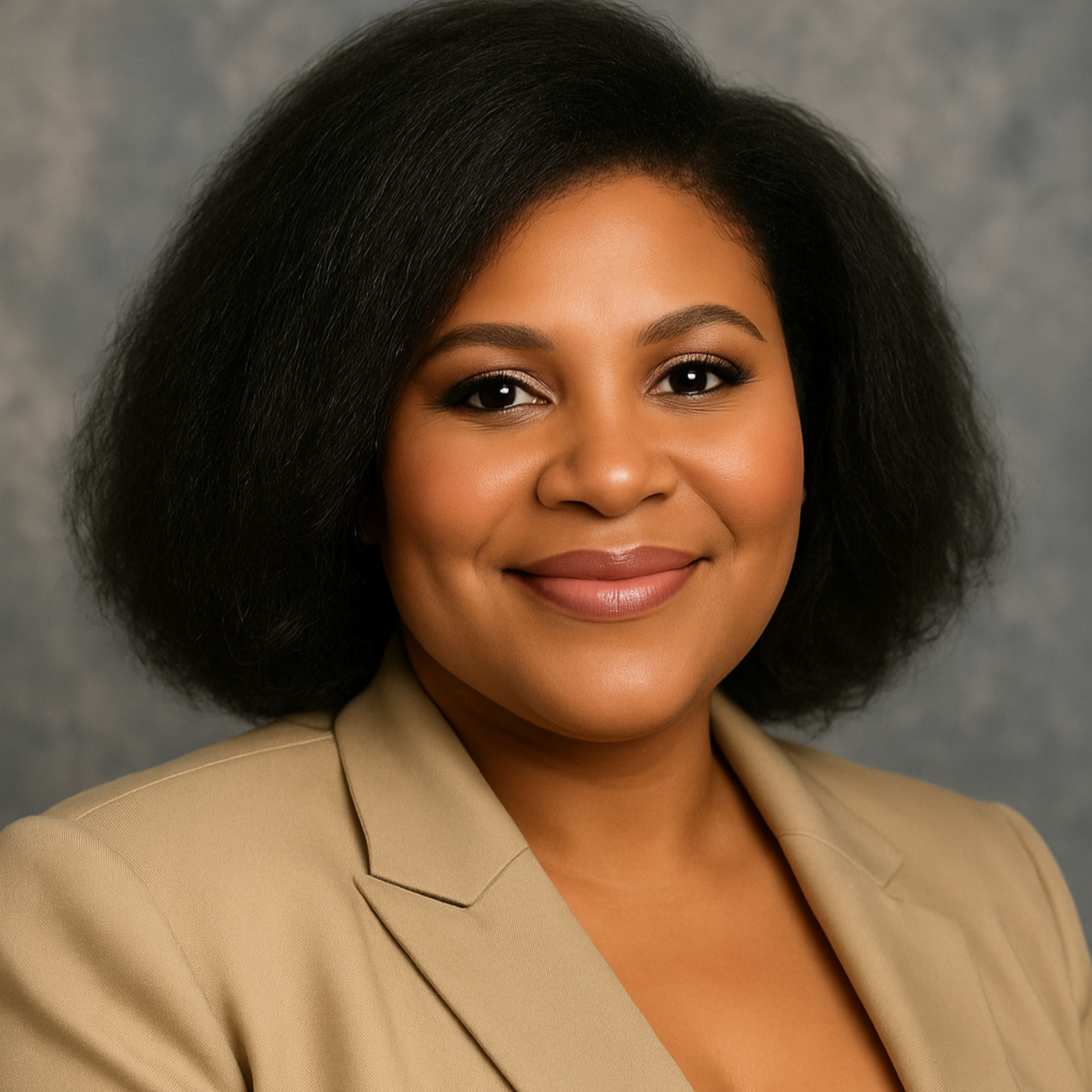
What does your sleep position reveal about your nervous system? In this episode of Elisha's Space, counselor and author Elisha walks through five sleep positions and what each one says about your body's trauma response, nervous system state, and capacity for rest. Using principles from polyvagal theory, somatic counseling, and Christian faith, this episode offers both clinical insight and spiritual grounding — plus a practical application of the R.E.S.T. Framework for bedtime regulation.
Whether you curl in the fetal position, sleep face-down, or can't seem to stay still — your nervous system has been speaking. This episode will help you finally hear it.
Topics include: nervous system healing, anxiety and sleep, trauma responses, somatic counseling techniques, vagus nerve regulation, and faith-based trauma recovery.
🕊️ Free Resources: Free Prayer Journal
📖 Work with Elisha: Schedule an initial consultation
Elisha's Space: Think about where your body ends up when you wake up in the morning. Are you curled up on your side? Knees pulled towards your chest. Are you flat on your back, arms tucked, completely still? Or are you face down, nose buried in the pillow, as if the mattress is the only safe place you have? You didn't choose that position consciously. You didn't decide it. Your nervous system did. And today, I'm going to tell you exactly what it's been trying to say. Welcome to Elisha Space, a sanctuary for healing growth. and for the kind of honest conversations that actually change things. I'm Elisha, your host, counselor, and author, and someone who sat in the same stuck places you have. If you're new here, welcome home. I mean that. This is a safe place to bring the complicated parts of yourself. And if you've been listening for a while, I see you. And I'm glad that you're back. Today's episode is practical, clinical, but pastoral, and a little bit surprising. We're going to talk about sleep, but not in the way that sleep hygiene culture usually does. We're not talking about blue light in phone apps. We're going to talk about what happens when your nervous system takes over your body at night and what the position you wake up in is quietly revealing about the state of your internal world. So stay with me. I want to start with a question. When is the last time you woke up feeling genuinely rested? Not just technically sleep, but rested. Soft, like you've been somewhere safe. For a lot of people I work with in counseling, that feeling is unfamiliar. They sleep, but they don't rest. They wake up stiff or in pain or already bracing. already gripping the day before it started. And here is what I've observed, not just clinically, but in my own body. Sleep position is not a neutral thing. It is not just comfort preference. It is your anatomic nervous system expressing in the most honest way it knows how, whether it believes you are safe. Your nervous system does not sleep. It stands watch. And tonight, after this episode, when you notice how you've arranged your body in the dark, you're going to understand something new about yourself. We're going to walk through five sleep positions. And for each one, I'm going to tell you what the neuroscience says, what the somatic reality is, and what it might mean for your healing journey. Knowledge isn't just power for trauma survivors. Knowledge is safety. So let's do it. Before we get into the positions, I need to give you a little bit of foundation because I never want to hand you information without giving you the context that makes it safe. Your autotomic nervous system has two primary branches. You've heard me talk about this before. There's a sympathetic branch. That's your accelerator, fight, flight, hypervigilance, scanning for threat. And there's the parasympathetic branch. That's your break, rest, digest, prepare, attach, connect. Your vagus nerve, and vagus literally means wandering in Latin, is the longest cranial nerve in your body. It wanders from your brain stem all the way down through your throat. your heart, your lungs, your gut. It is the primary highway of your parasympathetic system. Now here's what most people don't know. The position of your body directly affects vagal tone. When you compress your torso, curling tight or lying face down, you create mechanical pressure on the vagal pathways. When you open your body back, flat, arms relaxed, you create the physiological conditions for a deeper parasympathetic access. This isn't visualization, this is physiology. And here's what makes this personal. Your nervous system will default, every single night, to the position that feels most neurologically familiar. Not most comfortable, most familiar. which for many of us means most defended. So let's look at what that actually looks like. Position number one, the fetal curl, side lining, knees pulled up under the chest, sometimes arms wrapped around yourself, sometimes that pillow is pressed close like it's holding something in. This is the most common sleep position in the world. And I want to say something to every single person who sleeps this way. Nothing is wrong with you. The fetal position is a deeply intelligent response. When your system has experienced threat, chronic stress, relational trauma, and environment where you had to stay small and protected, your body learned that tucking in was survival. You are literally protecting your vital organs, your heart, your gut, the softest, most vulnerable parts of you. Polyvagal theory, Dr. Stephen Porges' work. helps us understand that the nervous system organizes itself around safety and threat. The fetal curl is a mobilized but contained response. Your system wants to protect, but it's not running. It's curled in. It's managed. Is there tension there? Tightness in your hips? Your lower back? Stiffness in the morning that doesn't make sense for your age? That is not your mattress. That is your nervous system holding a posture all night long. If you wake up in the fetal position, ask yourself, what feels unprotected in my life right now? Not what's wrong. What feels unguarded? That is where your work likely lives. And here is a spiritual truth I hold alongside this. God does not shame our smallness. He meets us there. The Psalms are full of God's people curled in grief, crying out from the small places. You have been my hiding place. That is not weakness. That is trust. Position number two, flat on your back, arms at the side or resting on the chest, body open, sometimes completely still. Now this one is interesting because depending on the person, it means two very different things. For some, sleeping flat on your back is a sign of a relatively regulated nervous system. Your body is open. Your chest is uncovered. Your breathing can deepen. You are not guarding. Physiologically, this position offers the most access to a full diaphragmatic breath, which means it gives your vagus nerve the most room to work. If you sleep on your back and you wake up feeling genuinely rested, that is your nervous system telling you it felt safe enough to stay open through the night. That is not nothing. That is hard. One for many of us. But, and this matters for trauma survivors, especially those with histories of assault, abuse, or violation, lying flat on your back can feel terrifying. And I have sat with people in counseling sessions who cannot sleep this way. Their system will not allow it because open means exposed. and exposed once met danger. If you try to sleep on your back and your body won't let you, if something in you keeps rolling over or tensing up, that is not weakness. That is your nervous system protecting you with the only vocabulary it has. The healing invitation here is slow, gentle. You might start by lying on your back for just three minutes. before rolling to your side. Not to force anything open, but to begin introducing your body to the experience of horizontal openness and safety. Let your nervous system hear that you are not running from it. Position number three, face down, stomach sleeping, prone. This is the most misunderstood. On the surface, it seems counterintuitive. You're burying your face. You're turning away from the room. You're compressing the chest. And here's what the research shows. Prone sleeping is associated with the highest sympathetic arousal during sleep of any position. Corazone levels and stomach sleepers tend to run higher REM sleep the restorative Emotionally processing stage of sleep is often disrupted The body has to work harder to breathe the neck is rotated There is chronic low-grade tension through the interior Posterior chain, so why do people do it? Because for many nervous systems especially those shaped by early environments where being watched, being seen, being approached from behind felt dangerous. Face down is the only position where the threat is eliminated. You can see nothing coming from behind you. You have literally turned your back to the world. There is also something in the weight of the mattress against the front of the body. The pressure that for some people mimics the felt sense of being held. This is called pro perceptive input. It's the neurological principle behind weighted blankets. Your system is trying to regulate itself through pressure. If you're a stomach sleeper, I'm not asking you to change that. I'm asking you to notice, notice what it would feel like to turn over. Does anxiety spike? Does something in you resist? Is there a part of you? that needs that particular form of protection right now. That question is the beginning of something important. Position number four, starfish. Arms out, legs spread, taking up space, fully extended. I love what this position says. The starfish position is associated with the ventral vagal state, the highest level of nervous system regulation. Your body is open in every direction. You are not guarding. You are not protecting. You are not hiding. You are taking up space for anyone, especially ⁓ who've been in a hundred ways to be smaller, quieter, or to take up less room. The ability to sprawl in sleep is a profound signal. Your system has enough safety stored to be expansive, even in unconsciousness. Now, I want to name something gently. Some of you are thinking, I've never slept like that in my life. I wouldn't even know how. And I hear you. That isn't a failure. That is information. It means part of your healing journey is learning and slowly in layers what it feels like to be uncurled, to let your body expand, to stop bracing. That is not work you do overnight, but it is work worth doing. Position number five, the log, side lying, but straight, not curled. Arms relatively neutral, body aligned. This one is often the position people arrive at after doing regulation work. It's not fully open like the back sleeper, but it's not contracted like the fetal curl. It's a middle state, the body negotiating between protection and openness. For allototrauma survivors in active recovery, this is the earned position. You're on your side. You still have a visual field in front of you. One side of your body is guarded by the bed or wall, but your toe or so is elongated. Your vagal pathways have more room. If you've moved from fetal curling to log sleeping and you didn't even notice it, I want you to notice it now. That is your nervous system settling. That is regulation happening in the dark while you aren't even trying. That is evidence of your healing. So what do we do with all of this? This is where I want to give you something practical, because that's what we do here. We don't just name the problem. We build the bridge. I want to walk you through the REST, R-E-S-T framework applied specifically to your sleep environment. If you are new to this, REST stands for Regulate, Experience, Surrender, and Trust. Regulate. Before you get into bed tonight, spend two minutes with your feet, fat on the floor, not scrolling, not lying down yet, just feet on the ground. Slow exhale. Let your system begin to downshift before you ask it to do the work of sleep. The vagus nerve responds to slow exhalation. Give it that signal. Experience when you lie down, instead of immediately doing whatever your body does automatically. Pause. Notice. Where are your hands? What is your impulse? Are you reaching for the curled position immediately? Are you turning face down before your head even hits the pillow? Experience what is happening without changing it yet. That noticing. That is already regulation. Surrender. And this is the spiritual peace, the one that I hold most tenderly. Surrender the need to do sleep right. So many of us lie down and immediately begin performing rest. We are anxious about the sleeping, which makes us not sleep. Surrender says, My nervous system knows something about what it needs tonight. I am not going to fight it. I am going to bring it to God. He grants sleep to those he loves. That's Psalm 127. He gives sleep. It is a gift. It is not something you earn by having the right setup or the perfect protocol. It is given. Your job. is to create the conditions for receiving it. Trust. Trust that healing happens in layers. That if you wake up in the fetal position tonight, that is not a failure. It is your nervous system at this moment and this season. And next season may look different because you are doing the work and the work accumulates. I want to close our time together with a breath prayer, not as a performance, as a practice, as an invitation for your nervous system to experience even briefly what safe co-regulation feels like. Place one hand on your chest, the other on your belly. Breathe in through your nose slowly for four counts. Hold for two. and breathe out through your mouth slowly for six. that again with me. ⁓ the nose. Hold. and out slowly. This extended exhale, that's your vagus nerve receiving the signal. This isn't relaxation. This is physiology at work. This is your body learning that it can slow down. That slowing down is not danger. tonight. When you lie down, whatever your position your body finds, let this be your anchor. Not a sleep position checklist, not a performance, but this truth. His peace is not dependent on your circumstances being resolved. It is a regulated nervous system and the presence of a safe guy. You don't have to earn rest. You don't have to figure out the perfect configuration. You get to come as you are, curled or open, defended or soft, and he is there. Let's pray. Father, I am grateful that you made these bodies, that you knit together the very nervous systems that we are learning to regulate, that you did not design us for bracing. You designed us for rest, for attachment, for safety. And when safety was taken, you were grieved. You are not the source of our fear. You are the remedy for it. For the person who crawls tonight, them in their smallness. Let them feel that you are the safest hiding place they have ever known. for the person who cannot lie open, be the safety their nervous system has never experienced. Introduce yourself slowly, gently, to the way you always do, the way that does not overwhelm, the way that waits. For the person who is finally beginning to uncurl, who is waking up in a position they didn't expect and wondering what it means, let them receive the gift of that. Let them recognize their own healing. Let them not minimize it. Give us sleep. The kind that repairs. The kind that restores. The kind only you can give. We trust you with our nights. In Jesus' name, amen. Here is your invitation. Seven days, simple. Tonight before you get into bed, write down the position your body automatically finds. Don't judge it, just notice it. And when you wake up in the morning, check. Did you stay there? Did you move? Do that for seven days. By day seven, You will know something about your nervous system that no one has ever told you to look for. And that knowledge, that is the beginning of agency. That is the learning of the language your body speaks at night. If this episode helped you, share it. Text it to one person you know who is struggling with sleep, with anxiety, with that exhausted but can't rest feeling. You might be sending them exactly the language they're needing. You can find more episodes, resources, and information about working with me at restoring you, christiancounseling.com. And if you're not yet subscribed, this is your moment. Hit that button so you never miss what we're building here together. Until next time. You are not too much and you are not too far and you are not alone.
 Apple Podcasts
 Castbox
 Castro
 Goodpods
 Moon FM
 Overcast
 Pocket Casts
 Podbean
 Podcast Addict
 Podcast Republic
 Spotify