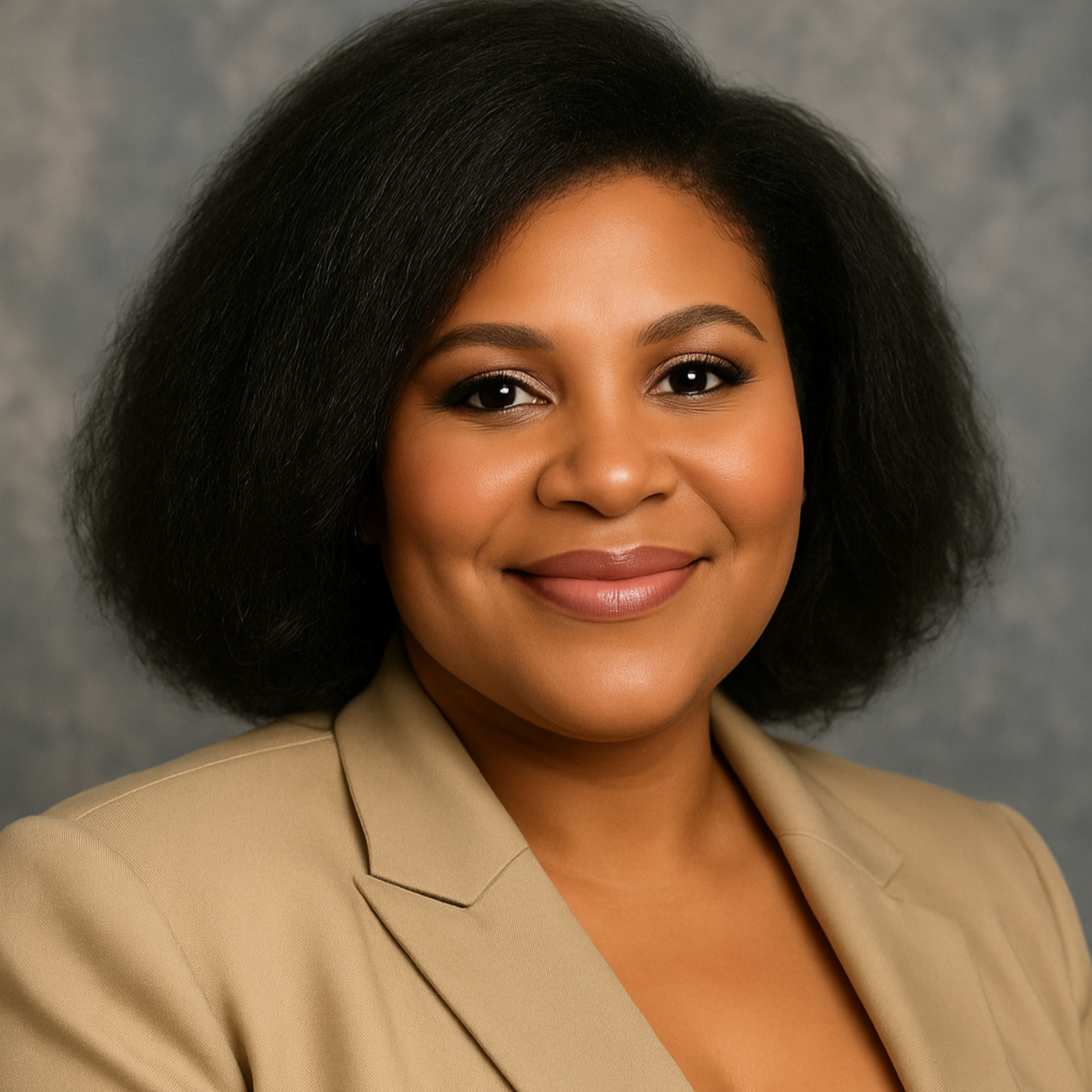
When the Healer Needs Healing: Dr. Ronda Wells on Trauma, Writing, and Faith
Tonight's Episode
What happens when the doctor becomes the patient — and the diagnosis is PTSD?
Dr. Ronda Wells is a physician, author, and woman of faith who has spent her career caring for others. But after a traumatic hospitalization — one of 16 surgeries in her lifetime — she found herself on the other side of the exam table, facing a diagnosis she never expected: Post-Traumatic Stress Disorder.
In this episode, Dr. Wells opens up about what it was like to not be heard by the very system she dedicated her life to. She shares how creative writing became her lifeline, why putting pen to paper can unlock healing that goes beyond talk therapy, and the childhood trauma she's only now finding the courage to explore in a memoir about her mother.
We also go deep into:
- The history of PTSD — from "shell shock" to "battle fatigue" to what we understand today
- Why shame keeps so many of us silent, and what breaks that cycle
- The moment she screamed "I will not yield" during a spiritual attack — and what happened next
- How faith, scripture, and the Psalms carried her when medicine couldn't
- Why "hope is always there," even when you can't feel it yet
Whether you're carrying your own trauma quietly, you've been told to just get over it, or you're searching for healing that goes beyond the clinical — this conversation is for you.
📖 Find Dr. Wells' books: rondawellsbooks.com 🩺 For authors seeking medical accuracy: novelmalpractice.com 📚 Look for: The Christmas Cherub (available now) and Harvest of Hope (releasing June 2026)
💛 If this episode spoke to you, share it with someone who needs to hear it. You never know whose healing starts with pressing play.
Subscribe and turn on notifications so you never miss an episode of Elisha's Space.
Elisha Lee: Welcome to Elisha's Space, a sanctuary for healing, growth, and authentic conversations. I'm your host, Elisha, counselor, author, and someone who believes that no wound is too deep for restoration. conversation is one I've been looking forward to because it sits right at the intersection ⁓ trauma, creativity, and resilience. ⁓ guest is Dr. Rhonda Wells. She's an author who knows what it means ⁓ to walk through the fire and come out telling stories that bring healing. She just released a Christmas novella about a World War II soldier returning home with severe PTSD, back when they didn't even call it PTSD. They called it battle fatigue. They called it shell shock. And most of the time they called it nothing at all. were just expected to come home and be fine. But here's where this gets personal. Dr. Wells isn't just about writing about PTSD from a distance. Last year, she developed PTSD herself after a traumatic hospitalization. And what she learned about healing, including the powerful role that creative arts has played in having expression, has played in her trauma recovery, is something I believe will speak directly to someone listening right now. ⁓
Ronda Wells MD: Yes.
Elisha Lee: Whether you're carrying your own trauma quietly, whether you've been told to just get over it, or whether you've been searching for a way to heal that goes beyond talk therapy, this episode is for you. So before we begin, I want us to take a breath together. Breathe in with me. Two, three, four. Hold. Two, three, four. And slowly release. two, three, four, five, six. You're in a safe space. Now let's get into it. Dr. Rhonda Wells, welcome to Elisha Space. ⁓ I have so been looking forward to this conversation. you mind telling the audience a bit about, you know, ⁓ a little bit about who you are and what led you to your writing?
Ronda Wells MD: Thank you. a family practice physician by certification and worked in practice for about three years and then realized trying to raise have babies and raise small children's there was no such thing as part-time family practice. So I up going to another field called occupational medicine ⁓ which is based where you go see the doctor if you're injured on the job or if you need a physical or drug screens. I did that for a while and then a mentor from medical school called me right after my daughter was born and said, do you know how to use a computer? Well, yeah, I'm more talking 35 years ago. Yeah, kinda. She goes, well, I want you to come, would you like to work for me like one day a week here at Anthem Blue Cross Blue Shield? And I go, sure, I'll go try it. So I trained on their computer system while my daughter was in her swing.
Elisha Lee: If you
Ronda Wells MD: It was so cute because the nurses kept coming around to look at her. anyway, and they all remember that's how I trained. ⁓ I one day a week and five years later I ended up full time as one of the medical directors in Anthem Blue Cross. It was just because they kept firing all the people over me. They kept merging and firing and merging and I just kind of got left finally. But what it led to was a niche job that I still hold and that is a transplant case manager with a program that actually takes solid organ transplants and bone marrow transplants out of their regular insurance system, ⁓ them across country if they have to, wherever we need to go to get them a care as a specialty care network, so to speak. And case manage those cases. And I work with the nurses that I worked with like 30 years ago. So yeah.
Elisha Lee: wow. wow. wow. ⁓
Ronda Wells MD: And then I started writing because they wanted me to do medical policy. I started doing medical, but what I really wanted to do was write fiction.
Elisha Lee: it was a good outlet, right?
Ronda Wells MD: It was, it is. realize, it's taken me a long time to realize this, that when I write, I relax. That's when I'm the most relaxed, is when I'm sitting here writing fiction and doing all this imagination and stuff. So I had like six or seven full drafts sitting on the shelf and I was still trying to get traditional published. And I had been so close, you know, so many times with agents, one thing or another. ⁓
Elisha Lee: Right, me too. Right.
Ronda Wells MD: And this last time what happened was the acquisitions editor said, yes, we want to buy this. The very next day the company reorganized. She got fired and there was no contract that ever materialized. At this point I am done. ⁓ what I did was I actually took a class with Peggy Sue Wells on self-publishing I decided I was going to independently publish this story that I had in mind.
Elisha Lee: Mm-hmm.
Ronda Wells MD: was based on an Indianapolis Christmas tradition ⁓ from there. So, and then I'm publishing the others that are on the shelf as
Elisha Lee: And just doing a little brief plug for you guys. So we're part of, okay, I'm gonna say we're an author, writer, speaker association. Awesome. We're part of...
Ronda Wells MD: Yeah. Yeah, the association is it no advanced speakers and writers Association I have trouble with it too because I'm just wearing NRB and we had our little badges and our little tags I was like, what was it again? Oh, yeah advanced writers and speakers Association
Elisha Lee: was so used to saying awesome. So I think us being part of awesome. Peggy Sue Wells ⁓
Ronda Wells MD: I know.
Elisha Lee: Peggy Seaworth is.
Ronda Wells MD: she is another author that is prolifically published. I know her because she came here to Indiana. I think she lives out West like Colorado or someplace like that. I don't know if she's in awesome or not, but she's an ACFW, which is American Christian fiction writers. And that's how I met her from there and you're from there. It's kind of cute because her first name is Peggy and mine is Rhonda. We're both Wells's. So we're kind of like Peggy Sue and help you Rhonda. So.
Elisha Lee: Right. I didn't even know there was an American Christian fiction writer, so I'll have to check that out.
Ronda Wells MD: Yes, it has been around for, ⁓ man, how many, 25 years to 30? I joined right when they were American Christian romance writers. What happened was they were pulling out of, I was a member of RWA, which was Romance Writers of America, and they were pulling away from it because it was, honestly, even the magazine was getting a little offensive for me as a Christian to read some of this, like, how to write sex scenes, erotica, and I'm like,
Elisha Lee: Mm-hmm.
Ronda Wells MD: I'm not writing that. So they pulled away and formed this organization. then within about a year or two, I was at the conference, my first conference, they renamed themselves to American Christian Fiction Writers, because they didn't want to drive the guys away. And I'm so happy to say I did get chosen to present this year finally for the first time at the ACFW conference. So I'm thrilled. So looking forward to
Elisha Lee: Hahaha That's pretty cool. That's pretty cool. Okay, that's pretty cool. So you carry a lot of hearts. You're an author. You are, you know, someone with a medical background. do all these pieces fit together in your story?
Ronda Wells MD: Somebody asked me, why did you make Jack with PTSD? And I realized what happened, ⁓ just as you were talking, that I had written most of the story for the Christmas Cherub prior to being hospitalized for pneumonia, I needed the rest of the story. I had probably had about 30,000 words originally anyway. I was working on screenplay and my Hallmark mentor said, know, if you've got a novella, you'd be better off publishing it. Cause Hallmark and others like, they like having, you know, IP behind the screenplays. So well, I can do that it'll be a good experience for me. I learned a lot. I learned a lot of wrongs. ⁓ stepped in every hole. You can do it wrong. I did it and some money, but then again, you learn. ⁓ So, But that's when the PTSD occurred because of the hospitalization. a doctor, I don't like hospitals. I've had 16 surgeries, unfortunately, in my lifetime, five of which were in the last five years. And I think the problem is because I know what can go wrong. And honestly, this time, ⁓ that's kind what happened. We had a good local hospital. It used to be good. And what happened was nurses were not trained.
Elisha Lee: Wow. ⁓
Ronda Wells MD: Well, at all. had two RNs that were good and everybody else was a higher, a temporary higher, probably. some of them didn't speak English that well. ⁓ I really upset with one nurse. was like, and she was facing away from me with a double mask on her face because it was in the flu epidemic ⁓ and couldn't hear her. Plus I have ringing in my ears. I couldn't hear her that well anyway. And of course the noise is in the room is going everywhere.
Elisha Lee: ⁓ my gosh.
Ronda Wells MD: And I asked her to repeat it and she got mad at me. And I thought, lady, I really can't hear you. Think about where you are and where you're standing. You're talking away from me and all. And I think she thought it was because English wasn't her first language. It wasn't it at all. Simply could not hear. So what happened was the Venus access, my veins are kind of bad anyway. And they just kept sticking me. And I think I had 20 IV sticks in about eight days.
Elisha Lee: Right.
Ronda Wells MD: And I kept telling them, you know, I'm an old blood banker. I know how to do IVs. I was trained to do IVs at a major city hospital. I trained other people to do it. And I kept telling them, don't do that. But they went ahead and did it. And then one of them jabbed a nerve in my... ⁓
Elisha Lee: Mmm. that sounds so painful.
Ronda Wells MD: It was very painful. It still bothers me a little. and then you have the added thing that I had a blood clot go to my lungs while I'm there. They still never, they never quite figured out where it came from. So, know, it just like, I just get me out of here before I die. Basically, I was really getting concerned. luckily the pneumonia was probably just viral. They didn't think it was bacterial, so it did respond. But I was on oxygen for at least probably a couple months when I got home. I was so weak. I could not do anything other than walk down the hall. And I had gotten a jigsaw puzzle for Christmas and I could put one piece or two pieces in and then I'd have to walk back to the room and lay down. So I was, I was weak. I was at my weakest I've ever been. And well, you start praying, believe me, you start praying for this one. And so the
Elisha Lee: Mm-hmm.
Ronda Wells MD: pulmonologist, my lung doctor said, you know, it's gonna take six months, get over this, six months, you know, he was right. It took a full six months. And then of course I broke my foot. Yeah, I just stepped off a curb wrong. I really just sprained it. That's what it felt like, but it just kept getting worse. I had broken a small bone and of course there were tendons attached to that bone. And I had a foot surgery the day after Christmas.
Elisha Lee: ⁓ my gosh.
Ronda Wells MD: I'm out of the cast and tomorrow is the day free. think I'm just in elastic brace from here on out. So I took the clunky boot to the National Religious Broadcasters Convention in Nashville last week and it did not go well. So I just went to my regular ankle spurt. But it did leave me. I didn't realize I'd had it until I related what had happened to my rheumatologist. And mean, ⁓ I her probably just like a week or two after I got out of the hospital and she looked at me she goes,
Elisha Lee: Hahaha!
Ronda Wells MD: You've got PTSD. What? Me? What are you talking about? Oh no, no, it's a real thing. You had a bad hospitalization, you were scared. said, yeah, I was scared. And I was very frustrated. Nobody was listening to me as a patient. And they kept taking the blood pressure wrong and it hurt because they've got a muscle disease. It's just like, they just did not listen. And I thought if they don't listen to me as a doctor, what are they doing to the regular patients? So, yeah, so I got over it, know, healing.
Elisha Lee: Mm-hmm. Right.
Ronda Wells MD: you know prayer and certainly reading and so the joke of all is when you said that I realized that's about when I started writing rest of the novel because it was due in July we were going to launch in July for Christmas in July it was originally supposed to be ⁓ Christmas but that didn't happen and very quickly wrote the rest of the novel and I realized now that's probably why I put the PTSD in I gave him metal fatigue I was going to give him a wound and I just poured right out. So I'm sure that's now I'm sure that's what happened. So.
Elisha Lee: bet it was, doing that was kind of therapeutic anyway, using that.
Ronda Wells MD: Probably. Yeah, I had to read a lot about it, do a lot with it, and I realized, ⁓ yeah. And I was molested by an uncle when I was eight years old. It was one of my mom's brothers. ⁓ I've working on ⁓ a about her because I wanted to find out what happened with her childhood. She was orphaned. And she had all these stories. And when started putting things together, I thought, some of these stories don't add up. ⁓ Where was when this happened? And then I...
Elisha Lee: Mm-hmm. Mm-hmm.
Ronda Wells MD: started doing more more investigations and I realized that her older brother had probably raped her when she was seven years old. that was the trauma of her life and explained her claustrophobia and all kind of her anxiety just explained everything. And of course there was nothing about counseling and healing back then. ⁓ So, know, ⁓ exactly, exactly.
Elisha Lee: Mm-hmm. except to point out to you something's wrong with you, right? Right, right.
Ronda Wells MD: And she was so high functioning, so smart. She was a nurse. You know, that's how she gave back. mean, she was a nurse for 45 years and a good one, which is why I bad nurses are not my mother. But anyway, so, you know, I had it as a child. I remember probably took me a year before I didn't think about it daily. You know, was shameful. A mom overheard me telling another girl one time, oh, we don't talk about that.
Elisha Lee: Mm-hmm. Mm-hmm.
Ronda Wells MD: outside the family. And I thought, oh, so I later learned, no, that's the wrong thing. She was probably told that, I would imagine. And I said, no, no, no, you've got to, you know, let it be known. You've got to talk about it. You need, that's therapeutic to let people know what happened to you. and I even, even in the memoir, know that it really was incest because it was a blood uncle and it carries such a deeper taint that it just keeps bubbling in the back of your head.
Elisha Lee: Mmm. Right.
Ronda Wells MD: maybe it'll be three years, but something will trigger it and it bubbles up again and you remember it. So especially during this book, it's brought a lot of it back, you know, writing the book and going down there and seeing things one way or another. But when I finally put it together, I think that this particular uncle was disabled mentally. He did not have, I him just being able to sign an X. He didn't how to spell his name.
Elisha Lee: Yeah.
Ronda Wells MD: He had not completed school. So what happened was I found that we went down there with my mom last time we were down there before these two uncles died. And came the room and I realized he was what they call microcephalic. His skull was small, which didn't allow him have brain developments. He was never going to be normal. He was always going to be slow. ⁓ And that just... blew me out of the water. So I thought, oh, I have to forgive this guy. And then I realized investigating more with my mom, my dad had said her brothers molested her. And finally I realized, I think I know what happened. was this older brother, it was a sociopath. He was a murderer, a rapist, and he got out of prison. She was the only female in the household because her mom was dead by then.
Elisha Lee: Mm-hmm.
Ronda Wells MD: and her dad was sick with TB. So I think what happened was he used brother, the slow one, who better than to help him taunt and they put a pillow over her face, they smothered her, know, all this was going on. And I'm thinking, because it was really interesting, because he did to me, what was done to her at almost exactly the same age. And if you look at the photos of us at that age, we're like carving copies. So I think he was just repeat, he was abused. as well. by doing that and stuff. but unfortunately he did become a child molester. no, I don't think everyone went to jail for it, but everybody in the family ⁓ knew it. So.
Elisha Lee: Mm-hmm. So I have a couple of questions. One question is, have you found that
Ronda Wells MD: Yes.
Elisha Lee: through your research and preparing to write in the creative space around these things, you know, you found that to be healing? ⁓ then the other question is, what do you want?
Ronda Wells MD: Yeah.
Elisha Lee: people to understand about this with these different layers of PTSD and the different types of traumas when they're reading your books.
Ronda Wells MD: It's complex for one thing. Like you just pointed out the very many layers that manifests in multiple different ways. think the biggest problem with the soldier was it was originally called shell shock. And that came out of World War II, which makes sense. You've got, know, this concussion, you've got a physical attack, which would affect the brain, almost like giving you a concussion. And these guys would just stop, they'd just freeze because, you know, the brain is shut down as a protective mechanism.
Elisha Lee: Mm-hmm.
Ronda Wells MD: and the horror of the trenches and the whole thing. So it got called shell shock, which it probably was. But by the time we're doing World War II, there are no trenches. And you couldn't be in a foxhole, but you might not be around, you know, shells exploding or anything like that. But you may just see, you know, a buddy killed or whatever, and you've got this PTSD. So they had to reframe what they were thinking about and call it battle fatigue. Because what happened was, These guys just, and if anybody's ever seen the original movie of Patton where the guy Patton slaps, really think, no joke, he did the biggest favor to psychiatry in the army was Patton slapping a soldier who had battle fatigue PTSD, young one. Patton got disciplined for it. And brought up the point that he wasn't a coward.
Elisha Lee: Mm-hmm.
Ronda Wells MD: He was, it was a mental thing that had happened to him. It was psychiatric and had to be treated. So they learned that what they should do is pull them away from the battle. If it was a mild case, they could give them rest, give them fluids, give them food, you know, to kind of tank them back up. ⁓ if they felt like it, they could immediately go back to the battle. That was probably, it's like getting back on the horse ⁓ falling off the horse. They realized they should do that. The problem was the guys that.
Elisha Lee: Mm-hmm. Right, right.
Ronda Wells MD: didn't recover. so those had to be sent to ⁓ military hospitals. And lot of it was interesting. A lot of early research was done in the British psychiatric hospitals. And that's where my character end up. But they were trying things. They were trying medications. They were therapies. They were trying psychotherapy. so the thing about it is it manifests ⁓ differently. It looks different every person. you might have an anxiety disorder or you might be depressed or you might have both. Some people went into what they call catatonia, which is just a total shutdown, looking at the wall. I can't do anything. I won't talk to you. can't eat it. So that's very rare. More commonly, you see the anxiety, depression, acting out, angry outbursts, which is what I gave ⁓ to character. Very common. And we still see it. We're still seeing our soldiers come back. You can't fight a war. ⁓ without being traumatized. mean, that's just what war does. so recognizing it now, at least the Army, I noticed the Army is interestingly trying a block, a nerve block of the big nerve in the neck that goes to the arm and have found some success with that. And I was like, ⁓ in the world? Anatomically, know, but hey, if it works, works. So they are still working at trying to fix this. ⁓
Elisha Lee: Right. Wait.
Ronda Wells MD: But starting in World War II, there was a lot of documentation. was documentation of World War I, but boy, I found a ton of stuff in World War II. And you can find first-person reports what happened. A lot of lives got black eyes in the middle of the night. ⁓ my dad actually had a friend, ⁓ very good friend, who was actually on the Baton Death March. And worked with him at Curtis Publishing Company. They were publishing the Saturday Evening Post. ⁓ They both salesmen. this friend, him stay with him in a hotel room, and anytime a plane would go over, Lauren would go out of the bed and hit the deck. And dad's like, what, what? And it was because of what had happened. Every time they hear a plane, they had to die. So he was definitely still having some PTSD from World War II, even into the early 60s, 1960s. So.
Elisha Lee: Mm-hmm. So given what you've been through and then your writing of the book and your doing the studies, was any of this triggering?
Ronda Wells MD: Yeah, I would say doing the research for my mom's memoir ⁓ brought a lot back, brought a lot more back. So I think about it a lot more. Luckily though, I am thinking about it with a balanced approach. Yeah, I did have to get, mom had dementia for about 15 years. And so that was tough. mean, honestly, probably had PTSD from that more than anything. I mean, it's like my beautiful husband says he is the most patient, God-fearing man in the world. ⁓
Elisha Lee: Okay. Right. Right.
Ronda Wells MD: And he just said, you know, you can only hear the same question 400 times before you get a little irritated. Amen. yeah, other I started writing was devotionals. So, also gave me an opportunity to write some devotionals online. I started getting some ideas ⁓ and so submitted them and then now I was invited to, ⁓ I met one of the editors at the Blue Ridge Writers Conference ⁓ and I'm for CrossMap. They're daytime devotionals and nighttime prayers. have a
Elisha Lee: Okay. Mm-hmm.
Ronda Wells MD: a regular once a month devotional that I submit and I'm on that platform as well. So gives me a little bit more exposure. It's a bigger But a lot of it comes out in the writing. And I do think that writing about it helps. And I don't think it has to be any kind of special writing. think just the act of putting a pen to paper can be an outlet. So did get counseling for two years before my mom died, because I was just ready to blow. I thought I'm ⁓ going to a stroke. got high blood pressure anyway. I've got to talk to somebody. It was so funny. She asked one question and I talked for an hour. she just sat there nodding. And we got to the end, she goes, you had a lot to get off your chest. Yeah, I So yeah.
Elisha Lee: Right. So how did your faith play in?
Ronda Wells MD: ⁓ it's huge. mean, ⁓ know, so joke. I I grew up in a Christian household. My dad was a preacher. So I remember, you know, knowing God at the age of two. No joke. You know, I never didn't know God. So that's a huge advantage, ⁓ I'm than people that grow up and they have no clue who Jesus is and don't know the Bible and don't know the Bible stories. But honestly, ⁓ my favorite book as a kid was my Bible story. book and I read those stories over and over and over again. I swear that's one reason I became a writer was all those stories were just, you know, inspiring. So.
Elisha Lee: You know, something I... find very interesting is that whenever I'm going through something, honestly wonder to myself, like sometimes, like how did people get through this without Jesus? don't
Ronda Wells MD: I don't know. I don't know. I don't think, I don't think they do well. There was a point where my mom had her major stroke my dad was in hospice. ⁓ so I remember running to the facility because I was called. It was one of those episodes where I had to follow the ambulance to the ER or something or another. And I remember being so stressed in the car, you know, I got to get to the ER for mom, but
Elisha Lee: Mm-hmm.
Ronda Wells MD: what we're do about dad. And realized, you know, it is a demonic attack. It's coming from the other side. And I knew that. And I just screamed out loud, I will not yield. Say, I will not yield. I screamed it several times. ⁓ will not yield. And that helped. As I basically told him off, said, get away, because now this is gonna work on me. ⁓ And do think things got better after that. So.
Elisha Lee: Mm-hmm. Mm-hmm. Okay, well that's good.
Ronda Wells MD: Sometimes you have to shout at Satan.
Elisha Lee: It always helps. It helps. If somebody is going through a difficult time and they feel like God's abandoned them through their PTSD or their trauma, you know, what would you say to them?
Ronda Wells MD: Yes, it really did! Go to the Word. Go to the Word every time. I would start with Bible study, things that you're familiar with, and the Psalms, I think, are probably in Lamentations. Proverbs contain some of the greatest wisdom in the world. I mean, the Psalms are laments. mean, if you look at some of them, they are, David is in a very dark place when he writes some of these Psalms, as were some of the other Psalms.
Elisha Lee: Right. If you think about it, David was like in a state of PTSD since he was a little kid. Because throwing up the audience, know what I'm trying to say, what happened with Goliath, right? Then he walked over and cut his head off. mean, that's a lot for a little kid.
Ronda Wells MD: The problem was so good thought. Yeah, I mean he had to admit it. Yeah, yeah, and then he's Yeah, I mean a Lot yeah, yeah, and then Saul is trying to kill him He's old to play the harp for Saul the liar and he's playing making music and then the king throws his spear on anybody that had to been traumatic and So yeah, he did have a lot of trauma which probably explains maybe some of his later You know
Elisha Lee: Right? choices right.
Ronda Wells MD: Yeah, choices. But probably wasn't the best parent in world. He certainly wasn't the best husband. But it's interesting that with Bathsheba, think maybe she must have been so amazing. He's a murderer. He's first degree murderer. And he knows this. But I think Nathan, I would have loved to have been there with Nathan and said, you, the man who did the shooting.
Elisha Lee: Mm-mm. Right? Right. Right, when you call them to the carpet, right?
Ronda Wells MD: Yeah, and think David says, fell on his knees and he realized I got to repent. and it says that David is a man after God's own heart. So as you pointed out, there's nothing that can't be forgiven. I truly believe if Judas had repented.
Elisha Lee: Right. ⁓ yeah, absolutely.
Ronda Wells MD: that he would have been saved.
Elisha Lee: Right, and he would have been received by the church. mean, we can receive Saul, we can definitely receive Judas, you know.
Ronda Wells MD: Exactly. Exactly. But I think Judas maybe didn't have the faith. don't know if he believed, honestly. I mean, he held the purse. went around and did stuff. So we don't really know who Judas was before he became, know, was he a scam artist ⁓ decided to steal from this group of people? I don't know. We don't know.
Elisha Lee: Right. Right, right, true, true. your studies and my, what I see in my practice is that when people are dealing with trauma and have PTSD around it, that there's a lot of shame, right?
Ronda Wells MD: Yes. Oh, yes. Oh, I felt so ashamed after the mall station. I mean, I did the right thing. I immediately ran and told my mom and she, oh man, she came out of that bed like a rocket and said, the best thing she ever did, she grabbed me by the shoulders and she said, this is not your fault. So, and off she took. And then by the next morning, my uncle was gone. So it turned out she marched him down to the bus station in our small town, putting him on a bus and sending back to. to Kentucky. So, and I always asked him, why did you do that? He should have been arrested. know, later on I'm working with the child abuse council for 10 years, you know, obviously out of my own experience, drove my desire to do that. And she said, I was afraid your father would kill him if he found out. So I sent him back. okay.
Elisha Lee: Right.
Ronda Wells MD: Probably a plan, Mom.
Elisha Lee: The other thing too about it too Rhonda is that the laws were different back then.
Ronda Wells MD: Oh yeah, oh yeah, there was no, right. I don't think they would have filed a case. Certainly what I know, all the reason stuff like that, they wouldn't have, you know, it was inappropriate touching on his part, trying to, you know, touch me, but I got away from him. So, and it leaves you with a shock. And like I said, it just leaves you with this shamefulness and what happened to me, I call it minor. I know it was incest, but even just minor things can leave.
Elisha Lee: Wow.
Ronda Wells MD: you know, a deep mark. I patients who had been incested by their fathers for 16 years and I had some really bad cases and they were definitely, you know, damaged far psychically than I was. ⁓ So, but still there. It's always there. Shame went away with time, but the memory that event is still like, kind of. ⁓
Elisha Lee: Right. What does restoring you look like in this season considering all the things you've been through? Which came from this book.
Ronda Wells MD: Well, let's see, hopefully 2026 will be a better year and I won't catch the flu. That'll help. Let's see. I also broke a tooth in the midst of all this and it had breaks though and all these dental appointments and it just wouldn't believe what I had to do to try and keep this tooth. And then of course I had the foot. So hopefully 2026 will be injury and disease free.
Elisha Lee: That'll help. ⁓ ⁓ my gosh. Woohoo!
Ronda Wells MD: and I'm releasing a contemporary romance in June, one off the shelf called Harvest of Hope. And it is about hope. ⁓ just got the edits back from the editor and the cover just came back from the designer Hannah Linder just knocked it out of the park again with this cover. I I love the cover on this one. She did the Christmas Cherub and it is, ⁓ it great? She just did a phenomenal job ⁓ that.
Elisha Lee: We love that name. ⁓ my gosh, I love it. Yes. Yes.
Ronda Wells MD: Like I said, it's based on, and we do actually have a cherub that goes on a clock in Indianapolis. I just wrote a fictional story around how it got created and everything. But, and no, doesn't have a magical wink that can tell true love, but I that to it. ⁓ So, you know, it goes out every year between Thanksgiving and Christmas. And even though the store that originally put it up there is no longer in existence, the city now owns the clock and the cherub, and we still maintain the tradition. So that's kind of where it came from. anyway, but yeah, so the cover is ready for Harvest of Hope and then there will be a second Christmas Cherub book. I'm working on it. Yeah. I was told by my readers and my first book club people like, oh, you are writing an extra. Oh, really? I didn't know. No, are working on it.
Elisha Lee: Awesome. Don't you love it when people love what you write so much? They're like, okay, we're.
Ronda Wells MD: Yeah, I was blown away. women all... We it! We love your characters! ⁓ Honestly, was embarrassing. A couple of times I think they knew the book better than I did. ⁓
Elisha Lee: I'm
Ronda Wells MD: I mentioned something when I had to think for a second. yeah, okay. The thing I did though was the, and I'm not alone in this, five of us missed it. In the first edition, if you will, the villainous actually was in the wedding ceremony. ⁓ She wasn't supposed to be. ⁓
Elisha Lee: Mm-hmm. He
Ronda Wells MD: It was a don't ever start two characters with the same letter. I broke the rule. And that's what happened that she ended up in the wedding. Sorry. It has been fixed on Ingram and I'm getting ready to fix it on Amazon. But I didn't feel bad because four of the people missed it as well as I did. So ⁓ actually took my husband's cousin who was a retired teacher. She said, why is Gloria in the wedding ceremony? He's like, what?
Elisha Lee: Okay. I'm What I found is that when I'm and book launches and people are reading the book, I'm already into the other books. I ⁓ to remember that people are just beginning their journey ⁓ I'm already over here. ⁓
Ronda Wells MD: Yeah. I am too. Yeah, I'm already moving on. Yeah. with the story. Yeah. Right. That's exactly where I was. know, I was already, I got to have surgery the day after Christmas. that was one thing that happened. I wasn't able to launch the book like I wanted to. We launched in July, but we were going to do a call it a soft launch in July and then do a hard launch in October. ⁓ And when I broke my foot. ⁓ So was limping around.
Elisha Lee: Mm-hmm.
Ronda Wells MD: So it took weeks to figure out what had happened with x-rays and then it took like three weeks to get the MRI scheduled and one thing or another and then it took another three weeks to get the surgery scheduled. And so by then I was at the end of the year. So I was planning on going out to all the local libraries, local independent bookstores. I did get a signing at Barnes and Noble that went really well the Saturday before Christmas. And then the Indianapolis Historical Society had a big book fair. And boy, they loved this book because no joke, their order of the year was the clock this year, the historic Ellis Air's clock. So they were thrilled and they put this book up with it. so I was very happy that they helped me as much as they did. So, ⁓ other things got canceled because of weather and I couldn't go and I couldn't walk. So.
Elisha Lee: That's all.
Ronda Wells MD: So I'm actually starting now. I've got my list of libraries. I'm going out with my little media sheet and we're going at it again because the next one's coming. So yeah. Yeah.
Elisha Lee: Absolutely, absolutely. ⁓ How can somebody get in contact with you? How can people have access to your book?
Ronda Wells MD: ⁓ you can go to my which will be in the notes, rondowellsbooks.com. The other way is if you're an author, I also help other authors with their medical stuff. I have a whole website dedicated to that called Novel Malpractice. ⁓ so can get to that way as well. ⁓ You email me through either one of those. and then course,
Elisha Lee: Press.
Ronda Wells MD: With the devotionals, I can't remember what email they've got up there. They've got comment sections on the devotionals where, you I think you could probably put something up, but I hope they're helping people. I really do. You don't get a lot of feedback on those, but you know, you figure out if you just help one person, it's enough. That's what God intends. You know, all of this is whatever God intends. yeah.
Elisha Lee: ⁓ gosh. Right, right. What's one thing you want someone listening today to carry with them, especially if they're silently struggling with trauma?
Ronda Wells MD: Hope is always there.
Elisha Lee: Yes, love that. Hope is everything, right?
Ronda Wells MD: It really is. Yeah. We're talking about faith and all, but what the faith gives you is hope. That's, yeah, that's what's so important about faith is it's giving you the hope, you know, of the ever after.
Elisha Lee: It really is. Yes. Wow. I just want to thank you, not only for your time today, but for your transparency with everything that you shared. It's so brave to share these different stories that you're telling, you know, that you're sharing on the show. It takes real courage, you know, because not everybody can come out and say all these things that happened, you know, well as talk about how you're healing. Like, you know, you're still going through your healing journey, but you are
Ronda Wells MD: You
Elisha Lee: healing and how you've used your creativity to do that. I just think that's amazing. So, audience of today's conversation resonated with you. I want you to do three things. first, I want you to go to Dr. Ronda Wells work. Her Christmas novella is available now and you can find it rondawellsbooks.com. ⁓
Ronda Wells MD: Absolutely.
Elisha Lee: And if you to learn more about her story, novelamacpractice.com, because that also helps with the creative practice as far as that goes. And I'll have the links in the description also. Second, if the episode spoke to something that you've been carrying, you don't have to carry it alone. Share this episode with someone who needs to hear it. You never know whose healing starts with pressing play. third, subscribe to Elisha Space and turn on notifications so you never miss a conversation. We're here every week building a community of people who are choosing healing over hiding.
 Apple Podcasts
 Castbox
 Castro
 Goodpods
 Moon FM
 Overcast
 Pocket Casts
 Podbean
 Podcast Addict
 Podcast Republic
 Spotify