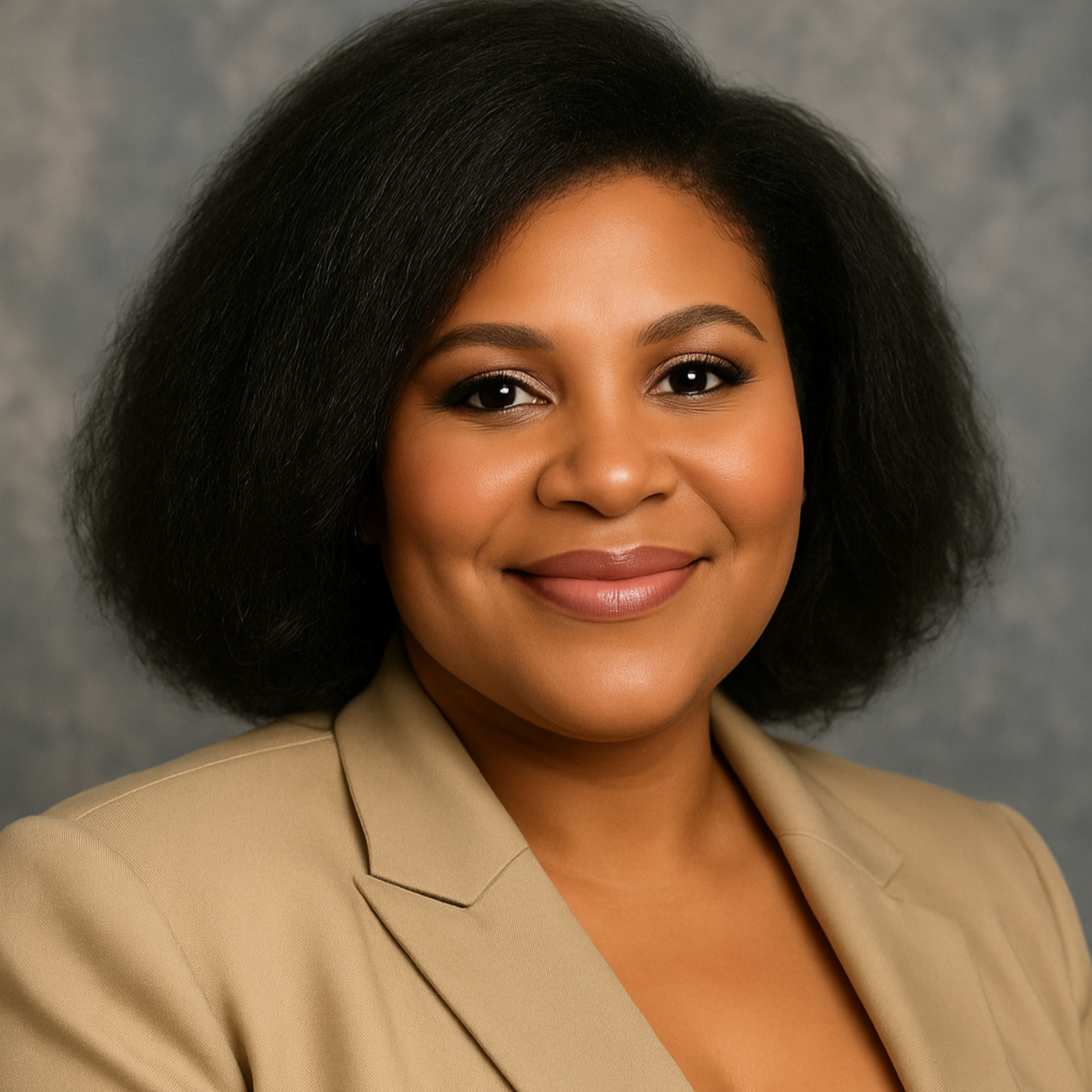
When You Feel Broken Beyond Repair: A Therapist's Blessing
Tonight's Episode
Have you ever looked at your life and thought, "I am broken beyond repair"? Not just struggling — but fundamentally, permanently damaged?
In this deeply personal episode, counselor and author Elisha addresses the belief that you are beyond God's reach and beyond healing. Through clinical insight, powerful Scripture, and a spoken blessing you won't forget — this episode meets you in the broken place and speaks truth over it.
In this episode:
✅ The "defectiveness schema" — why trauma makes you believe you're broken
✅ What Scripture ACTUALLY says about brokenness (not the bumper sticker version)
✅ Why healing isn't linear — the spiral model of recovery
✅ Neuroplasticity: your brain is literally designed for restoration
✅ Kintsugi Faith — a journaling practice for finding gold in the fractures
✅ A therapist's spoken blessing over anyone who feels beyond repair
Weekly Challenge:
📓 Kintsugi Journal: Name one break, name the gold, speak the shift — 7 days
🗣️ Morning declaration: "I am not broken beyond repair. I am broken being repaired."
Scriptures Referenced:
• Psalm 34:18 • Psalm 147:3 • Isaiah 42:3
• John 11:1-44 • 2 Corinthians 4:8-9 • Jeremiah 29:11
Mentioned: "The Brain That Changes Itself" by Dr. Norman Doidge
🔴 Join Elisha LIVE:
Tuesday at 7 PM EST | Saturday at 9 AM EST
Follow Elisha's Space on your favorite podcast platform.
Elisha Lee: I need to be honest with you about something. There are days even as a counselor, even as someone who teaches healing for a living, there are days when I look at my own story and I think, can this really be fixed? And if I feel that as a professional, I know you felt it too. that moment when the pain isn't just heavy, it's permanent. When you stop asking God to heal you and start wondering if maybe you're the one person he can't reach. Today, I'm not just speaking to you as a counselor, I'm speaking a blessing over you and I need you to receive it. Welcome to Elisha Space. I'm Elisha, counselor, author, and someone who has sat in the broken places, personally and professionally, more times than I can count. Before we go where we're going today, I need you grounded. So breathe with me. In. Two. Three. Four. Hold 2 3 4 and release 2 3 4 5 6 again and 2 3 4 Hold 2 3 4 out 2 3 4 5 6 Good. Your nervous system just told your brain we're safe enough to feel this and today we're going to need that. So let's name it because one of the most powerful things we can do clinically and spiritually is name the thing that's been living unnamed inside us. It's not the same as sadness. It's not the same as a hard season. It's a specific belief. And I want you to hear that word, belief, that says that damage done to me is permanent. There is no version of me that is whole. The best I can hope for is survival, but restoration? Well, that's for other people. And if you're sitting in that belief right now, I want you to know you're not crazy. You're not faithless. You're not dramatic. You are having a completely understandable response to what you've been through. ⁓ As a therapist, I can tell you there's a name for this. In clinical psychology, we talk about core beliefs, sometimes called schemas. Now, these are the deep operating systems installed in us, usually in childhood, usually through pain and One of the most common schemas in trauma survivors is what we call the defective schema. It sounds like this. I am fundamentally flawed. If people really knew me, they wouldn't love me. Something about me is broken at the foundation. Now here's what's important. This belief doesn't come from truth. It comes from experience. Someone treated you as if you were disposable. And your brain, which is designed to make meaning, concluded, I must be disposable. Someone failed to protect you and your brain wrote the story. I must not be worth protecting. The belief feels like a fact. But it's not a fact. It's a scar that learned how to talk. Let me say that again. Your brokenness is not a fact. It's a scar that learned how to talk. And scars? Scars are evidence of wounds. Yes. But they are also evidence that the wound closed. You're still here. The wound didn't win. And here's where I want to gently challenge the church, because I love the church and I'm speaking as someone inside it. Sometimes in faith spaces, we add a second wound on top of the first. We tell people, just give it to God, as if trauma is a package you can hand over at the post office. We quote Jeremiah 29, 11, I know the plans I have for you to someone who can't even get out of bed. And we wonder why they feel more broken, not less. because now they don't just feel broken, they feel broken and guilty for not being able to face their way out of it. That's not ministry, that's spiritual manipulation. So, what does God actually say about broken people? Not the Instagram version, not the bumper sticker theology. What does the Word actually say? Psalms 34, 18, the Lord is close to the brokenhearted and saves those who are crushed in spirit. Now, I want you to notice the verb He doesn't stand at a distance and shout instructions. He comes close. Proximity. Intimacy. Nearness. The text is saying that your brokenness doesn't repel God. It attracts him. Psalm 147-3. He heals the brokenhearted and binds up their wounds. The Hebrew word for binds up is Shabbos. It's a medical term. It means to bandage, to wrap, to compress a wound until it stops bleeding. God is not doing spiritual theory. He's doing triage. Isaiah 42 3 and this one is about the Messiah. A bruised reed he will not break and a smoldering wick he will not snuff out. A bruised reed, a smoldering wick, that's you on your worst day, almost broken, almost extinguished and God's response. is not to discard you. His response is gentleness. Notice where you feel that in your body right now because your body knows truth before your mind accepts it. If something just shifted in your chest, if your eyes stung for a moment, that's not weakness. That's your spirit recognizing something it's been starving for. permission to be held while broken. But I want to take you to the story that changed how I practice as a counselor. It's in John 11, the raising of Lazarus. Jesus arrives at the tomb and Lazarus has been dead for four days. Martha says to him, and listen to her words. Lord, if you had been here, My brother would not have died. That's not faith. That's accusation wrapped in grief. She's saying, you were late. You let this happen. I trusted you and you didn't show up. And what does Jesus do? He doesn't correct her theology. He doesn't quote scripture back at her. Verse 35. The shortest verse in the Bible. Jesus wept. The Son of God stood in front of death and decay and grieved with them before He fixed anything. He entered the brokenness before He spoke it. And then, and only then, He said, Lazarus, come out. And the dead man walked. But here's the part everyone misses. Verse 44. The dead man came out, his hands and feet wrapped with strips of linen. He was alive but still bound, still wrapped in grave clothes. And Jesus said to the people around him, Not to Lazarus. Take off the grave clothes and let him go. You know what that tells me. Resurrection is God's work. But unwrapping, that's community work. That's why you need a counselor. That's why you need safe people. That's why you're listening right now. God brings you back to life, but he uses human hands. remove the thing still binding you. If this episode is reaching a place in you that nothing else has been able to touch, and I believe for some of you it is, I need you to do something for me. Share this. Not on your feed. I'm not asking you to perform vulnerability. Text it. ⁓ Send the link to the person you know who is in the broken place right now. You might not have the words, but I do. Let me speak them for you. ⁓ And if you haven't yet, Elisha Space wherever you're listening so the next episode finds you. Because we're building something here. A space where healing and honesty live in the same room. Now, I want to put my clinician hat on because one of the reasons people feel broken beyond repair is that they've tried to heal and it didn't seem to work. They went to therapy. They went to the altar. They read the books, did the journaling, prayed the prayers, and they got better for a while. And then they didn't. And that relapse? That regression? It whispered something devastating. See? You can't be fixed. So let me tell you what's actually happening clinically. Healing is not a line going up. It's a spiral. You return to the same wounds. The same triggers. The same grief. but you meet them at a different altitude each time. The first time you process your childhood drama, you're surviving. The second time, you're understanding. The third time, you're integrating. The fourth time, you're teaching someone else. It feels circular. It's actually ascending. There's a concept in neuroscience called neuroplasticity. the brain's ability to form neural pathways at any age. And the research is extraordinary. Studies show that the brain can literally reorganize itself, not just cope with damage, but rewire around it. Dr. Norman Deutsch, in his book, The Brain That Changes Itself, documents cases of people whose brains physically restructured after massive injury. Not metaphorically, physically. New connections formed where old ones were destroyed. if the physical brain can do that, neurons can forge new pathways ⁓ around catastrophic damage, then the idea that you psychologically beyond repair is not just spiritually false, it's scientifically inaccurate. ⁓ The architecture of your brain. is designed for restoration. And I know what some of you are thinking. But Elisha, you don't know what happened to me. You're right, I don't. But I sat across from hundreds of people who thought they were the exception. So one case too far gone. And I'm still waiting to meet someone who actually was. I haven't found them yet, and I've been doing this work for a long time. And spiritually, 2 Corinthians chapter 4, verses 8 and 9, Paul writes, We are hard pressed on every side, but not crushed, perplexed, but not in despair, persecuted, but not abandoned, struck down, but not destroyed. but not. That tiny two word phrase is the hinge of your entire story. The enemy will tell you to read the first half pressed, perplexed, struck down. God is pointing you to the second half, not crushed, not abandoned, not destroyed. I want to give you a framework. And this one comes from Japanese art. It's called kintsugi. It's the practice of repairing broken pottery with gold. When a bowl shatters, they don't throw it away. They don't try to hide the cracks. They fill the bricks with gold lacquer and the piece becomes more valuable. more beautiful because of where it was broken. That is the most accurate picture of biblical redemption I have ever found outside of scripture. God does not heal you by pretending the breaking never happened. He doesn't return you to who you were before the trauma because that person didn't know what you know now. He fills the broken places with something precious. And the fracture lines become the most luminous parts of who you are. So here's what I want you to practice this week. I call it Kinswegi Journaling. And it's simple, but don't let the simplicity fool you. Simplicity is often where the deepest healing lives. Step one, name the break, write it down. I was broken in and then fill the space. Be specific, not a paragraph, one sentence. Naming it takes it from a feeling that owns you to a fact you can hold. Step two, name the goal, ask yourself. What grew in me because of that breaking? What do I know now? What compassion do I carry? What strength did I build in the repair? Write that down too. Step 3. Speak to shift. Say this out loud. And I mean out loud. Because your ears need to hear your own voice saying it. I was broken in that place and gold grew from there. I am not beyond repair. I am in the process of becoming more valuable than I was before the breaking. That's it. One break. One gold. One declaration. Every day this week. If you do this for seven days, you will begin to notice a shift. Not because the pain is gone, but because the meaning of the pain changes. And when meaning changes, everything changes. Some of you need to do this exercise with a counselor or a trusted friend present. If the break is deep, if it's childhood abuse, assault, abandonment, please don't excavate that alone. That's what safe people are for. That's what therapy is for. Healing is brave, but it should also be boundary. Now, I want to do something I don't normally do. I said in the beginning that this isn't just a teaching episode. It's a blessing. So I'm going to ask you to do something for me. If you can, close your eyes. If you're driving, keep them open, but soften your grip on the wheel. If you're lying in bed at 2 a.m., let your body sink into the mattress. If you're on a walk, slow your pace. I'm going to speak over you, not as a teacher, not as a podcaster, but as a counselor who has seen the broken places and as a woman of faith who believes in the God who fills them with gold. Receive this. Blessed are you who feel shattered tonight, not because the shattering was good, but because the one who holds you has never once looked at your pieces and said, this can't be saved. Blessed are you who tried to heal and fell again. The falling was not failure. The falling was a tired body landing in the arms of a God who has never, not once, dropped what he was carrying. Blessed are you who were told that faith should have fixed this by now. Your faith is not measured. by the absence of pain. Your faith is measured by the fact that you are still here, still listening, still searching for a voice that tells the truth about you. And the truth is this, you are not a rough draft. You are not God's mistake. You are not the exception to his healing. The same God who spoke light into darkness. who breathe life into dust, who called Lazarus out of the tomb after four days of death and decay. That God is not intimidated by your brokenness. He is not pacing heaven trying to figure you out. He is not scrolling past your prayers. He is close to you. Right now. Psalms 34, 18 close. Binding your wounds close. Bruised, reed, gentle. So hear me, beloved. You are not broken beyond repair. You are broken being repaired. Right now, in this breath, in this moment, the gold is already in the cracks. You just haven't learned to see it yet. But you will. If you felt something shift during that blessing, if something in your chest unlocked, if tears came, don't judge that. That's your spirit receiving what your mind has been rejecting. Let it in. Your challenge this week is two things. First, the Kingsweep Journal. One break. one goal, one declaration every day for seven days. Second, I want you to say this out loud every morning before you check your phone, before the noise starts, say, I am not broken beyond repair. I am broken being repaired. And if you want to go deeper with me, come to our live streams. We meet on Tuesdays and Saturdays. Bring your questions. Bring your stories. Bring your messy, beautiful, gold-famed self. This is a safe space. That's not a tagline. That's a promise. I love you. I mean that from the truest place in me. And I'll see you in the next episode of... elatious face.
 Apple Podcasts
 Castbox
 Castro
 Goodpods
 Moon FM
 Overcast
 Pocket Casts
 Podbean
 Podcast Addict
 Podcast Republic
 Spotify